

More news on this day
A recent Scottish Highlands travel promotion has drawn scrutiny after images used across digital channels were traced not to the Highlands, but to locations in China and North Korea, sparking debate about authenticity in destination marketing and raising questions for tourists seeking genuine Highland experiences.
Get the latest news straight to your inbox!
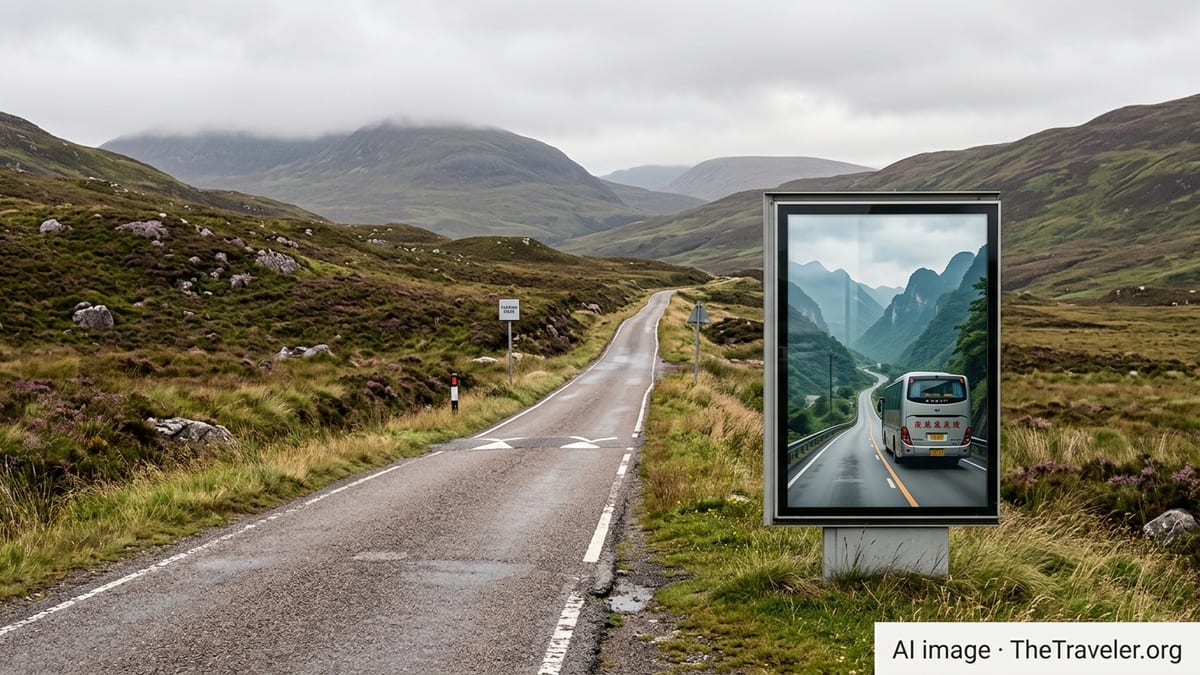
How A Mislabelled Highlands Journey Went Global
Social media users first flagged the problem after noticing unfamiliar scenery in a promotional visual linked to the Highlands and Islands, including what appeared to be Asian script on a bus and landscapes that did not resemble Scotland’s rugged glens. Online discussion quickly connected the imagery to locations in China and, in at least one case, to a well-known road scene in North Korea, suggesting the photos had been sourced from generic image libraries rather than from within Scotland itself.
The controversy gained traction as users compared screenshots of the campaign material with publicly available travel images from East Asia. Commenters pointed out distinctive architectural details, road markings and signage that are not present in the Scottish Highlands, as well as mountain profiles inconsistent with well-known Highland ranges such as the Cairngorms or the Cuillin. The mismatch turned what was intended as a simple value-for-money transport or tourism message into a viral example of misplaced destination branding.
Publicly available information indicates that the creative assets were likely produced with stock photographs to illustrate long-distance bus or scenic travel concepts, without adequate geographic verification. While the campaign has since been amended and the disputed image removed from official channels, the incident has become a touchpoint in wider conversations about truth in travel advertising and the pressures facing regional marketing teams.
The episode also arrives at a time when tourism bodies are working to distinguish the Highlands from competing destinations in Europe and beyond. Misidentifying far-flung landscapes as Scottish risks blurring that distinction and undermining broader campaigns that rely heavily on the region’s unique cultural and natural heritage.
Authenticity Questions In The Age Of Stock Imagery
The misattributed images have underscored how easily destination marketing can drift from authenticity when creative teams rely on global stock libraries to meet tight deadlines and budgets. Stock providers often tag images with broad terms such as “mountain road” or “rural bus route,” making it possible for photos from one continent to be repurposed for campaigns in another without clear disclosure or rigorous checking.
Commentary across travel and design forums highlights a growing unease with this practice, particularly when promotions imply specific places. Observers note that audiences are becoming more adept at spotting inconsistencies in architecture, vegetation and road infrastructure, especially when these are shared widely and dissected online. When mistakes occur, they can quickly damage trust not only in a single campaign but also in the wider narrative a destination is trying to convey.
The Scottish Highlands case also intersects with a broader shift toward computer-generated and heavily edited imagery in tourism marketing. As more campaigns experiment with AI-enhanced visuals and hyper-saturated scenes, the line between documentary photography and constructed fantasy can become blurred. For regions that trade heavily on their wildness and realism, such as the Highlands, missteps involving foreign or overly manipulated images risk diluting the sense of place that visitors seek.
Industry analysts point out that authenticity is now a key factor in travel decision-making, particularly among younger and long-haul visitors. When promotional material is perceived as inauthentic, potential visitors may question whether other elements of the experience, from accommodation to activities, are being represented accurately.
What Tourists Should Look For In Genuine Highlands Imagery
For travelers trying to distinguish real Highlands visuals from generic mountain backdrops, several clues can be useful. Authentic Highland landscapes typically feature a combination of heather moorland, peat bogs, rough grazing land and scattered Scots pine or birch, rather than the dense forests or terraced hillsides more commonly associated with parts of East Asia. The geology is also distinctive, involving rounded, glaciated peaks and deep sea lochs rather than sheer limestone karsts or subtropical vegetation.
Built infrastructure offers further hints. In rural Scotland, road signs follow United Kingdom standards, using English and sometimes Gaelic, with familiar triangular warning signs and rectangular direction panels. Buses and local vehicles display UK registration plates and left-hand driving, which contrasts with signage, character scripts and plate formats typical of Chinese provinces or North Korean cities. Tourists comparing campaigns with user-generated content from independent travelers can often verify whether visuals align with on-the-ground reality.
Weather and light can also help distinguish the Highlands. Genuine photographs commonly show rapidly changing conditions, from low cloud and drizzle to shafts of sunlight breaking over lochs, often with relatively muted color palettes. Promotional images featuring consistently bright, sub-tropical light, ornate pagoda-style structures or non-UK road furniture are less likely to have been captured in Scotland, even if the overall composition feels “mountainous.”
Travel planning platforms, guidebooks and reputable photography collections focused on Scotland can serve as reference points for visitors evaluating marketing material. Comparing suspicious images with widely recognized views of locations such as Glencoe, the North Coast 500, Skye or Torridon can help tourists assess whether a campaign is depicting the Highlands or simply applying a Highland label to a generic scenic route.
Planning An Authentic Highlands Journey After The Mix-Up
Despite the controversy, the Scottish Highlands remain one of Europe’s most accessible regions for travelers seeking dramatic scenery, small communities and outdoor activities. Tourists looking for an authentic experience can focus first on understanding the geography of the area they plan to visit. The Highlands stretch from the central belt northwards, encompassing renowned areas such as Lochaber, Wester Ross, Sutherland and the Inner and Outer Hebrides, each with distinct landscapes and cultures.
Publicly available resources from regional tourism bodies, local councils and transport operators outline established scenic routes, including well-known circuits such as the North Coast 500, the Road to the Isles between Fort William and Mallaig, and the routes into Skye via the Skye Bridge or the Mallaig to Armadale ferry. These itineraries are supported by local businesses and communities, with photography that generally corresponds closely to real viewpoints, coastal stretches and mountain passes along the way.
Visitors can also prioritize experiences that are inherently place-specific and unlikely to be confused with other regions. These include exploring clan histories at Highland museums, joining guided walks that focus on Gaelic place-names and ecology, or traveling on iconic rail journeys such as the West Highland Line. Local festivals, agricultural shows and community events similarly offer photographs and stories rooted clearly in the Highlands, providing a strong contrast to generic imagery from abroad.
Independent planning tools, including maps, satellite imagery and trip reports from recent visitors, can further help travelers verify that the views promoted in a brochure or advert correspond to real locations they wish to see. Cross-checking a scenic vista from a campaign with widely shared photographs taken by hikers on the same trail can provide reassurance that the landscape is genuinely Highland, rather than a borrowed backdrop from another continent.
Lessons For Future Highlands Marketing
The mistaken use of Chinese and North Korean imagery in a Highlands-focused promotion has quickly become a case study in how destination branding can go wrong in the digital era. For marketing teams, the incident highlights the importance of strict verification processes for any visual asset that implies a specific place. This can include cross-referencing photographs with geotagged originals, prioritizing commissions from local photographers and maintaining clear records of where and how images were sourced.
Regional tourism organizations may also see value in developing curated, rights-cleared image libraries that accurately represent different parts of the Highlands across seasons, weather conditions and visitor activities. Such collections can reduce reliance on generic stock platforms and provide campaign partners with a reliable source of authentic visuals aligned with local expectations and community values.
For travelers, the episode serves as a reminder to approach heavily stylized or geographically ambiguous imagery with a degree of caution. When planning an itinerary or choosing a tour based on promotional visuals, tourists may benefit from seeking additional confirmation through independent photos, maps and first-hand accounts. Doing so can help ensure that the landscapes they expect to encounter in the Scottish Highlands match the reality they will see when they arrive.
As the Highlands continue to attract visitors from across the world, the region’s appeal is closely tied to its real topography, history and culture. Ensuring that campaigns showcase those qualities accurately will be central to maintaining trust with audiences and supporting communities that depend on tourism spending grounded in genuine Highland experiences.