

More news on this day
A recent Scottish Highlands travel promotion has drawn international attention after online users identified its hero image as a mountain road on the border between China and North Korea rather than a scene from Scotland, raising fresh questions about authenticity in destination marketing and prompting travelers to seek more reliable ways to plan Highland journeys.
Get the latest news straight to your inbox!
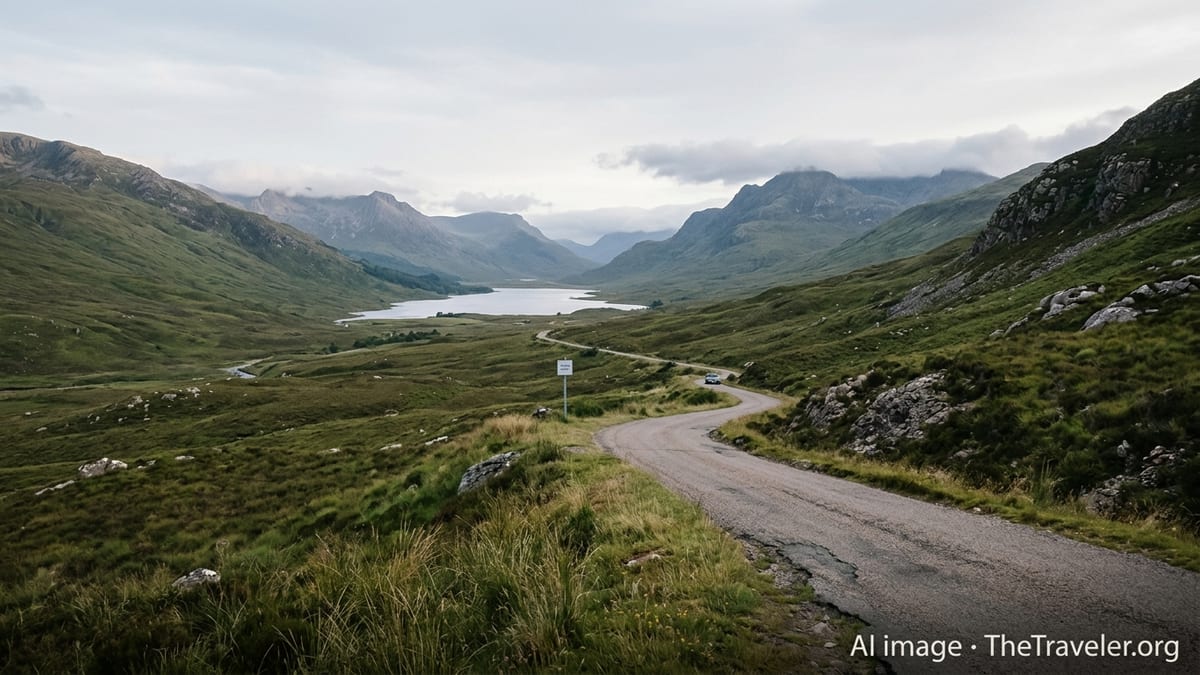
How an Overseas Highway Ended Up Promoting the Highlands
The controversy emerged in late March 2026 when an image used to promote bus travel in the Scottish Highlands was widely shared on social media. Commenters on community forums compared the campaign photo to satellite images and travel photography and concluded that the winding mountain road and guardrails matched a route near Changbai Mountain, a volcanic peak straddling the border between China and North Korea, rather than any road in Scotland.
Publicly available discussion threads noted distinctive visual details such as green crash barriers, the layout of hairpin bends and the surrounding forested slopes, which are typical of northeastern Asia but not of Highland trunk roads. The posts argued that these clues indicated the image showed a shuttle route leading toward the border area of China and North Korea. The bus in the picture also appeared to carry markings inconsistent with Scottish operators, reinforcing doubts about the location.
Coverage in local and national media quickly picked up on the user-led detective work. Headlines highlighted the irony of a Highland tourism and transport message framed by an East Asian border landscape. Reports indicate that the promotional image was later withdrawn, although the wider campaign around public transport and sustainable travel in the Highlands continued.
The situation has unfolded at a time when many tourism bodies are expanding digital outreach, especially through low-cost design tools and stock imagery. Industry analysts suggest that this can increase the risk of mislabelled or generic landscapes slipping into campaigns, particularly when materials are produced quickly or repurposed from global image libraries without close geographic verification.
Why Authentic Imagery Matters in Highland Tourism
The Highlands occupy a central place in Scotland’s tourism offer, drawing visitors with expectations of rugged mountains, single-track roads, peat moorlands and crofting communities. Economic studies describe tourism as a vital employer across remote Highland and island areas, with visitor spending closely linked to the region’s distinctive natural and cultural character.
Destination marketing professionals argue that using clearly authentic photography is essential to maintaining trust with travelers. When a widely promoted image turns out to depict a road thousands of kilometers away, it can feed perceptions of tourism “fantasy” rather than lived reality. Commentators in Scotland have already expressed concern about the spread of highly edited or artificial images of Highland scenery that do not reflect typical conditions, particularly in winter or in poor weather.
There is also a safety dimension. Scenic routes in the Highlands can involve narrow single-track roads, livestock on the carriageway and rapidly changing weather, in contrast to the broad, engineered highway curves seen in the China–North Korea border image. Road safety campaigns in Scotland regularly emphasize that new drivers to the region should anticipate slow speeds, passing places and limited mobile coverage, none of which are captured by glossy photos of wide, empty mountain highways.
For many small Highland communities, authenticity is not an abstract ideal but a practical concern. Local businesses invest in walking guides, ranger services and visitor information boards that are tailored to the landscape immediately around them. When national or regional campaigns rely on imagery from other continents, it can undermine those local efforts to communicate what the area is genuinely like and how to enjoy it responsibly.
How to Verify That a “Highlands” Image Is Really Scotland
The episode has prompted many prospective visitors to ask how they can tell whether images used to market Highland trips genuinely show Scotland. Travel experts recommend a combination of visual literacy and basic online research to check photographs before building an itinerary around a particular view.
One simple approach is to look for recognisable Scottish road features. The Highlands are famous for narrow single-track stretches marked by passing-place signs, hedgeless verges and stone walls. Long sequences of wide dual carriageway curves lined with uniform green metal barriers, as seen in the disputed image, are uncommon in remote Highland glens. Snow poles, sheep grids and bilingual Gaelic–English signs are additional cues that a road is located in the Highlands rather than somewhere else.
Prospective visitors can also cross-reference images by searching for the same photo in reverse image tools. If a supposed Highland scene appears on overseas travel blogs or mapping platforms tagged to locations in East Asia or other regions, that is a strong indication that it has been mislabelled. Many popular Scottish viewpoints, from Glen Coe to the Quiraing, are widely documented in user-generated photography, making it relatively straightforward to compare angles and verify whether an image matches known landmarks.
Another indicator is the presence of local businesses and place names. Genuine Highland promotional photos often feature identifiable inns, ferry terminals, piers or mountain silhouettes that can be matched to maps and guidebooks. Images that show anonymous buses or infrastructure with no legible Scottish branding, or landscapes with unrecognisable flora, should be treated cautiously when planning a trip.
Planning Authentic Scenic Routes Across the Real Highlands
Despite the publicity around the misidentified border highway, travelers have no shortage of genuine scenic routes to explore in the Scottish Highlands. Established itineraries such as long-distance coastal circuits, classic glen drives and island-hopping routes are widely documented in official tourism literature, guidebooks and independent travel blogs, providing verified descriptions and photography.
Publicly available information from Scottish transport authorities, national parks and regional tourism groups can help visitors choose routes that match their interests and driving confidence. Many sites publish detailed maps, seasonal advice and guidance on travel by bus or rail, which can be cross-checked against digital maps to confirm that road alignments and viewpoints correspond to real Scottish locations.
Visitors who prefer car-free travel can consult rail timetables, bus networks and community transport initiatives that specifically serve Highland towns and villages. These services often promote scenery along the way that is unmistakably Scottish, including sea lochs, heather moors and historic bridges. Using official timetable maps in combination with online street-level imagery allows travelers to confirm that the views they expect are located on the lines they plan to use.
On the ground, local visitor information centres, ranger bases and small accommodation providers are valuable sources of up-to-date route suggestions. Many maintain printed maps and walking leaflets created in collaboration with land managers and rescue services. These materials focus on realistic journey times, parking capacity and access conditions, offering a counterpoint to idealised images circulating online.
Digital Literacy for Tourists in the Age of AI and Stock Imagery
The mix-up between the Scottish Highlands campaign and the China–North Korea border road has unfolded at a moment when artificial intelligence and stock photography are rapidly reshaping how travel imagery is produced. Industry commentary increasingly notes that generic mountain scenes, sometimes generated or heavily edited by algorithms, are entering marketing materials without clear labelling.
For tourists, this environment makes digital literacy as important as traditional guidebook research. Before committing to non-refundable bookings based on a single photograph, travelers are encouraged to seek multiple, independent visual references for the same destination, ideally from recent visitor photos shared on reputable platforms. When several sources depict similar weather, road conditions and crowds, the images are more likely to represent what a traveler will actually encounter.
Understanding basic cues of image manipulation can also help. Overly saturated skies, repeated patterns in clouds or vegetation and unexplained lens effects can indicate that a picture has been significantly altered. While edited images are common in all forms of advertising, recognizing them enables visitors to adjust expectations and seek supplementary information on trail difficulty, access and safety.
The Highlands remain one of Europe’s most celebrated landscapes, and the core appeal of the region does not depend on flawless promotional photography. For many visitors, the attraction lies precisely in unpredictable weather, narrow roads and moments of quiet in less familiar terrain. By applying a critical eye to online imagery and relying on a mix of official resources and local knowledge, tourists can ensure that their Highland journeys are rooted firmly in Scotland rather than on a distant border road in another part of the world.