

More news on this day
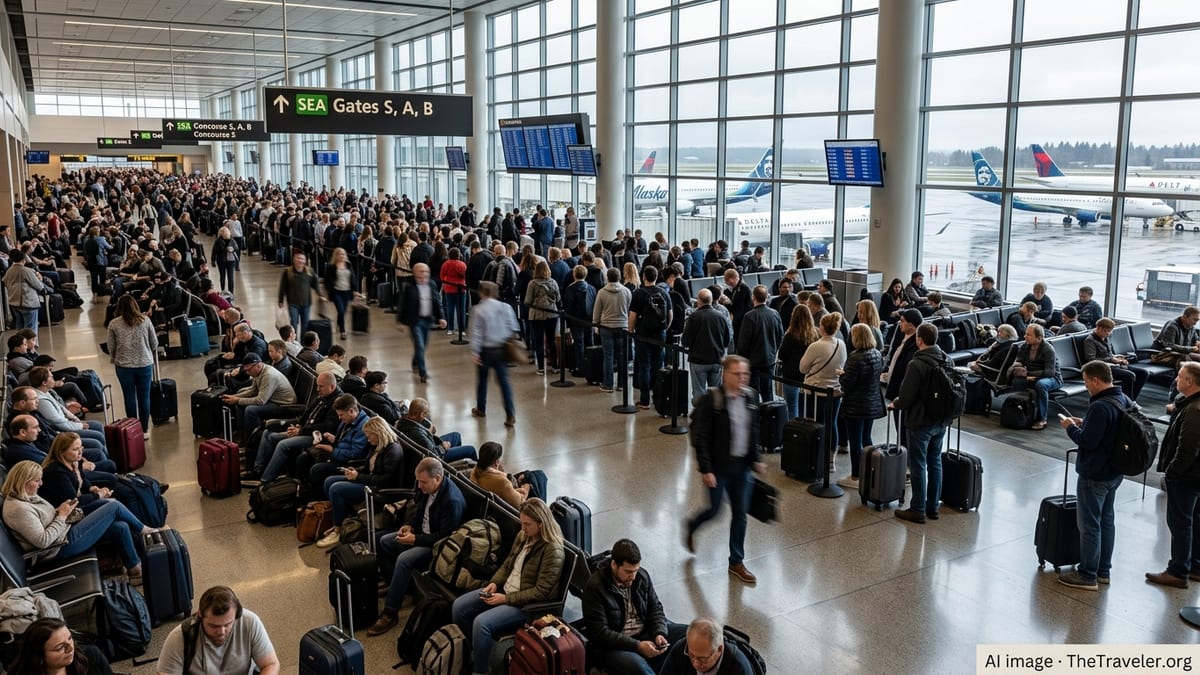
Hundreds of passengers at Seattle–Tacoma International Airport faced long lines and hours of uncertainty today as nearly 90 delayed flights and at least two cancellations disrupted operations for Alaska Airlines, Delta Air Lines and American Airlines, according to live airport status boards and flight-tracking data.
Get the latest news straight to your inbox!
Widespread Disruptions Ripple Through Sea-Tac
Real-time tracking data for Seattle–Tacoma International Airport showed a sharp spike in late departures and arrivals today, with close to 90 flights running behind schedule and a small number of outright cancellations across several major U.S. airlines. The pattern of disruption concentrated around Alaska Airlines, Delta Air Lines and American Airlines, three of the largest operators at the airport, leaving departure halls crowded and gate areas packed with waiting travelers.
Publicly available flight information indicated that delays were most acute during the morning and early afternoon periods, traditionally among the busiest windows for business and leisure travel. Many services were pushed back between one and three hours, with knock-on effects for onward connections across the country. While only a couple of flights were formally canceled, the volume of late operations created a backlog that was still being cleared into the afternoon.
Airport status boards and third-party tracking platforms showed the disruption affecting both departures and arrivals, underscoring how quickly an issue at a major hub can cascade across an airline’s network. Passengers bound for destinations across the West Coast, the Mountain West and several transcontinental routes all reported significant schedule changes compared with their original itineraries.
Alaska, Delta and American See Schedules Stretched
Alaska Airlines, which treats Seattle as its primary hub, appeared to bear a substantial share of the impact, with many of its short- and medium-haul services from Sea-Tac departing later than planned. Delays on key routes to California, the Rocky Mountain region and Alaska itself contributed to congested gate areas and longer-than-usual queues at service counters as travelers sought alternative options.
Delta Air Lines and American Airlines also faced notable disruption, with flights to large domestic hubs experiencing rolling departure times. Publicly available operational data for the three carriers, including historical performance from federal transportation reports, show that dense schedules and limited slack in aircraft and crew availability can amplify the effect of even modest disruptions on any given day.
Industry observers note that when several major carriers experience delays simultaneously at a single airport, options for rebooking become constrained. Seats on unaffected flights quickly fill, same-day standby lists lengthen, and passengers with tight connection windows often find themselves forced into overnight stays or substantial rerouting to reach their destinations.
Operational and Weather Factors Combine
While detailed causes for each individual delay were not immediately clear, publicly available information on regional operations and recent weather patterns around Seattle point to a combination of factors. Seasonal conditions, including low clouds, rain and intermittent periods of reduced visibility, can slow arrival and departure rates, prompting air traffic management programs that hold aircraft on the ground or in the air for longer than scheduled.
Recent discussions among travelers and aviation watchers have also highlighted how de-icing bottlenecks, limited gate availability and stretched ground crews at Sea-Tac can quickly add minutes to turn times when traffic is heavy. When this occurs across multiple airlines, the result can be a chain reaction where modest ground delays accumulate into more severe schedule disruption over the course of the day.
Historical federal performance reports on Alaska, Delta and American underscore how a mix of weather, air traffic constraints and carrier-level issues such as crew scheduling commonly show up as primary causes in delay statistics. When these elements coincide, they can produce exactly the sort of pattern seen at Sea-Tac today, where the majority of flights still operate but far fewer depart on time.
Passengers Face Long Lines, Missed Connections and Scrambled Plans
Inside the terminal, the impact on travelers was immediate and visible. Check-in areas and security lanes grew increasingly crowded as departure times slipped, and passengers already airside formed long queues at customer service counters as they sought to secure new connections, hotel vouchers or meal options during extended layovers.
Reports from travelers using public forums and social media described families waiting with young children at packed gates, business travelers juggling work commitments on laptops in improvised spaces, and international passengers worried about missing onward connections from other hubs. The relatively small number of cancellations masked the broader strain caused by widespread delays, particularly for those with multi-leg itineraries.
For many passengers, the main challenge became uncertainty rather than outright cancellations. With rolling departure estimates shifting in 30- or 60-minute increments, travelers weighed whether to remain at their assigned gate, seek out quieter corners of the terminal, or attempt to rebook to later flights in hopes of a more predictable schedule.
Guidance for Travelers Flying Through Seattle
Given the day’s disruptions, aviation analysts and consumer advocates often emphasize several practical steps for anyone scheduled to travel through Sea-Tac during periods of irregular operations. Monitoring flight status frequently through airline apps or airport information feeds is critical, as changes can occur rapidly and automated notifications may lag real-time updates displayed at the gate.
Travel experts also recommend building additional buffer time into connections that route through busy hubs such as Seattle, especially in seasons when weather is more likely to affect air traffic. Passengers who see extended delays posted for their flights sometimes find it useful to proactively explore alternative routings or standby options before queues at service desks lengthen.
For travelers whose flights from Seattle are delayed or canceled, publicly available guidance from airlines and federal transportation resources outlines circumstances under which passengers may be entitled to rebooking assistance, meal vouchers or hotel accommodation. Understanding each carrier’s policies in advance can help travelers make quicker decisions when disruptions unfold and advocate effectively for available support.