

More news on this day
Ultra-luxury cruise line Seabourn is knitting together the United States, Japan, Canada and Antarctica in an ambitious 2026 schedule that combines classic ocean cruising with expedition voyages to some of the world’s most remote frontiers.
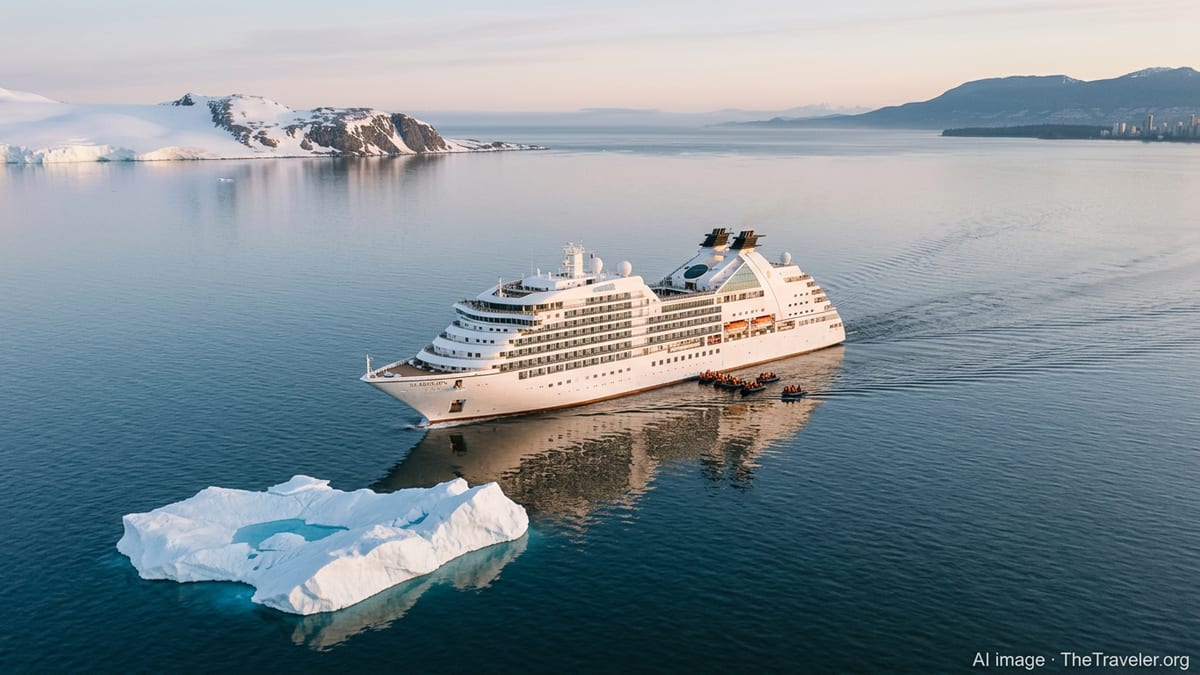
World Cruise Routes Tie Major Gateways Together
Seabourn’s 2026 program positions the United States as a primary long-haul gateway, with world cruise segments marketed heavily to North American travelers and key inclusions such as enhanced luggage and concierge services tailored specifically for guests embarking from U.S. and Canadian homeports. The company’s 2026 world cruise aboard Seabourn Sojourn and related segments highlight North Pacific crossings that help frame Japan and Canada as marquee waypoints in a larger global journey.
According to Seabourn’s published 2026 world cruise materials, the itinerary features extensive sailing in and around Japan, including scenic cruising of the Inland Sea and the Kanmon Strait, before crossing the Pacific toward North America. These routes are scheduled to reach the Canadian west coast, including British Columbia, giving guests a continuous luxury journey that effectively links Tokyo and Vancouver within a single overarching voyage.
Additional supporting segments, including spring circumnavigation sailings in Japan and transpacific passages to Canada, are being marketed as standalone options for guests who do not have the time for a full world cruise. For U.S.-based travelers, this segmentation allows for flexible embarkation and disembarkation options that can start or end closer to home while still incorporating Japan’s cultural highlights and Canada’s rugged Pacific coastline.
Japan 2026: Seasonal Voyages Anchor the Pacific Program
Japan sits at the heart of Seabourn’s 2026 ocean deployment, with the line rolling out a series of spring and autumn voyages designed around the country’s most photogenic seasons. Seabourn Encore is scheduled to operate multiple itineraries that time calls with cherry blossom festivities in the spring and foliage voyages in the fall, reflecting a broader luxury trend toward highly seasonal, event-focused cruising.
Dedicated Japan voyages showcase marquee ports such as Yokohama, Kobe and other coastal cities, with itineraries that include scenic transits through narrow straits and inland waterways. In addition, select world cruise segments are scheduled to begin or end in Japanese ports, reinforcing the country’s status as both a destination and a strategic turnaround point for Seabourn’s global planning in 2026.
These Japan-focused sailings dovetail with Seabourn’s broader Pacific network, including crossings that continue east toward Alaska and Canada later in the season. The positioning of ships from Japan into North American waters reflects the brand’s commitment to integrating Asia more tightly into its traditional strongholds in the U.S. and Canada.
Canada and the United States Strengthen North American Links
On the North American side, Canada plays a starring role in Seabourn’s 2026 schedule, particularly along the Pacific coast. Several voyages are slated to arrive in or depart from Vancouver, enabling seamless connections to Japan-focused itineraries as well as to extended world cruise routes that continue along the Canadian and U.S. coasts. These sailings highlight British Columbia’s fjord-like channels, narrow passages and forested islands, positioned as a scenic counterpart to Japan’s own inland waters.
The United States remains a core source market and transit point for Seabourn’s luxury guests. Marketing for 2026 emphasizes enhanced services for travelers whose journeys originate in U.S. and Canadian cities, including elevated luggage handling options and concierge-style support for complex air and land arrangements. Many Seabourn guests are expected to route through major U.S. hubs en route to join world cruise segments in Asia or North America.
Within the region, Alaska and the Pacific Northwest are also poised to benefit from Seabourn’s 2026 deployments. While detailed deployment patterns are spread across several ships, the line is positioning its small-ship, high-service product as an upmarket option for travelers looking to pair wilderness-focused cruising in Alaska or Canada with longer global itineraries that reach as far as Japan and, ultimately, Antarctica.
Antarctica Expeditions Remain the Remote Crown Jewel
At the opposite end of the world from Japan and Canada, Antarctica continues as the centerpiece of Seabourn’s ultra-remote offering in 2026. The expedition ships Seabourn Venture and Seabourn Pursuit are scheduled to operate a series of Antarctic voyages, typically ranging around 10 to 22 days, that combine the White Continent with nearby destinations such as South Georgia and the Falkland Islands during the austral summer season.
These sailings begin and end in Ushuaia, Argentina, but are strongly marketed into North America and Japan, with Seabourn highlighting the ability for well-traveled guests to connect far-flung experiences within a single year. Prospective guests in the United States, Canada and Japan are being targeted with imagery of penguin colonies, iceberg-filled channels and expert-led Zodiac operations, underscoring the line’s ambition to balance classic luxury with authentic expedition credentials.
In recent months, Seabourn has also begun to refine its expedition offerings, including winding down certain specialized experiences such as its submarine program and refocusing resources on core Zodiac, kayaking and landing operations. For 2026, that translates into an emphasis on high-quality shore time, lecture programs and wildlife-viewing opportunities that appeal to sophisticated travelers already familiar with premium cruise products in Japan and North America.
Luxury Positioning Targets High-Spend Global Travelers
Across its 2026 programming, Seabourn is clearly aiming at a global clientele that can afford extended holidays linking multiple continents. The combination of Japan’s seasonal itineraries, Canada’s and Alaska’s wilderness coastlines, U.S. air gateways and Antarctica’s remote expeditions effectively creates a four-cornered map of ultra-luxury cruising for the year.
The line continues to differentiate itself with small-ship capacities, a high crew-to-guest ratio and a strong focus on inclusive amenities such as premium dining, open bars and concierge-level service. For long-haul travelers from the United States, Japan and Canada, Seabourn is positioning its 2026 voyages as a way to stitch together marquee regions into a single, coherent travel narrative, rather than treating each as an isolated cruise holiday.
As booking windows for 2026 continue to open, industry observers will be watching how quickly these interlinked itineraries fill, particularly among repeat luxury cruisers. For now, Seabourn’s strategy suggests that the line sees its future not just in individual destinations like Japan, Canada or Antarctica, but in the connective tissue that allows high-end travelers to experience them all in a single, carefully curated year of travel.