

More news on this day
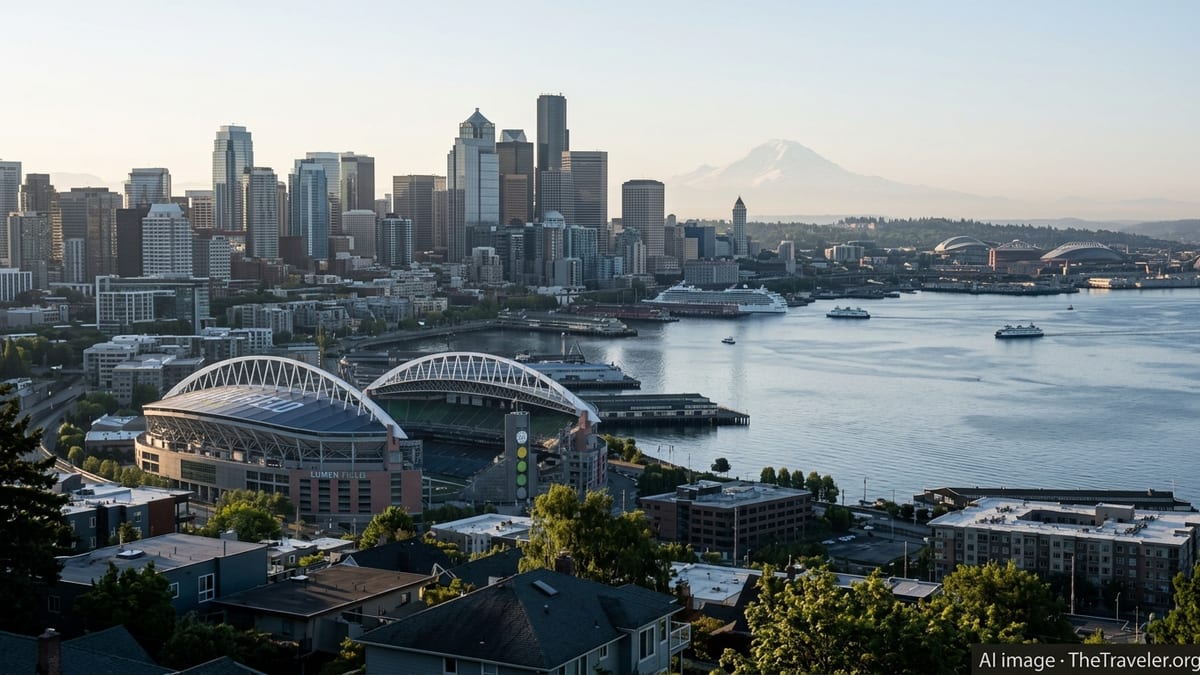
Seattle’s travel market is entering a pivotal year: forecasts point to a sharp decline in international visitors in 2025 even as FIFA World Cup 2026 preparations accelerate, setting the stage for an intense tourism surge when six matches arrive at Lumen Field next summer.
Get the latest news straight to your inbox!
From Pandemic Recovery to New Tourism Crossroads
Seattle’s tourism economy has spent the past two years climbing back from the pandemic shock, with downtown visitation, hotel performance and convention traffic broadly improving. Publicly available data from Visit Seattle and local reports show that downtown hotels sold more than 4 million room nights in 2024, the highest level since 2019, and recent months have brought record-setting room revenues during major summer events.
Even with those gains, the region has not fully regained its pre-2020 visitor volumes. Information compiled by regional and federal agencies indicates that Seattle and King County welcomed about 33.9 million visitors in 2022, roughly 81 percent of the 41.9 million visitors reported in 2019. Employment in tourism-related sectors has also trailed earlier peaks, reflecting a slower rebound in business travel and shifting work patterns downtown.
Now, a new challenge is emerging just as the city prepares for its biggest sporting showcase in decades. Recent Tourism Economics projections, summarized in industry briefing materials, suggest that Seattle could experience a pronounced downturn in international overnight visitation in 2025, driven largely by a pullback from its single largest foreign market, Canada. That anticipated dip will frame the context for what happens when the World Cup kicks off in June 2026.
The result is a mixed picture: a destination that has regained momentum in domestic and event-driven travel, but that is also confronting a near-term cooling in overseas demand before an unprecedented global spotlight arrives.
World Cup 2026: Six Matches, Nearly $1 Billion on the Line
Seattle is one of 11 United States host cities for the 2026 FIFA World Cup, sharing tournament duties with venues across North America. Lumen Field, home to the Seattle Seahawks and Seattle Sounders, is scheduled to stage four group-stage matches and two knockout games, according to tournament schedules published by soccer media and FIFA-aligned outlets.
Economic impact studies commissioned by Visit Seattle and analyzed by Tourism Economics project that the World Cup will generate at least 929 million dollars in total economic impact for King County. That estimate encompasses direct spending by visitors, as well as indirect and induced effects on local suppliers, wages and tax revenue. The same modeling points to the creation or support of nearly 21,000 jobs tied to the event window, along with more than 100 million dollars in tax receipts for state and local governments.
National analyses echo the scale of what is coming. A recent assessment highlighted by major U.S. media suggests that the 11 American host cities together could see billions of dollars in additional tourism spending linked to soccer visitors, with Seattle ranking among the top projected beneficiaries. One independent forecast ranked the city near the top of all U.S. hosts by expected World Cup economic impact, reflecting its robust hotel base, international air links and the number of matches allocated.
Event planners and tourism experts note that the influx will not be limited to match days. Training camps, fan festivals, broadcast operations and extended itineraries across the Pacific Northwest are likely to spread demand before and after fixtures, creating a longer peak season than Seattle typically experiences in June and July.
Visitor Decline Meets Event Surge: What It Means for Travelers
The World Cup is arriving at a moment when broader U.S. travel trends are in flux. Industry research circulated by trade groups and travel analysts points to headwinds for inbound tourism to the United States in 2025, including a strong dollar, visa processing backlogs and competition from other long-haul destinations. For Seattle, an additional factor is the softening outlook for Canadian visitors, who usually account for the majority of its international arrivals.
Tourism Economics data shared in international-market briefings indicate that Seattle could face one of the steepest projected drops in international overnight visitation among major U.S. cities next year, approaching a 27 percent decline compared with 2024. Nearly all of that reduction is attributed to fewer trips from Canada, a key market for weekend city breaks, shopping visits and cruise departures.
For travelers considering a trip to Seattle before the World Cup, that easing in demand may translate into more choice and, in some cases, more competitive pricing on flights and hotel rooms, particularly outside peak summer and cruise periods. However, some segments such as large conventions and major concerts are still driving strong spot demand, as evidenced by record hotel revenues during high-profile events in 2024 and 2025.
Once the World Cup begins, the pattern flips. Forecasts presented to local governments and tourism stakeholders suggest the Seattle area could host roughly 750,000 visitors in June and July 2026 tied to the tournament, on top of its usual summer travel season. Short-term rental platforms are already projecting tens of thousands of guest stays and elevated host earnings around match dates, signaling intense competition for centrally located lodging.
How Seattle Is Preparing: Infrastructure, Security and Fan Experience
State and local agencies across Washington are accelerating preparations for the tournament. Legislative records and regional news coverage show that lawmakers have approved funding packages to upgrade security, transportation and stadium infrastructure at and around Lumen Field, with work focused on the playing surface, access routes and crowd management systems.
Municipal research organizations report that public bodies are coordinating on a multilayered strategy that includes transit operations, temporary street closures, crowd safety planning and accessible fan experiences. Planning documents describe the development of fan zones designed to concentrate viewing parties, food vendors and on-the-ground programming in specific districts, with Seattle cited in national coverage as one of the host cities advancing detailed festival concepts.
Transportation planning is a central concern. Seattle’s constrained downtown street grid, reliance on key freeway corridors and busy cruise season create a complex backdrop for moving tens of thousands of fans to and from each match. Technical memos and public briefings point to adjustments in light rail, commuter rail and bus service, as well as coordination with ride-hailing and taxi operators, to reduce pressure on surface streets and parking.
At the neighborhood level, nearby cities and counties are assessing how to capture spillover benefits while managing impacts on residents. Briefings presented to local tourism and economic development committees in communities around Puget Sound reference expectations that visitors will base in or day-trip through smaller hubs, from ferry-linked towns to mountain gateways, extending the World Cup footprint well beyond downtown Seattle.
Practical Takeaways for Visitors and the Travel Industry
For travelers planning a Seattle trip in the next 18 months, the timing of bookings will be critical. Industry analysts advise that non-soccer visitors who want to avoid peak prices and crowds may look to spring 2026 or shoulder-season months in late 2025, when international demand is expected to soften but the city’s cultural, culinary and outdoor offerings remain strong.
Those targeting World Cup matches or the surrounding festivities are likely to face a very different environment. Projections from tourism economists and accommodation platforms point to exceptionally tight availability near Lumen Field and along main transit corridors during match windows. Travel planners recommend that visitors monitor official match schedules, practice-day events and city-announced fan zone programming when choosing arrival and departure dates.
Within the travel industry, airlines, hotels and tour operators are already treating Seattle as a focal point for 2026 product development. Public updates from carriers and hospitality brands indicate that capacity, staffing and inventory strategies are being revised to handle a short but intense burst of global attention. Cruise lines, which already contribute heavily to Seattle’s summer tourism, are also expected to adjust itineraries and marketing messages to appeal to fans who want to combine soccer with Alaska sailings or extended regional travel.
Behind the scenes, local officials, business groups and community organizations are weighing how to convert the World Cup from a one-time surge into a long-term branding opportunity. With international visitation expected to dip before the tournament and then spike sharply when it arrives, the stakes are high: how Seattle manages the coming boom may influence its reputation, visitor mix and tourism growth trajectory well beyond the final whistle in July 2026.