

More news on this day
Seattle travelers weary of long security lines and traffic-choked drives to Seattle-Tacoma International Airport are increasingly opting for a faster, downtown-to-downtown hop between Boeing Field and Spokane, trading the hub’s crowds for a quieter terminal and streamlined boarding on small regional aircraft.
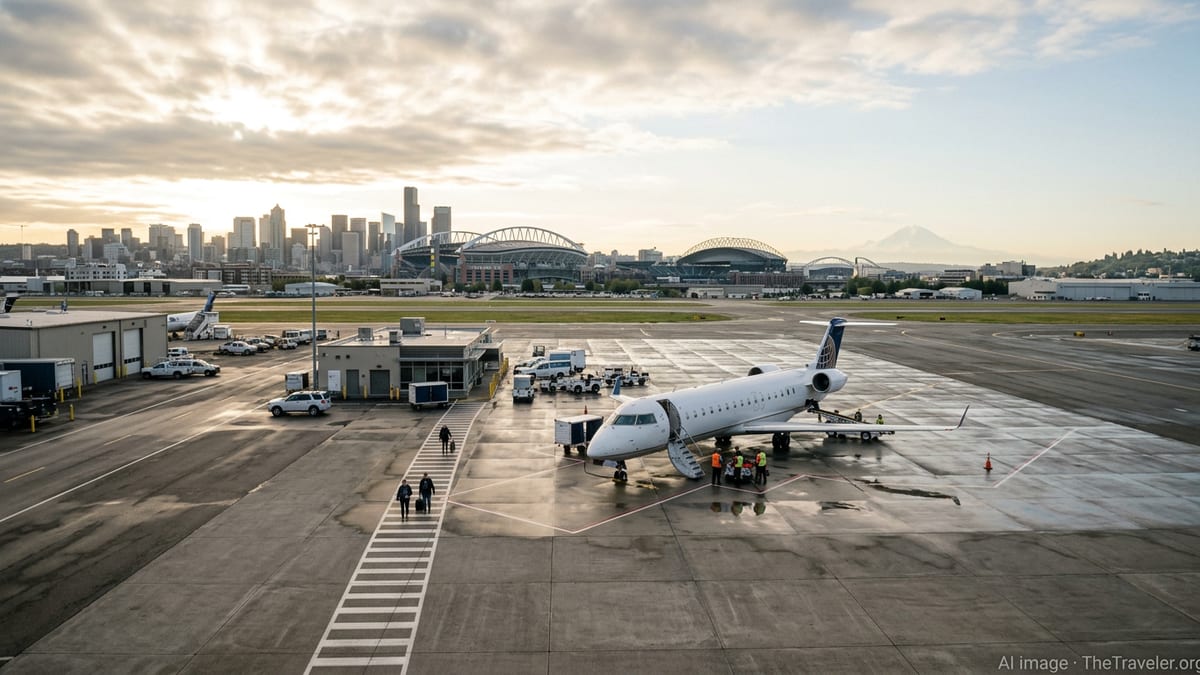
A Quieter Gateway on Seattle’s South Side
King County International Airport, better known as Boeing Field, has long been the domain of corporate jets, cargo operators, and flight testing. In recent seasons, however, its compact terminal and location just south of downtown Seattle have become a draw for regional travelers looking for an easier way to reach Spokane. Without the sprawling concourses and dense crowds associated with Seattle-Tacoma International Airport, Boeing Field offers a scaled-down experience that many passengers say feels more like boarding a shuttle than navigating a major hub.
The appeal starts before travelers even step inside. Boeing Field sits closer to Seattle’s urban core than Sea-Tac, shaving valuable time off the ground journey for those coming from downtown offices, South Lake Union tech campuses, or surrounding neighborhoods. With fewer flights and less congestion on airport roads, curbside drop-offs and pick-ups are typically faster and less stressful, particularly during peak commuting hours.
Inside, passengers encounter minimal lines at check-in and security compared with the bottlenecks that have become common at Sea-Tac on busy afternoons and holidays. Regional carriers and charter operators running the Boeing Field to Spokane corridor focus on frequent, short-haul service, allowing travelers to arrive closer to departure time and move quickly from curb to gate. For many, this shift has reframed Spokane from a half-day ordeal into a practical same-day round trip.
Travel industry observers note that Boeing Field’s evolution mirrors a broader trend in U.S. regional aviation: smaller, centrally located airfields playing a larger role in connecting nearby cities where demand favors speed and convenience over the full menu of big-airport amenities.
Downtown-to-Downtown Time Savings Add Up
The main selling point of the Boeing Field to Spokane route is not necessarily the time spent in the air, but everything around it. Flight times between the two cities are similar regardless of departure airport, yet travelers report saving an hour or more on each end by avoiding highway congestion to Sea-Tac, long security queues, and crowded baggage carousels. The result is a significantly faster door-to-door journey for those starting and ending their trips in each city’s central districts.
On the Seattle side, the proximity of Boeing Field to downtown means travelers can move between office towers or hotel lobbies and the departure lounge in a single short rideshare or taxi hop. The smaller scale of the facility simplifies wayfinding: with only a handful of gates and a compact layout, even first-time passengers can check bags, clear security, and reach their gate in minutes rather than navigating multiple checkpoints and concourses.
In Spokane, the regional airport and nearby general aviation facilities are closely tied to the city’s modest footprint, allowing quick transfers into the central business district. A growing mix of airport shuttles, rideshare services, and local transit options has made it easier for visiting business travelers, students, and leisure guests to reach hotels, campuses, and event venues without lengthy transfers. For Seattle-based passengers, that translates into a realistic morning arrival in Spokane, a full working day or weekend agenda, and an evening return without an overnight stay.
For time-sensitive travelers such as corporate teams, healthcare professionals, and government staff shuttling between the two cities, the cumulative savings on even a handful of trips each month can be significant. That calculation, more than anything, is fueling the quiet shift away from the traditional Sea-Tac connection.
Bypassing Sea-Tac’s Crowds and Constraints
Seattle-Tacoma International Airport remains the region’s dominant gateway, handling tens of millions of passengers annually and serving as a hub for major domestic and international carriers. With that scale comes chronic congestion: lengthy security lines during busy periods, heavy traffic on surrounding highways, and crowded gate areas that can turn short-hop regional flights into extended ordeals for travelers making the Seattle–Spokane run.
For passengers with no need to connect to long-haul routes, those drawbacks are prompting a reassessment. Travelers focused solely on the point-to-point journey between the two Washington cities are finding that bypassing Sea-Tac removes multiple pain points from their trip. Check-in times are shorter, parking can be easier, and the experience of boarding a smaller plane from a quieter terminal feels markedly less hectic than threading through a global hub.
Some regional operators marketing service from Boeing Field explicitly highlight the absence of large-airport hassles as part of their pitch. Their messaging centers on reduced arrival times before departure, more personal customer service, and a streamlined path from curb to cabin. While ticket prices can vary based on schedule and demand, passengers who favor the Boeing Field option often describe the added convenience as worth a modest premium over traditional economy fares.
Sea-Tac, for its part, is continuing to invest in infrastructure to relieve pinched checkpoints and improve passenger flow, but regional route competition from secondary airports underscores how sensitive travelers have become to time and comfort, especially on short hops.
Business, Leisure, and Hybrid Travelers on Board
The Boeing Field to Spokane corridor is drawing a mix of passengers that reflects the evolving relationship between the two cities. Spokane’s growing role as a regional healthcare, education, and tech support hub means more business travelers are commuting between offices, campuses, and medical centers. For them, the ability to leave a desk in downtown Seattle, catch an afternoon flight from Boeing Field, and be in a Spokane conference room or hospital campus before the next meeting is a compelling advantage.
Leisure travelers are also discovering the appeal of the smaller-airport routing. Spokane’s access to ski resorts, wine regions, riverfront parks, and cultural events is powering a steady weekend and holiday crowd. Many of those visitors prefer to skip the stress of Sea-Tac at peak getaway times, opting instead for a smoother start to their trips from Boeing Field. Families, in particular, find the compact terminal easier to navigate with children and luggage.
At the same time, a hybrid category of travelers is emerging: remote workers and frequent commuters who split their time between Puget Sound and eastern Washington. For them, reliable regional air links function less like traditional airline trips and more like an airborne extension of intercity rail, enabling flexible, last-minute travel without the overhead of a large airport experience.
Local tourism officials in both cities say the trend is reinforcing ties across the Cascade Range, bringing visitors to downtown Spokane restaurants, museums, and venues even as Spokane residents gain simpler access to Seattle’s waterfront, sports stadiums, and arts scene via Boeing Field connections.
What Growing Demand Means for Regional Air Travel
The rising popularity of Boeing Field’s downtown-to-downtown connection with Spokane hints at a larger shift in how Pacific Northwest travelers think about short-haul flying. Instead of defaulting to the nearest major hub, passengers are evaluating entire journey times and weighing the comfort of smaller terminals, flexible schedules, and more personalized service against the traditional advantages of a large airport.
Industry analysts suggest that as more travelers make that calculation, demand could support additional frequencies, new operators, or alternative aircraft types tailored to the corridor. Smaller regional jets and turboprops, optimized for quick turnarounds and short runways, are particularly well suited to this role, enabling carriers to adjust capacity without overcommitting to large mainline aircraft.
City and county officials will be watching closely as traffic patterns evolve. Increased use of Boeing Field for scheduled passenger service raises questions about terminal enhancements, ground transportation links, and neighborhood impacts around the airfield. In Spokane, continued growth in regional arrivals could spur further investment in airport access roads, transit connections, and downtown visitor infrastructure.
For now, Seattle-area travelers voting with their boarding passes are sending a clear signal: on the Seattle to Spokane route, the fastest way between downtowns increasingly runs through a smaller airport that offers a calmer, quicker alternative to Sea-Tac’s crowds.