

More news on this day
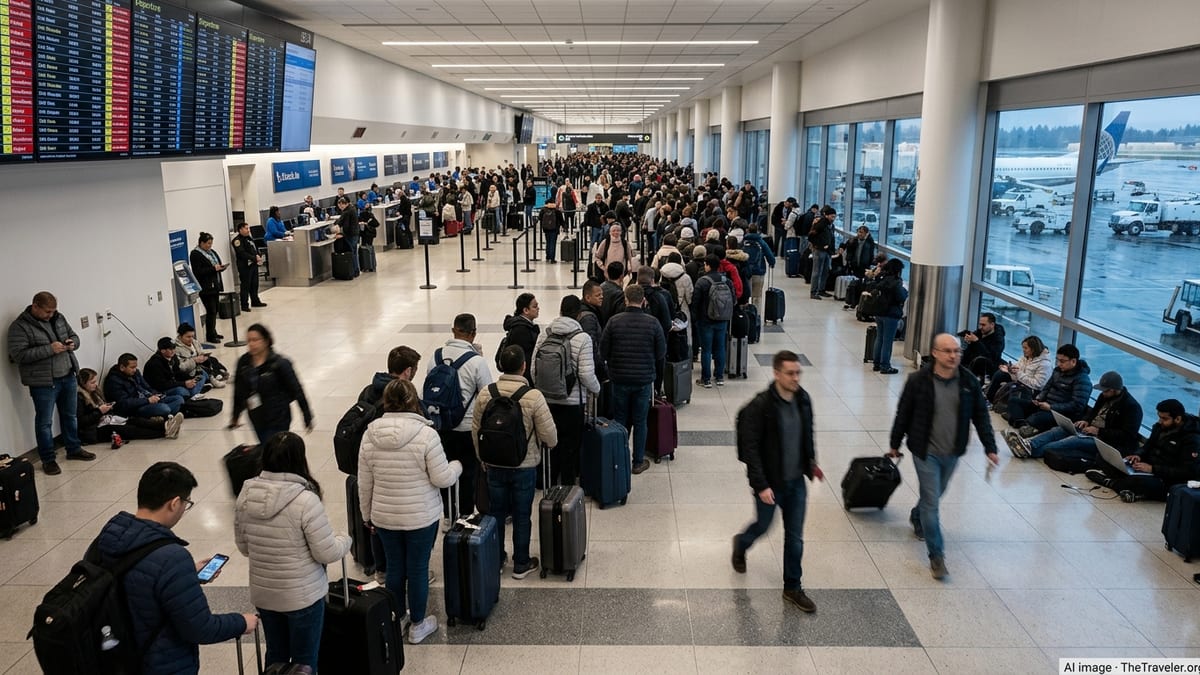
Seattle-Tacoma International Airport plunged into disarray this week as cascading cancellations and rolling delays upended travel plans on key long-haul and leisure routes to Miami, Orlando, Dubai and Manila, leaving terminals packed and passengers scrambling for scarce alternatives.
Get the latest news straight to your inbox!
Storm Fallout Meets Strained Airline Operations
The latest disruption at Seattle-Tacoma comes on the heels of a powerful March storm system that swept across large parts of the United States, triggering widespread flight delays and cancellations at multiple hubs. Publicly available meteorological summaries describe heavy snow in the Pacific Northwest and blizzard conditions further east, conditions that have repeatedly exposed how vulnerable tightly scheduled airline networks remain to severe weather.
At Seattle-Tacoma, that weather-driven stress appears to have collided with limited crew availability and equipment constraints. Recent traveler accounts describe late-night departures pushed back by hours, aircraft repeatedly sent for de-icing and planes holding on the tarmac as airlines struggled to juggle gates, crews and flight rotations. While official metrics for the current disruption are still emerging, earlier federal data already placed Seattle-Tacoma among major U.S. airports with significant accumulated passenger delay minutes.
The result is a familiar but intensified pattern: a handful of early cancellations and missed crew connections compounding across the day into a network-wide snarl. By late evening, passengers bound for far-flung destinations were finding their itineraries in tatters, particularly on routes that depend on a single daily departure from Seattle to connect them onward.
Long-Haul Link to Dubai Under Mounting Pressure
Among the hardest-hit services is the non-stop link between Seattle and Dubai, a key gateway for travelers heading to South Asia, Africa and the Middle East. Publicly available information on recent operations indicates repeated cancellations on the route over the past two weeks, forcing passengers onto multi-stop itineraries through alternative hubs or leaving them in Seattle for days at a time.
Online flight-tracking discussions and passenger forums show a patchwork pattern of Dubai services operating, then abruptly disappearing from schedules as conditions in both North America and the Gulf shift. In some cases, travelers report being rebooked multiple times from early March dates to later departures, only to see those replacement flights also canceled at short notice.
Further complicating matters, disruptions in Dubai airspace and changing operational constraints in the region have added a second layer of uncertainty on top of the Seattle storm fallout. For travelers hoping to rely on the Seattle–Dubai non-stop to reach onward destinations, the combination has turned a normally straightforward 14-hour flight into an unpredictable gamble involving last-minute reroutes through Europe or other U.S. gateways.
Transpacific Turmoil for Manila-Bound Travelers
Travelers connecting between Seattle and Manila are facing similar turbulence. Seattle-Tacoma functions as a major West Coast launching point for transpacific traffic, and publicly available schedule data shows that Manila services rely heavily on specific long-haul aircraft and tightly timed banked connections. When storms or staffing issues disrupt those banks, there are few backup options.
Reports from recent days suggest that some Manila-bound passengers have been forced into unexpected overnight stays in Seattle or other U.S. cities, or into circuitous routings via Honolulu, Tokyo or other Asian hubs. With many flights operating close to capacity during the late-winter travel period, rebooking options are limited, and seats on alternative services disappear quickly once a cancellation hits the screens.
Compounding the challenge, Seattle’s role as a consolidation point for regional feeder flights means delays on short-haul routes can easily cause passengers to misconnect to the single daily transpacific departure. When that happens, travelers often have to wait 24 hours or more for the next opportunity, further intensifying congestion in customer service lines and at rebooking counters across the terminal.
Leisure Corridors to Miami and Orlando Gridlocked
While the most dramatic stories may involve ultra-long-haul flights, the disruption has also battered Seattle’s high-demand leisure corridors to Florida. Publicly available airline network information underscores the importance of routes from Seattle to Miami and Orlando, especially during late winter when travelers from the Pacific Northwest flock to warmer destinations.
In recent days, personal accounts from affected passengers describe a churn of rolling delays, gate changes and same-day cancellations on these routes, often linked to aircraft and crews arriving late from other storm-hit parts of the country. Because many Seattle–Florida services operate just once or twice daily per carrier, a single cancellation can push hundreds of travelers into an already overloaded rebooking pool.
The knock-on effect stretches beyond Seattle. When a Seattle–Miami or Seattle–Orlando flight fails to depart on time, it can disrupt return services and connecting itineraries for travelers trying to link Florida with the Pacific Northwest or Alaska. As a result, what begins as a regional weather issue in Washington state quickly propagates along the entire north–south corridor.
Terminal Crowding, Frayed Nerves and Limited Alternatives
Inside Seattle-Tacoma’s terminals, the operational challenges are translating into long security lines, crowded concourses and visibly frayed tempers. Recent first-hand accounts shared on public forums reference passengers camping out overnight near gates, extended waits for information at service desks and confusion as multiple flight-tracking platforms list conflicting departure times.
Seattle-Tacoma’s transport links offer some relief for those who can postpone or abandon their trips. The airport is connected to central Seattle and the region by Link light rail, giving stranded travelers a relatively reliable way to return to the city or seek hotel accommodation when flights are delayed or canceled. However, with so many itineraries unraveling simultaneously, available rooms near the airport and downtown have become more difficult to secure at short notice.
For now, publicly available information suggests that operations are slowly stabilizing as the March storm system moves out and airlines work to reset their schedules. Yet the experience at Seattle-Tacoma this week underscores how quickly a combination of severe weather, crew shortages and international airspace disruptions can turn a routine departure day into a nightmare for travelers trying to reach Miami, Orlando, Dubai and Manila via a single, overburdened hub.