

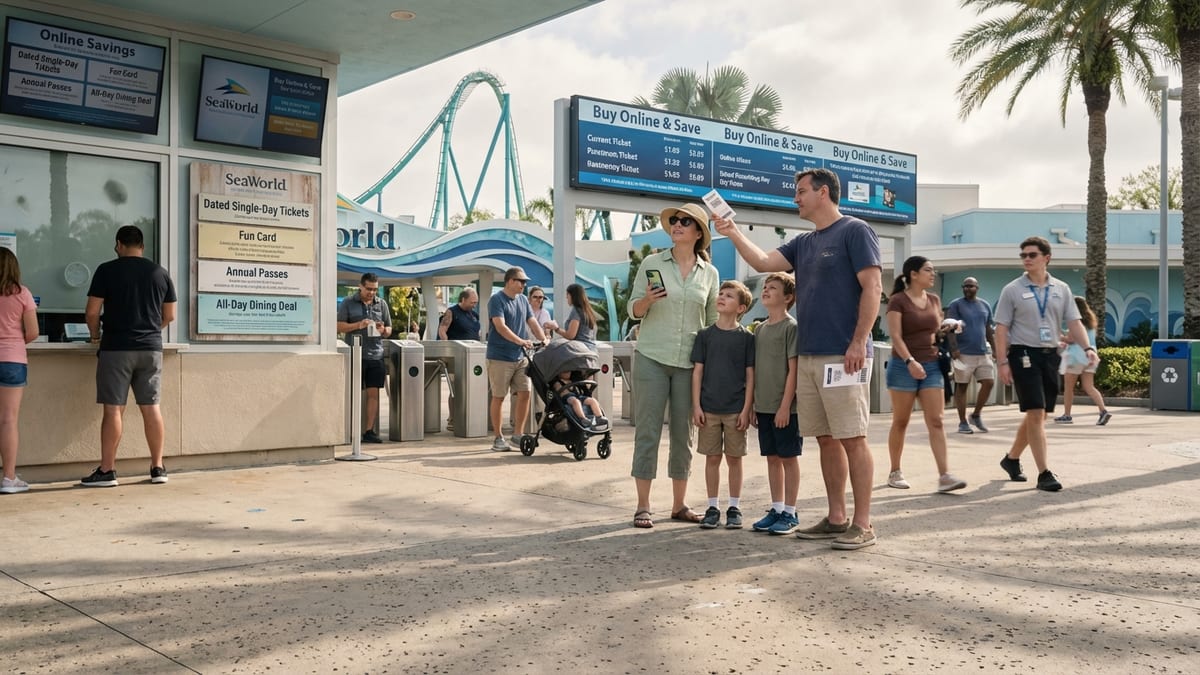
Planning a visit to SeaWorld Orlando starts long before you walk through the turnstiles. With a maze of ticket types, limited-time offers, dining upgrades and front-of-line passes, it is easy to overpay or overlook a deal that would have made your day much smoother. This guide breaks down current SeaWorld Orlando ticket options, typical prices, money-saving deals and the most popular add-ons so you can build the right package for your budget and travel style.
Understanding the Main SeaWorld Orlando Ticket Types
SeaWorld Orlando sells several core admission products: single-day tickets, multi-park and multi-day tickets, Fun Cards and annual passes. Each serves a different type of traveler, from one-time visitors to Orlando to locals who visit several times a year. The right choice depends on how long you will be in town, whether you want to visit the water park Aquatica Orlando, and how flexible your dates are.
The base product for most travelers is the dated single-day ticket. When bought in advance online, these tickets are dynamically priced by day, with lower rates on off-peak weekdays and higher prices during holidays, summer and major school breaks. Recently, SeaWorld has been promoting limited-time online offers advertising single-day tickets starting around the mid 60 dollar range on the lowest-demand dates, compared with gate prices that can climb well above 140 dollars. Committing to a specific visit date nearly always produces a lower price than buying at the gate.
Alongside dated tickets, SeaWorld typically sells flexible options that allow you to pick your day later or bundle more than one park. Two-park and three-park tickets that include SeaWorld Orlando, Aquatica Orlando and either Busch Gardens Tampa Bay or Adventure Island are often priced only modestly higher than a single-park ticket, especially in sale periods. For visitors planning a broader Central Florida theme park itinerary, these bundles can significantly cut the cost per park day when compared to buying admission separately.
For guests who want repeated visits within the same year but are not ready to commit to a full annual pass, the SeaWorld Orlando Fun Card is a popular middle ground. It is marketed as pay for a day, come back all year, giving you unlimited regular admission through the end of the calendar year, subject to posted blockout dates. Fun Cards usually do not include free parking, discounts or special event access, which are reserved for annual pass holders, but can still represent strong value for guests planning at least two or three visits.
What You Can Expect to Pay: Current Ticket Pricing Snapshot
Exact ticket prices at SeaWorld Orlando change frequently because of dynamic pricing and seasonal promotions, but it is helpful to understand the general cost range you are likely to see when planning a 2026 visit. As of mid-January 2026, limited-time online offers for a SeaWorld Orlando single-day ticket have been advertised from about 65 to 80 dollars plus tax on the lowest-demand dates, with higher pricing on peak days and same-day purchases. This is significantly below the published maximum gate rate, which can top 140 dollars for a walk-up single-day ticket.
Discounted bundles have become a major focus of SeaWorld ticketing strategy. Value packages that combine park admission with the All-Day Dining Deal are currently marketed from roughly 110 dollars for a basic ticket plus dining, up to around 150 dollars or more for premium bundles that may also include extras such as front-of-line access or reserved seating. When purchased separately, the All-Day Dining Deal starts at about 59.99 dollars for adults and 29.99 dollars for children ages 3 to 9, so folding it into a ticket can create measurable savings if you plan to rely heavily on in-park meals.
The 2026 Fun Card is positioned as an attractive alternative for anyone who might visit more than once within the year. Current corporate and online offers list a SeaWorld Orlando Fun Card at around 129.99 dollars per person, with a separate price for Aquatica-only cards. The card allows unlimited visits through December 31, 2026, but carries a list of blockout dates that include popular spring break Saturdays in March, select dates in April, the July 4 period, several Saturdays in summer and key holiday dates in October and late December. Guests who need more flexibility, especially on holidays, often step up to an annual pass instead.
Annual passes are structured in tiers, commonly labeled Bronze, Silver, Gold and Platinum, with prices quoted either as a total annual cost or as a monthly payment under an automatic renewal plan. For example, recent offers for a Bronze Pass have started around 171 dollars per year, or roughly 14 to 15 dollars per month, while a Gold Pass has been promoted from about 231 dollars per year or just over 19 dollars per month. Higher-tier passes add benefits such as free or preferred parking, larger in-park discounts, guest tickets and better access to seasonal events, which can offset the additional cost for frequent visitors.
When a Simple Single-Day Ticket Makes the Most Sense
Despite the growing menu of bundles and passes, the dated single-day ticket still makes the most sense for many travelers. If you are planning one focused day at SeaWorld Orlando as part of a broader Florida vacation dominated by other attractions, a straightforward day ticket keeps your spending contained and your planning relatively simple. You avoid blockout dates, monthly billing commitments and the fine print that can come with passes and Fun Cards.
The key strategy for single-day buyers is to purchase online in advance and be flexible about dates when possible. Dynamic pricing means that a weekday visit in late January or early May is often markedly cheaper than a Saturday during spring break or around major holidays. If your travel dates are not fully set, try checking SeaWorld’s calendar to gauge pricing variations and, if possible, arrange your SeaWorld day on a lower-cost date. For families of four or more, even a modest difference in daily price can translate into serious savings.
Another argument for a pure admission ticket is if you prefer to explore the park at a leisurely pace without add-ons and are comfortable paying as you go for food. While value bundles with dining can be a good deal for big eaters, light grazers and those who plan to return to their hotel or off-site restaurants for meals may come out ahead by skipping the extras. In that case, channel any ticket savings into smaller optional upgrades inside the park, such as an occasional animal experience or a single reserved show seating purchase.
Travelers who are uncertain about their final group size or are waiting on friends or relatives to confirm can also benefit from starting with flexible single-day tickets. Because some discounts and bundle offers are capacity controlled or limited-time, locking in a low rate for the guests you know are coming can be smart, then adding any last-minute travelers at prevailing rates as plans solidify.
Fun Cards vs Annual Passes: Which Is Better Value?
Once you move beyond a one-off visit, the real choice at SeaWorld Orlando is usually between a Fun Card and an annual pass. At first glance the Fun Card seems like a bargain: pay about the cost of a single busy-day ticket, then come back all year. For families who live within driving distance, or repeat visitors who know they will be back later in the year, the appeal is obvious. However, the card’s limitations are important. It excludes key high-demand days, does not provide free parking and typically does not include in-park discounts or special event admission.
The blockout dates alone can tip the scales. In 2026, SeaWorld Orlando Fun Cards list multiple Saturdays in March and July and a series of Halloween and Christmas season days among their blockouts. If those are precisely the times you prefer to visit due to school holidays or vacation time, you may find yourself forced either to skip the park on those days or to buy separate admission, undermining the card’s value. For Orlando locals who can easily drop in on non-blockout weekdays, this may not be a major issue, but for out-of-town families it can be a serious constraint.
Annual passes, by contrast, are designed to remove friction. Even the entry-level Bronze Pass adds benefits such as some in-park discounts and access to more dates than a typical Fun Card, while mid-tier and top-tier passes offer parking included, larger merchandise and food discounts, and occasionally free or discounted guest tickets. For a family that will visit several times through the year and typically drives to the park, the savings from free parking alone can offset much of the difference in price between a Fun Card and a pass.
Choosing between the two products comes down to honesty about your expected use. If you are fairly sure you will visit two or three times on non-peak dates and you are content to pay for parking and items at full price, the Fun Card can be a cost-effective option. If you plan to visit frequently, want the freedom to drop in on holidays or weekends, or expect to spend significantly on food and souvenirs, a pass often delivers better long-term value. In many cases, setting up a monthly payment plan for a mid-tier pass can bring your ongoing cost close to what you would have spent on admission alone for several standalone visits.
Key Add-Ons: Dining Deals, Quick Queue and Reserved Experiences
SeaWorld Orlando’s most talked-about add-on is the All-Day Dining Deal. Priced from 59.99 dollars for adults and 29.99 dollars for children 3 to 9, it allows you to eat and drink at participating restaurants once every 90 minutes throughout the day. Each adult redemption includes one entrée, one side or dessert and one soft drink or iced tea, while children receive a kid’s meal. Guests wear a wristband and simply present it at the counter to redeem their next meal period. For big eaters or families who appreciate predictable budgeting, this can effectively convert your SeaWorld day into an all you care to eat experience.
To get maximum value from All-Day Dining, you need to be realistic about your eating habits and your touring style. If you typically eat a light breakfast, lunch and dinner, plus a couple of snacks, the deal can easily pay for itself, especially given theme park entrée prices. If you tend to eat one substantial meal a day and rely on quick snacks the rest of the time, you may come out ahead paying out of pocket. Another consideration is time: because you can only redeem once every 90 minutes, you will want to plan your route to swing by participating locations as you move between shows and attractions rather than detouring repeatedly just to use the benefit.
Beyond dining, the other headline add-on is Quick Queue, SeaWorld’s line-skipping product. Although specific prices vary by date and by whether you choose limited or unlimited access, these passes are commonly sold as part of premium ticket bundles or as standalone upgrades. A Quick Queue product typically allows you to bypass the regular line at major attractions via a dedicated entrance, reducing your wait time. On peak days, this can make the difference between riding a marquee coaster once and enjoying several laps on your favorites.
SeaWorld Orlando also markets a spectrum of reserved experiences, from show seating upgrades to behind-the-scenes animal encounters. Reserved show seating for popular productions helps you avoid long pre-show waits and guarantees a spot without arriving excessively early, which can be valuable on crowded days. Animal tours, such as visits with dolphins, penguins or sea lions, are separately ticketed and capacity-controlled, with prices that vary by season. If you are passionate about marine life, budgeting for one signature experience rather than several smaller add-ons often creates a more memorable day.
How to Find the Best Deals, Discounts and Bundles
SeaWorld Orlando heavily promotes time-limited ticket deals throughout the year, especially ahead of major travel seasons. In the months leading into spring break, summer and the year-end holidays, it is common to see campaigns offering significant discounts on dated tickets, bundle packages that include food or parking, or special products like a Fun Card that includes the rest of the current year plus the following season. Checking for these limited-time offers before you lock in your plans is one of the easiest ways to save.
Another key tactic is to buy directly and early. While third-party sellers occasionally advertise discounted SeaWorld tickets, the deepest current promotions are often found on SeaWorld’s own website, especially for residents of the United States, Puerto Rico and Canada. Purchasing at least several days in advance usually unlocks better pricing than same-day online buys or gate purchases. If your travel dates are still flexible, exploring SeaWorld’s ticket calendar can reveal dramatically lower prices on shoulder-season weekdays compared with Saturdays or major holidays.
Travelers tied to a specific employer or membership program may also access corporate or partner offers. SeaWorld periodically runs corporate Fun Card promotions for companies in the Orlando area, as well as discounted tickets through assorted benefit portals. While these deals are not universal and may require logging in through your employer or membership site, they can reduce the per-person cost enough to matter for larger families. It is worth checking any workplace or association benefits you have well before purchasing at full advertised rates.
Finally, consider the impact of parking and in-park spending when evaluating the true cost of a deal. A bundle that appears more expensive upfront but includes free parking and dining may ultimately undercut a cheaper ticket when you add a day of parking fees and meals. Conversely, a deep-discount ticket without add-ons can be ideal if you plan to rely on off-site dining and are staying within walking or rideshare distance. Running a rough budget for your planned day, including likely food, souvenirs and experiences, can quickly reveal which ticket structure delivers the best net value for your group.
Planning Your Day Around What Your Ticket Includes
Once you have chosen a ticket type and any add-ons, it pays to structure your SeaWorld Orlando day around those inclusions. Guests with All-Day Dining should familiarize themselves with the participating restaurants and their locations, then sketch a loose route that weaves meal stops naturally into their touring pattern. For example, you might start with coasters near the front of the park, then swing by a participating restaurant for an early lunch, catch a mid-afternoon show with a snack break afterward, and finish with dinner near your final evening attraction.
If you have invested in Quick Queue or a premium ticket bundle that includes line-skipping privileges, prioritize the most in-demand rides early in the day, when lines are shortest, and save multiple re-rides for the busier afternoon. This approach lets you experience the attractions you care about even if system capacity fluctuates. Make sure to verify which attractions your version of Quick Queue covers, as line-skipping may not apply to every ride in the park.
Fun Card and pass holders, meanwhile, can take a more relaxed approach, particularly if they live nearby or are in Orlando for an extended stay. Instead of attempting to do everything in a single marathon day, you can devote one visit to coasters and thrill rides, another to shows and animal habitats, and perhaps a third to seasonal festivals like the Seven Seas Food Festival or Halloween events. Spreading experiences across multiple days not only lightens the daily pace but also allows you to adjust for weather and crowds.
Regardless of your ticket type, always pay careful attention to blockout dates, park hours and event schedules published for your visit date. Some special events are included with regular admission, while others require separate tickets. Your Fun Card or pass may grant entry to certain festivals but exclude separately ticketed nighttime experiences. Checking the fine print on your ticket confirmation and verifying operating hours and event listings for your chosen date can prevent surprises at the gate.
The Takeaway
SeaWorld Orlando’s ticket lineup in 2026 is more flexible and more complex than ever, which is both a challenge and an opportunity for travelers. The challenge lies in navigating a landscape of dated tickets, Fun Cards, passes, bundles and add-ons with different prices and restrictions from one week to the next. The opportunity is that with a bit of research and timing, most visitors can find a configuration that delivers strong value for their specific travel style, whether that is a single intense park day or repeated shorter visits throughout the year.
For one-time visitors, a discounted dated single-day ticket purchased online, with or without a dining bundle, remains the simplest and often the smartest choice. Repeat guests within the same calendar year should weigh the relative merits of a Fun Card against a lower-tier annual pass, keeping a close eye on blockout dates and the hidden costs of parking and in-park spending. Heavy eaters and families aiming for predictable vacation budgets may find that All-Day Dining and certain premium bundles justify their added cost, especially on peak days.
Above all, approach your SeaWorld Orlando ticket purchase not as a last-minute chore but as an integral part of planning your day in the park. Review current offers, map out how you like to tour and eat, and consider your likelihood of returning later in the year. By matching the right ticket to the way you actually travel, you can enjoy SeaWorld’s coasters, shows and marine life with fewer financial surprises and more room in your budget for the moments that matter most.
FAQ
Q1. How much does a SeaWorld Orlando ticket cost in 2026?
As of early 2026, limited-time online offers for dated single-day tickets to SeaWorld Orlando typically start in the mid 60 to upper 70 dollar range on low-demand days, with higher pricing during peak seasons and at the gate. Exact prices vary by date because SeaWorld uses dynamic pricing, so you will need to check your specific visit day to see the current rate.
Q2. Is it cheaper to buy SeaWorld Orlando tickets online or at the gate?
In most cases it is cheaper to buy SeaWorld Orlando tickets online in advance than to purchase at the gate. Online prices often reflect limited-time promotions and date-based discounts that can significantly undercut the maximum walk-up rate, especially on less busy days. Buying at the gate is convenient but usually the most expensive option.
Q3. What is the difference between a Fun Card and an annual pass?
A SeaWorld Orlando Fun Card gives you unlimited regular admission through the end of the calendar year, but it has blockout dates and usually does not include free parking, in-park discounts or special event admission. An annual pass costs more but adds benefits such as parking, food and merchandise discounts, and broader access throughout the year, with fewer or no blockouts depending on the pass tier.
Q4. Is the All-Day Dining Deal worth it?
The All-Day Dining Deal can be worth it if you plan to eat most of your meals in the park and are comfortable sitting down or ordering food every 90 minutes or so. Adults receive an entrée, side or dessert and a drink at each redemption, and children receive a kid’s meal. If you are a light eater or expect to rely on snacks or off-site dining, you may save money by paying for food as you go instead of adding the dining plan.
Q5. Do SeaWorld Orlando tickets include parking?
Standard SeaWorld Orlando tickets, including single-day admission and Fun Cards, do not include parking. Parking is a separate charge at the gate. Many annual pass tiers include free or discounted parking, which can significantly reduce costs for frequent visitors who drive to the park.
Q6. Can I upgrade my SeaWorld Orlando ticket to a Fun Card or annual pass?
SeaWorld often allows guests to apply the value of an unused or partially used single-day ticket toward the purchase of a Fun Card or annual pass, as long as you upgrade on the day of your visit or within a specified window. Policies can change, so it is important to ask Guest Services at the park or review the current upgrade terms before assuming your ticket is eligible.
Q7. Are there special discounts for Florida residents at SeaWorld Orlando?
SeaWorld Orlando frequently offers special pricing for Florida residents, including discounts on single-day tickets, Fun Cards and annual passes. These offers may require proof of residency at purchase or at the park entrance. Because the details change throughout the year, residents should check current SeaWorld promotions before buying.
Q8. What is Quick Queue and do I need it?
Quick Queue is SeaWorld Orlando’s line-skipping service that allows you to use a dedicated entrance on select attractions, reducing your wait time. It is most valuable on peak days, such as holidays and busy weekends, or if you have limited time in the park and want to experience as many major rides as possible. On quieter weekdays, many guests are comfortable skipping this add-on.
Q9. Are SeaWorld Orlando special events included with my ticket?
Many of SeaWorld Orlando’s seasonal festivals, such as food events and certain holiday celebrations, are included with regular park admission. However, some nighttime events or premium experiences require separate tickets. Whether your Fun Card or pass includes specific events depends on the product’s terms, so you should review the details for your chosen ticket or pass and check the event description for any separate admission requirements.
Q10. How far in advance should I buy SeaWorld Orlando tickets?
Buying SeaWorld Orlando tickets at least several days to a few weeks in advance is usually enough to secure the better online pricing for most dates. If you are traveling during a major holiday period or school vacation, it is wise to purchase as soon as your plans are firm, both to lock in a lower price and to ensure availability for any limited-capacity add-ons, such as special tours or reserved experiences.