

More news on this day
A Southwest Airlines flight from Nashville to Fort Lauderdale made an unscheduled landing in Atlanta on Friday night after a suspected onboard security situation led the crew to divert the aircraft and law enforcement to remove a passenger.
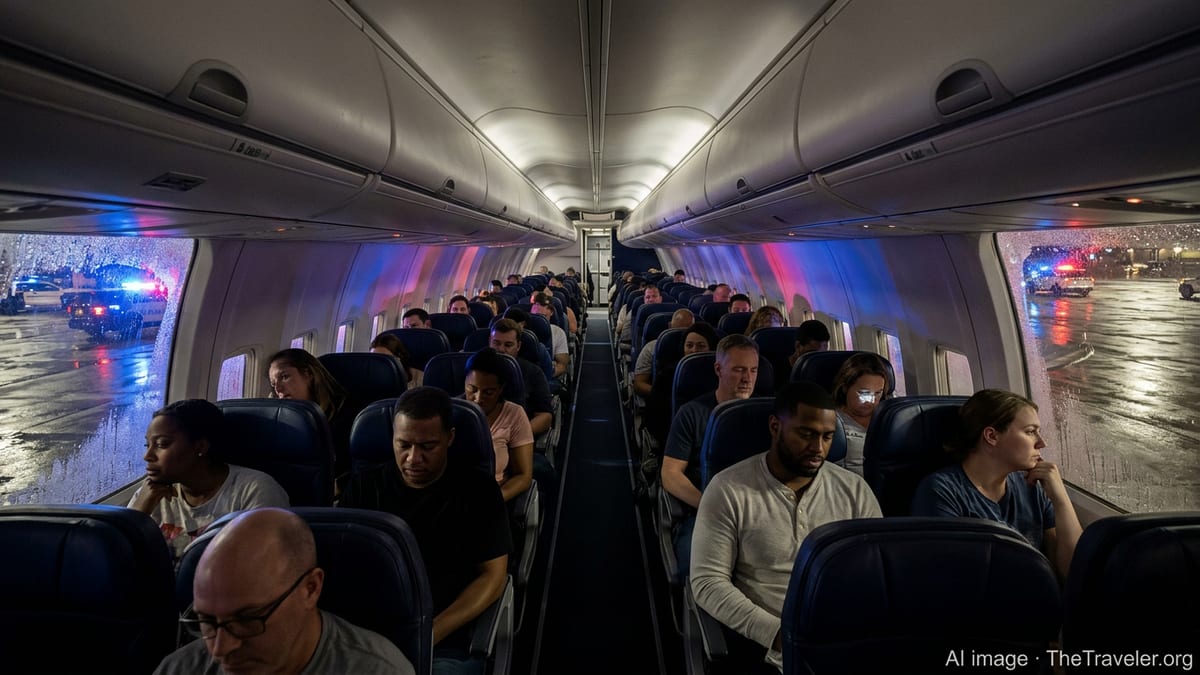
Flight 2094 Diverted After Reported Security Concern
Southwest Airlines Flight 2094 departed Nashville International Airport on Friday evening, bound for Fort Lauderdale, but was rerouted to Hartsfield-Jackson Atlanta International Airport following what the airline described as a possible security matter involving a passenger.
The Boeing 737 landed safely in Atlanta at around 9 p.m. local time, according to flight-tracking data and statements from the airline. Atlanta police boarded the aircraft and escorted one passenger off the plane while the rest of the travelers remained in their seats.
Videos and passenger accounts shared on social media described tense moments in the cabin as crew members prepared for the diversion and instructed travelers to keep their hands visible. While officials have not detailed the precise nature of the alleged threat, the airline confirmed that the diversion was made out of an abundance of caution.
In a statement, Southwest said it appreciated the professionalism of the crew and apologized to customers for the disruption and overnight delay, reiterating that the safety of passengers and employees is its highest priority.
Law Enforcement Response Finds No Credible Threat
Upon arrival in Atlanta, local police and federal authorities met Flight 2094 on a remote part of the airfield, a standard procedure when crews report a potential security issue on board. The passenger at the center of the incident was detained and questioned as the rest of the aircraft remained secured.
The Federal Bureau of Investigation later said that an investigation determined there was no credible threat linked to the individual removed from the flight. Officials confirmed that no dangerous devices or materials were found and that no one on board was injured.
Authorities said no charges would be filed following the interviews and preliminary review of the incident. The lack of a prosecutable offense underscores the fine line crews and security officials walk when deciding how to respond to perceived risks in flight.
Even when a threat ultimately proves unfounded, aviation security protocols call for rapid and visible intervention, including diversions and law-enforcement boardings, whenever the possibility of danger cannot be quickly ruled out while airborne.
Long Night for Passengers as Storms Compound Delays
For passengers on Flight 2094, the security scare translated into a long and exhausting travel ordeal. After the aircraft was cleared and the detained passenger removed, Southwest arranged for another plane to carry the remaining travelers from Atlanta to Fort Lauderdale.
Severe weather and congestion at Hartsfield-Jackson added further delays, leaving the group to wait in Atlanta late into the night before they could resume their journey. The replacement flight ultimately reached Fort Lauderdale in the early hours of Saturday, with passengers arriving just before 3:30 a.m.
Some travelers described the experience as unnerving but expressed relief at the measured, if disruptive, response. Others voiced frustration at the lack of detailed information during the incident and the long overnight delay, highlighting the communication challenges airlines face when security-sensitive events unfold in real time.
Southwest said it has reached out to affected customers to apologize and indicated that standard compensation and rebooking options were offered in line with the extended disruption.
Security Protocols Under Scrutiny Amid Heightened Anxiety
The diversion of the Nashville to Fort Lauderdale flight comes at a time when anxiety about in-flight incidents is already elevated among many travelers. Recent viral videos of disruptive passengers, emergency landings and tense cabin announcements have fueled concern about what can happen at 30,000 feet.
Aviation security experts note that airlines and crews are trained to treat any ambiguous or potentially threatening behavior with caution. When questions arise about a passenger or a reported comment on board, diverting to the nearest suitable airport and requesting law-enforcement support is a well-established playbook.
In practice, that can mean entire flights are disrupted even when later investigations determine there was no genuine threat. Officials argue that erring on the side of caution is essential in a post-9/11 security environment, where the cost of underestimating a risk mid-flight can be catastrophic.
For airlines like Southwest, each diversion also becomes a customer-service test. How carriers communicate, care for passengers during lengthy delays and explain why drastic actions were taken often shapes traveler perceptions long after an incident is declared safe.
What Travelers Can Expect After a Mid-Flight Diversion
Incidents such as the diversion of Flight 2094 offer a window into how airlines and airports handle suspected security issues in the air. When a crew reports a concern, air traffic controllers work to bring the aircraft to an airport with robust law-enforcement and emergency response capabilities, as Atlanta provides for the southeastern United States.
Upon landing, passengers can expect to remain seated while officers board, assess the situation and remove any individual deemed a potential risk. Bags may be re-screened, interviews conducted and, in some cases, passengers may need to deplane away from regular gates so authorities can manage the situation without disrupting other operations.
Once cleared, airlines typically arrange onward travel on the same or a different aircraft and may provide hotel or meal vouchers depending on the length and circumstances of the delay. While unnerving, these procedures are designed to prioritize safety first, then restore the disrupted journey as quickly and calmly as possible.
For those aboard the Nashville-to-Fort Lauderdale flight, the incident ended with a lengthy but otherwise uneventful continuation to South Florida and confirmation from investigators that no credible threat ever materialized, a reminder that in modern air travel, precaution can sometimes look like drama from a passenger seat.