

More news on this day
An Emirates flight from Kochi to Dubai was forced to abandon its journey and return to Kerala after a sudden security shutdown at Dubai International Airport, as escalating tensions in West Asia once again disrupted air traffic across one of the world’s busiest aviation corridors.
Get the latest news straight to your inbox!
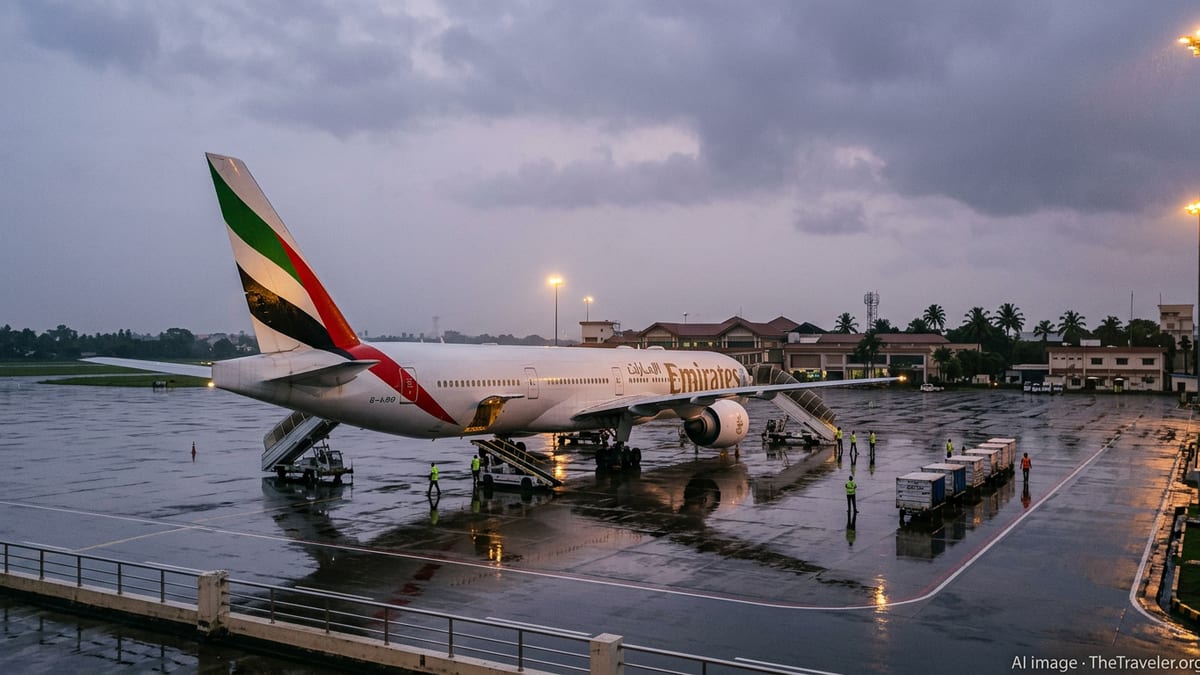
Flight Turned Back Mid-Journey After Dubai Closure
Emirates flight EK 533, operating from Kochi to Dubai, was redirected back to Cochin International Airport when Dubai International Airport temporarily closed because of a fresh security incident linked to ongoing regional tensions. Publicly available tracking data and regional media reports indicate that the aircraft departed on schedule before being instructed to abandon its approach to Dubai and return to India.
The unscheduled return extended the journey by several hours and left passengers facing renewed uncertainty at a time when travel to and through the Gulf has already been heavily disrupted. Social media posts from travelers and aviation enthusiasts described the aircraft circling before diverting back toward the Indian coast, consistent with procedures followed during sudden airspace or airport closures.
The incident comes at a moment when the United Arab Emirates is managing repeated security risks connected to the wider conflict in West Asia, where missile and drone activity has periodically affected civil aviation. Previous disruptions have already forced airlines across the region to reroute or cancel flights, particularly those transiting major hubs such as Dubai.
West Asia Security Tensions Spill Into Civil Aviation
According to widely reported updates on the regional situation, the latest disruption at Dubai International Airport is part of a broader pattern of security flare-ups linked to strikes and counterstrikes involving Iran and several Gulf states. In recent weeks, airspace closures and intermittent restrictions have affected the United Arab Emirates, Qatar, and neighboring countries, complicating route planning for airlines and placing additional strain on airports used as global transit points.
Dubai International Airport is a critical node for East–West connectivity, handling tens of millions of passengers annually and serving as Emirates’ home base. Even short closures can trigger a cascade of delays, diversions, and cancellations across multiple continents, as aircraft and crew become out of position and connecting itineraries unravel.
Reports indicate that recent security incidents in the UAE have included attacks and interceptions involving drones and missiles, with debris on occasion landing near civilian infrastructure and transport hubs. While civil aviation authorities and defense systems in the region have sought to keep air corridors open wherever possible, the priority has shifted repeatedly toward temporary shutdowns and highly restricted operations when risks increase.
Impact on Passengers and Operations in Kochi
For travelers aboard EK 533, the sudden return to Kochi meant not only the loss of a flight segment but also widespread disruption to onward journeys. Many passengers on Emirates flights from India connect in Dubai to long-haul services bound for Europe, North America, and Africa, meaning that a single flight interruption can displace an entire chain of connections.
Ground staff at Cochin International Airport were left to manage the arrival of a full long-haul service back at its origin point, including passenger care, baggage handling, and the complex task of rebooking itineraries that depended on Dubai as a transfer hub. Publicly available information from travel advisories and airline statements in recent days has consistently urged passengers not to proceed to airports in the region without confirmed, active bookings.
The Kerala–Gulf corridor is particularly sensitive to such interruptions. Large expatriate communities from the state live and work in the UAE and other Gulf countries, and regular flights between Kochi, Kozhikode, Thiruvananthapuram, and Gulf hubs such as Dubai and Abu Dhabi form a vital travel and economic lifeline. Each extended disruption adds financial and emotional pressure for travelers commuting for work, family emergencies, or medical needs.
Broader Disruptions for Emirates and Regional Carriers
The diversion of EK 533 forms part of a wider pattern of irregular operations for Emirates as the airline navigates fluctuating security conditions in West Asia. Recent operational updates and industry coverage show that Emirates has already implemented large-scale schedule reductions and repatriation-style flights on certain days, prioritizing stranded passengers and essential travel while suspending or limiting regular services.
Other Gulf and Asian carriers with major operations through Dubai and nearby hubs have adopted similar measures, including cancellations, rerouting through alternative airports, or using different timings to avoid higher-risk windows. Airline scheduling teams are working with compressed planning horizons, revising flying programs day by day as airspace permissions and security assessments evolve.
These conditions have placed additional pressure on crew scheduling, aircraft maintenance cycles, and airport resources. At Dubai International Airport, reduced throughput and irregular arrival waves have altered terminal crowding patterns, while in origin cities such as Kochi, airports must repeatedly accommodate aircraft and passengers returning unexpectedly after aborted flights.
What Travelers Should Know Before Flying via Dubai
For travelers with upcoming journeys through Dubai or other West Asian hubs, publicly available guidance from airlines and airports strongly emphasizes preparation and flexibility. Passengers are advised to monitor airline apps and official communication channels closely, as flight statuses can change rapidly in response to new security assessments or airspace notices.
Travel industry advisories recommend against heading to the airport without a clearly confirmed and active flight status, given the risk of last-minute cancellations and limited capacity on alternative services. Travelers are also being encouraged to keep contact details updated in their bookings so that airlines can issue timely notifications about rebooking options, schedule changes, or refunds.
For those flying from Indian cities like Kochi, it may be prudent to allow extra contingency time in travel plans and to ensure that accommodation and essential needs can be covered in the event of unexpected delays. As the situation in West Asia remains fluid, further disruptions cannot be ruled out, and passengers connecting through Dubai should be prepared for possible schedule adjustments similar to the diversion experienced by Emirates flight EK 533.