

More news on this day
Travellers across Mexico are facing fresh disruption this week as civil unrest and ongoing security operations triggered more than a dozen flight cancellations, affecting services operated by Viva Aerobus and Air Canada on key routes linking Cancun, Monterrey, Mexico City, Montreal, Tijuana and several other cities.
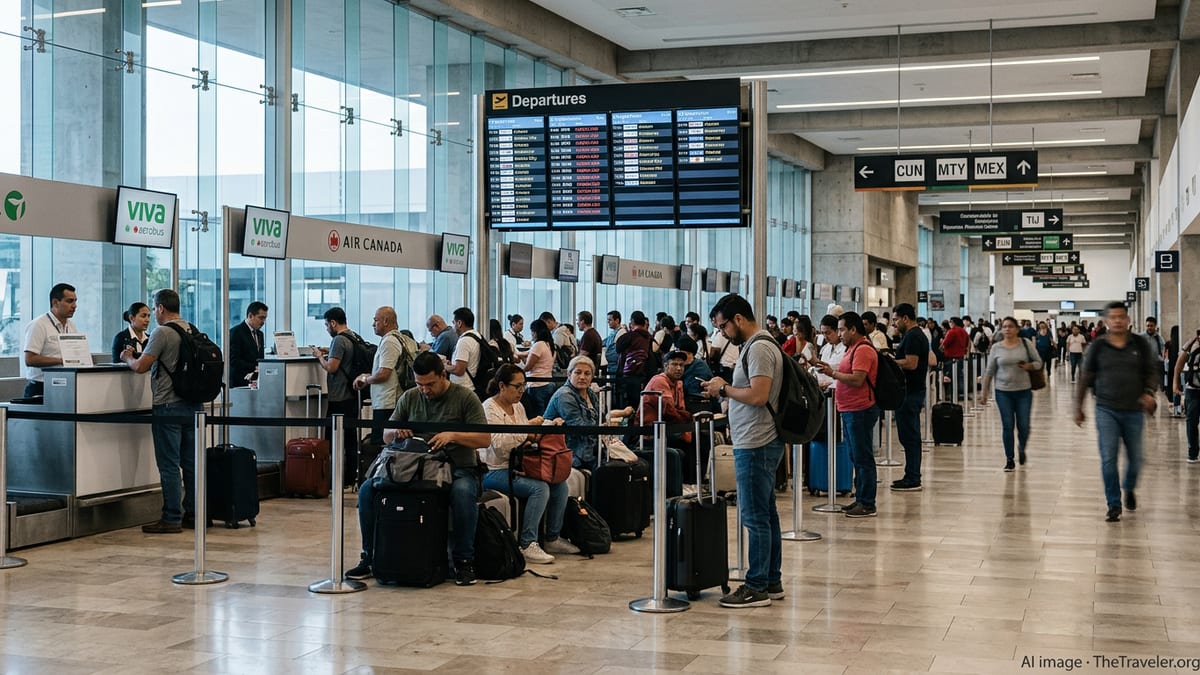
Security Operations Ripple Through Air Travel Network
The latest cancellations follow an escalation of security operations in multiple Mexican states in late February 2026, which have already prompted roadblocks, sporadic violence and temporary travel warnings. Authorities and diplomatic missions have cautioned that highway closures and checkpoints can slow access to airports or, in some cases, make it impossible for crews and passengers to reach terminals in time.
While most major airports remain technically open, airline schedules have been repeatedly adjusted as carriers respond to fast-moving conditions on the ground. That has translated into a patchwork of delays and outright cancellations rather than a uniform shutdown, leaving travellers uncertain until just hours before departure whether their flights will operate as planned.
Carriers have stressed that safety of passengers and crew remains their overriding priority, and they are coordinating closely with local and federal officials. However, the combination of road disruptions and heightened security has strained operations, particularly on dense domestic corridors that feed resort destinations and cross-border routes.
Industry analysts note that Mexico’s aviation network is highly interconnected, so disruptions on one part of the system can quickly cascade, especially for low cost carriers that rely on tight aircraft rotations. When a single inbound flight is delayed or cancelled for security reasons, it can take several subsequent departures out of the day’s lineup.
Viva Aerobus Routes to Cancun, Monterrey and Tijuana Hit
Low cost carrier Viva Aerobus, which uses the IATA code VIV, has been among the airlines most visibly affected. The carrier operates a dense network linking Mexico City, Monterrey and Tijuana with coastal hubs such as Cancun, and relies heavily on rapid turnarounds to keep fares low.
In the past 48 hours, passengers have reported a string of cancellations involving Viva Aerobus services connecting Monterrey with Tijuana and other northern cities, as well as select flights on the busy Mexico City to Cancun corridor. Some flights to and from Acapulco, identified on airport boards with the ACA code, have also been removed from schedules as the carrier reallocates aircraft and crews.
At Guadalajara’s airport, local live updates on March 9 highlighted at least one Viva Aerobus service to Tijuana marked as cancelled while neighbouring departures to Cancun and Monterrey remained scheduled. Similar patterns of selective cancellations have emerged at other hubs, reinforcing the sense that operations can change quickly even within the same airline and airport.
Passengers on affected VIV flights report receiving short notice of changes, with some learning of cancellations only after arriving at the airport. Viva Aerobus has been offering rebooking on later flights where seats are available, but heavily used routes mean same day alternatives are not always guaranteed.
Cancun and Mexico City See Targeted Disruptions
Cancun International Airport, one of Latin America’s busiest leisure gateways, continues to handle dozens of domestic and international arrivals and departures each day. Yet alongside largely normal operations, travellers have encountered selective cancellations on routes linking the Caribbean hub with interior cities such as Monterrey and Guadalajara, particularly on lower frequency services.
Airport status boards over the weekend showed most flights operating on time, with certain services annotated as cancelled or no longer scheduled. Local media and airport operators have emphasised that the facility itself remains open and functional, but have urged passengers to monitor their specific flights closely due to rapidly shifting airline decisions.
In Mexico City, both the main Benito Juarez airport and the newer Felipe Angeles facility north of the capital continue to serve extensive Viva Aerobus and full service operations. Schedules on trunk routes to Cancun, Monterrey and Tijuana remain largely intact, but a handful of flights have been trimmed from timetables as carriers adjust capacity to match demand and navigate staffing and routing challenges created by security disruptions on the ground.
Travel advisers say this mixed picture can be confusing for visitors who see headlines about unrest yet find their own flights still listed as on time. The reality, they say, is that both airports and airlines are trying to maintain as much of the network as possible while building in more flexibility to cancel or reroute individual services on short notice.
Transborder Routes to Montreal and Beyond Affected
The knock-on effects of Mexico’s internal disruptions are also reaching international routes, particularly seasonal and leisure oriented services between Canada and Mexican beach destinations. Air Canada has confirmed adjustments to parts of its Cancun network, including flights serving Montreal, as it responds to changing security assessments and demand patterns.
In recent weeks, the carrier has already had to temporarily curtail operations to Puerto Vallarta and other Pacific coast airports at the height of the unrest, before gradually restoring capacity after consultations with Canadian and Mexican authorities. While core routes from Montreal, Toronto and Vancouver remain in place, some individual flights have been cancelled or consolidated, leaving passengers rebooked onto alternative dates or routings.
For travellers bound from Canada to Cancun and onward to cities such as Mexico City, Monterrey or Tijuana, the latest wave of cancellations adds another layer of complexity. Missed domestic connections can force last minute overnight stays in hubs or unscheduled changes to hotel bookings at final destinations.
Tour operators say they are working closely with airlines to secure protected alternatives for package holiday customers, but independent travellers who booked flights and accommodation separately are often left to negotiate rebooking or refunds on their own.
What Travellers Need to Know Now
With the situation on the ground still evolving, travel experts recommend that passengers holding tickets to or within Mexico over the coming days build extra flexibility into their plans. That includes allowing additional time to reach airports in case of roadblocks or checkpoints, and monitoring flight status repeatedly in the 24 hours before departure rather than relying solely on original confirmation emails.
Many airlines serving Mexico, including Viva Aerobus and major North American carriers, have introduced temporary waivers allowing customers to change dates or reroute without standard change fees on affected itineraries. However, fare differences may still apply, and policies can vary significantly between airlines and even between tickets on the same carrier.
Travellers are also being urged to review the fine print of their travel insurance and credit card protections. Some policies may cover trip interruption or additional hotel and transport costs when flights are cancelled due to civil unrest or security operations, while others exclude such events.
For now, Mexico’s skies remain mostly open, but the recent cluster of cancellations on routes touching Cancun, Monterrey, Mexico City, Montreal and Tijuana underlines how quickly conditions can change. For anyone planning to fly in or out of the country in the coming days, staying informed, flexible and proactive will be essential to keeping their journeys on track.