


Sedona, Arizona has moved from desert secret to global headliner, and the numbers show it. Expedia’s latest Unpack ’27 trends report highlights Sedona as one of its breakout destinations, with demand up roughly 55 percent in recent years. That surge means spectacular red rock hiking, tight trailhead parking, and rising resort rates now coexist in a compact desert town only six miles long and three miles wide. This guide brings together the latest on trail access, shuttles, passes, and lodging costs so you can see Sedona’s best side without spending your vacation stuck in traffic or circling for a parking spot.
Get the latest updates straight to your inbox!
Understanding Sedona’s New Popularity and What It Means for You
Sedona’s red rock skyline has been famous for decades, but traveler behavior has changed fast. Expedia’s Unpack ’27 travel trends report, covered by outlets such as MoneyWeek in October 2026, singled out Sedona as a destination where bookings have climbed by more than 50 percent, describing year over year growth of about 55 percent as visitors chase wellness breaks, hiking, and photogenic landscapes. That kind of demand shows up on the ground as full parking lots at sunrise, busy resort pools in shoulder season, and higher nightly rates across hotels, resorts, and vacation rentals.
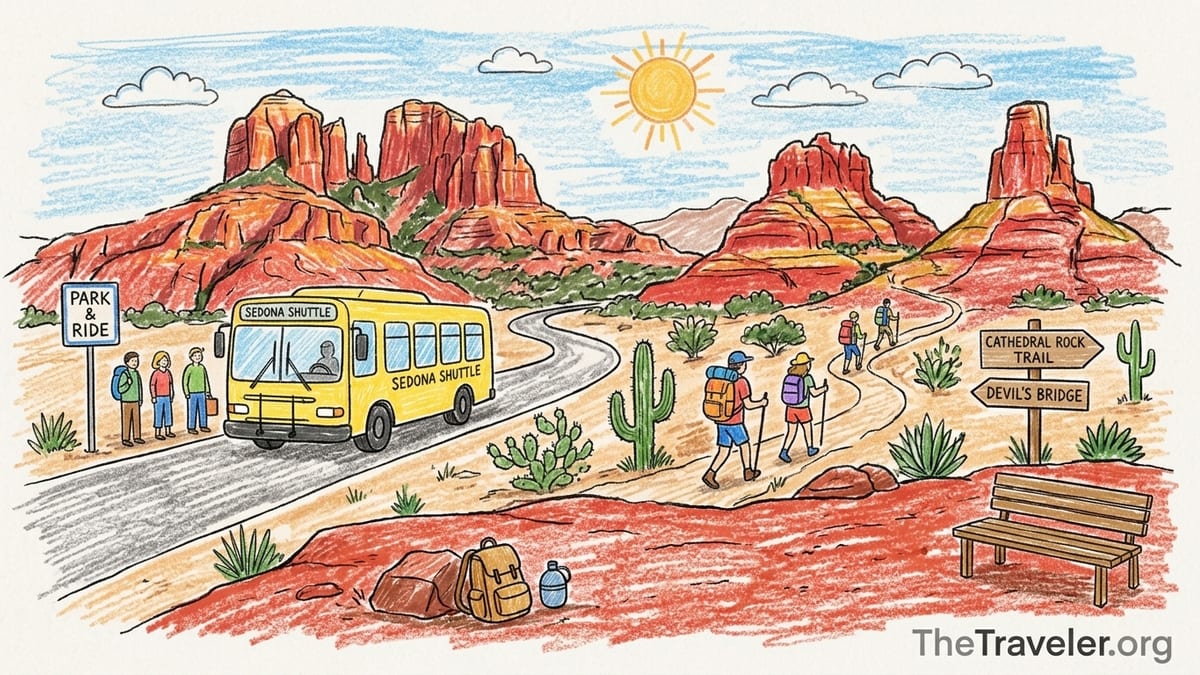
For first time visitors, the biggest shift to understand is that Sedona increasingly manages trail access like a small national park, even though the land is part of Coconino National Forest and not the National Park System. Popular trailheads such as Cathedral Rock, Soldier Pass, and Dry Creek Vista now rely heavily on a free city shuttle instead of personal vehicle parking. On busy spring break weekends, locals advise treating the village almost like a pedestrian base, using park and ride lots rather than driving to every viewpoint.
The upside of this new system is that it makes Sedona more sustainable and, when you plan ahead, easier to navigate. With the right mix of early starts, shuttle use, and alternative viewpoints, you can still find quiet stretches of slickrock, wide canyon views, and, in shoulder season, good value on rooms without sacrificing your whole budget to nightly rates and parking fees.
Trailhead Shuttles, Red Rock Passes and Current Parking Rules
The biggest practical change for hikers is the free Sedona Shuttle. According to current City of Sedona rider guides and the official shuttle site, the trailhead routes operate most of the year from Thursday through Sunday, generally from 7 a.m. to 5:30 p.m., with extra days added around spring break and some holidays. Buses run from three free park and ride lots to the Cathedral Rock, Little Horse, Soldier Pass, Dry Creek Vista, and Mescal trailheads, covering many of the town’s most in demand hikes including Devil’s Bridge and several Bell Rock connections.
When the shuttle is running, parking is heavily restricted at key trailheads. The city and Coconino National Forest state that the Cathedral Rock and Soldier Pass parking lots are closed to the general public whenever shuttle service is operating, a rule locals reinforce in online trip reports. Some hikers still arrive very early to park at Cathedral Rock before shuttle hours, but if you come mid morning on a spring weekend you should plan on using the park and ride, not driving to Back O’ Beyond Road and hoping for an open space.
A separate but related system is the Red Rock Pass, the day use parking permit managed by the Red Rock Ranger District of Coconino National Forest. The official Red Rock Pass program describes it as a day use parking pass required at a network of heavily used trailheads and picnic sites. Recent pricing information from region focused pass vendors and Forest Service documents shows day passes costing about 5 to 6 dollars per vehicle for 24 hours, with weekly and annual options also available. You can usually buy the pass at self service kiosks near popular trailheads or at local vendors such as grocery stores and visitor centers.
Some high profile areas operate outside the Red Rock Pass system. Places like Crescent Moon picnic area below Cathedral Rock, Slide Rock State Park in Oak Creek Canyon, and West Fork charge their own entry or parking fees at gates instead of accepting a Red Rock Pass. Recent traveler reports put those day use fees in the range of roughly 10 to 15 dollars per vehicle, sometimes more on peak weekends. That means a couple planning two days of hiking might buy a 5 dollar Red Rock day pass for one morning, then pay a separate state park or concessionaire fee the next day at Slide Rock or West Fork.
Signature Hikes: Cathedral Rock, Devil’s Bridge and Airport Mesa
Cathhedral Rock remains Sedona’s most famous silhouette, and the short but steep trail to its saddle points is still a priority for most hikers. The official U.S. Forest Service trail description notes that Cathedral Rock Trail 170 climbs directly up the formation from Back O’ Beyond Road, gaining several hundred feet in less than a mile through sections that feel more like scrambling than walking. With the new shuttle rules, most visitors now ride from the SR 179 park and ride to the Cathedral Rock trailhead, start before the desert sun is high, and plan to be back on the bus by mid afternoon.
On the west side of town, Dry Creek Vista serves as the main access point for Devil’s Bridge. The free trailhead shuttle stops at Dry Creek Vista, dropping hikers within a short walk of the old jeep road that leads to the famous sandstone arch. The last section climbs a series of rock steps to reach the ridge. Photographs of hikers standing on the arch have fueled social media demand, and it is common to see an informal line forming near the top as people wait patiently for their turn. Local guides and recent articles suggest arriving on one of the first morning shuttles or visiting outside spring break and major holidays if you want shorter waits.
Airport Mesa offers a very different experience, combining a short scenic drive with wide views over West Sedona. The main viewpoint sits along Airport Road just below the mesa top. According to traveler accounts and local guides, the small lower vortex parking area holds only a handful of cars and usually charges a few dollars for parking collected at a pay station or booth. When that lot fills, drivers often continue to the larger pay lot at the airport overlook on top of the mesa, which offers sweeping sunset views of Capitol Butte, Coffee Pot Rock, and the town below.
From a practical standpoint, those three sites illustrate how Sedona hiking works in 2026. Cathedral Rock is now primarily shuttle access, Devil’s Bridge requires either the shuttle or a long dusty walk down a former 4x4 track from overflow parking, and Airport Mesa demands patience for a paid parking spot at a small, scenic lot. Building your daily schedule around these patterns will save both frustration and fuel.
Quieter Trails and Alternatives to Crowded Viewpoints
As Sedona’s most recognizable spots fill up, experienced visitors increasingly recommend less obvious viewpoints that still deliver red rock drama. Residents posting recent itineraries point to the Airport Loop and Sedona View Trail as notable alternatives. Both start near the airport and circle or traverse the mesa edge, offering nearly continuous views with far fewer people than the main vortex pullout below. Parking is still paid near the overlook, but once you are on the loop, crowds thin out quickly.
West Sedona neighborhood trailheads such as Teacup, Sugarloaf, and Thunder Mountain also see lighter traffic. One traveler who stayed in a small one bedroom Airbnb in West Sedona in 2026 described walking from their rental to the Teacup trailhead with morning coffee, heading out around sunrise and encountering only a handful of other hikers on weekdays. These routes weave beneath Coffee Pot Rock and other buttes, offering classic Sedona backdrops without the shuttle logistics or long lines for a single rock feature.
For sunset, locals often steer visitors away from the predictable chaos at airport vortex or crowded pullouts along SR 179. Instead, they mention Red Rock Loop Road to the southwest of town and Schnebly Hill Road east of the Tlaquepaque arts and dining district. Trip reports from 2026 highlight pullouts and trailheads along these dirt and paved roads where visitors watched the cliffs ignite in evening light with only a few other cars around. There may be small parking or access fees at certain points, but pressure remains lower than at the headline spots.
Finally, consider pairing Sedona with nearby public lands that are still far quieter. South of town, national forest roads near the Village of Oak Creek open access to Bell Rock and Courthouse Butte via longer loop hikes that spread people out. To the north, once Oak Creek Canyon construction and closure orders ease, campgrounds and day use areas beyond Slide Rock typically see fewer people than the big-name Sedona trailheads, especially early and late in the season.
Getting Around Without the Car Headache
Because Sedona’s city limits cover only about six by three miles, it is entirely possible to spend two or three days here without relying on your car for every movement. The Sedona Chamber of Commerce and the city’s transportation plan both emphasize a combination of walking, biking, and transit to reduce congestion. Many hotels and smaller inns sit within walking distance of Uptown Sedona or West Sedona restaurants, and the Sedona Trails and Pathways System provides paved and unpaved multiuse paths that make it safer to move around on foot or by bike.
The newest mobility tool is Sedona Shuttle Connect, an on demand microtransit service launched in 2024. City reports note that it had already provided more than 14,000 rides through fiscal year 2025, connecting residents and visitors to jobs, services, and park and ride lots. The system operates somewhat like a shared ride shuttle that you request through an app or phone call, then board at a nearby corner. It does not replace the dedicated trailhead shuttles but can help you leave your car near your lodging and still reach Uptown, Tlaquepaque, or park and ride locations.
For those arriving from Phoenix, several private shuttle companies, including long running operators that locals refer to as Groome, offer scheduled service between Phoenix Sky Harbor International Airport and Sedona multiple times per day. Recent traveler reports in 2026 describe using these airport shuttles successfully, then relying on Sedona’s trailhead buses and on demand services once in town. Rideshares such as Uber and Lyft exist but can be limited in early morning and late evening hours, especially outside peak seasons.
Driving remains useful, especially if you plan to explore Oak Creek Canyon, scenic dirt roads like Boynton Pass or Schnebly Hill, or make side trips to Jerome or Cottonwood. The town has been working on new parking facilities in Uptown, including a parking garage whose opening was still pending as of local news coverage in late 2026. Until that garage fully opens, be prepared to pay for surface lots or private parking near the main shopping streets and to walk a few blocks to trailhead shuttle stops.
Current Resort, Hotel and Rental Costs in Sedona
The same popularity that fills shuttles has pushed up lodging prices. Data services that track short term rental performance across Sedona reported an average nightly rate of around 430 to 440 dollars over the past year, well above Arizona and U.S. averages. Those figures capture everything from basic condos to large luxury homes but give a sense of how much visitors now pay, especially during peak spring months when rates often spike higher.
Traditional resorts and hotels show a wide spread in pricing. A survey of major booking platforms in late 2026 found resort style properties such as Hilton Vacation Club Los Abrigados Resort & Spa offering entry level rooms in the ballpark of 100 to 150 dollars per night outside the busiest weeks, while high end spa resorts and boutique properties regularly pass 600 to 800 dollars per night in March and April. One Reddit user researching November 2026 dates reported a quote of about 1,179 dollars for a two queen room at a well regarded property, adding that premium stays in Sedona now often run above 1,000 dollars per night for peak weekends.
Budget conscious visitors still have options, though they may need to trade views and amenities for price. Recent traveler posts mention small one bedroom Airbnbs in West Sedona with kitchenettes renting around 200 dollars per night in shoulder season, as well as cottage style resorts such as Sedona Pines that provide full kitchens and shared pools at lower per night costs than hilltop spa hotels. Chain hotels along SR 89A and in the Village of Oak Creek sometimes post sub 200 dollar rates in summer, when daytime heat suppresses demand.
To manage costs, many visitors now treat Sedona as a splurge segment of a broader Arizona trip. For instance, they may book two nights at a midrange property in West Sedona, hike intensively using the shuttles, then shift to more affordable lodging in Cottonwood or Flagstaff for the rest of the week. Because occupancy and pricing swing significantly with school calendars and holidays, it is worth checking midweek dates outside of March, April, and fall break if your schedule is flexible.
Practical Money and Time Savers for a Crowded Destination
With trail quotas, shuttle schedules, and higher nightly rates, Sedona rewards those who sketch a daily plan before arrival. For hikers, that often means choosing one marquee outing and one quieter alternative per day. A realistic example: ride the first shuttle to Cathedral Rock for a steep morning climb, then return to your hotel for lunch and an afternoon rest before driving to Red Rock Loop Road for a low key sunset viewpoint. On another day, take the shuttle to Dry Creek Vista for Devil’s Bridge at dawn, then explore West Sedona neighborhood trails like Teacup or Sugarloaf from a roadside pullout once the shuttle crowds have thinned.
Parking passes are another place where planning pays. If you expect to use several Forest Service day use sites in one or two days, buying a Red Rock day or weekly pass and keeping the paper visible on your dashboard will be cheaper and easier than paying separate fees repeatedly. Travelers who return regularly sometimes opt for the Coconino Annual Pass, described by the Sedona Chamber as a 50 dollar option that replaces the old Red Rock Annual Pass and is accepted at major local fee sites. However, that level of pass typically only makes sense if you plan multiple trips or an extended stay.
Food and drink spending can also climb quickly in a resort town. Many visitors now look for accommodations with at least a small kitchenette so they can prepare breakfast before early hikes and assemble packed lunches. That single change can save a traveling couple or family 50 to 80 dollars per day compared with eating every meal out in Uptown or at resort restaurants. Several recent visitor accounts stress the value of stopping at supermarkets in West Sedona or nearby Cottonwood on arrival day to stock up on trail snacks, water, and simple dinners.
Finally, do not underestimate the desert environment. Spring and fall can feel mild in the shade yet intense in direct sun, and summer heat can push shuttles to adjust schedules to earlier hours. City notices in 2025 showed the Mescal and Dry Creek Vista shuttle routes ending earlier in the afternoon during the hottest weeks to protect both drivers and hikers. Carry far more water than you think you need, start hikes early, and treat the shuttle timetable as an outer boundary for your plans rather than a flexible suggestion.
When to Visit and How to Leave a Lighter Footprint
Sedona’s busiest weeks now mirror a national park: spring break from late February through April, fall break in October, and long holiday weekends. During those times the city often adds extra shuttle days and warns that trailhead parking lots may close early due to capacity. If your dates are locked into those windows, book lodging and airport shuttles several months ahead and plan on using park and ride lots for almost all trail access.
Shoulder seasons and off peak periods offer more space and better rates. May before summer heat peaks, late September before fall break, and the cooler weeks of January often combine clear skies with thinner crowds and somewhat lower lodging prices. Data from vacation rental analysts shows occupancy and nightly rates dipping noticeably outside March, April, and major holiday weeks, though Sedona no longer has a true low season the way it did a decade ago.
Whatever month you choose, traveling with Sedona’s environment in mind will help keep the place worth visiting. Using the free shuttles and microtransit instead of driving to every trailhead reduces congestion and cuts down on roadside dust. Buying the required passes and day use permits ensures that more than 90 percent of fees from programs like the Red Rock Pass go back into trail maintenance, bathroom cleaning, and erosion control projects, as local partners emphasize. Staying on signed trails, packing out trash, and respecting early morning quiet hours in residential neighborhoods are small actions that add up, especially as visitation grows.
In a town where demand has risen more than 50 percent according to major travel platforms, some friction is inevitable. Yet visitors who understand the new rules of access, embrace shuttles and park and ride lots, and seek out lesser known trails still find the Sedona they came for: sunrise light on sandstone walls, cool pools under sycamore trees, and starry nights over a surprisingly small desert town.