

More news on this day
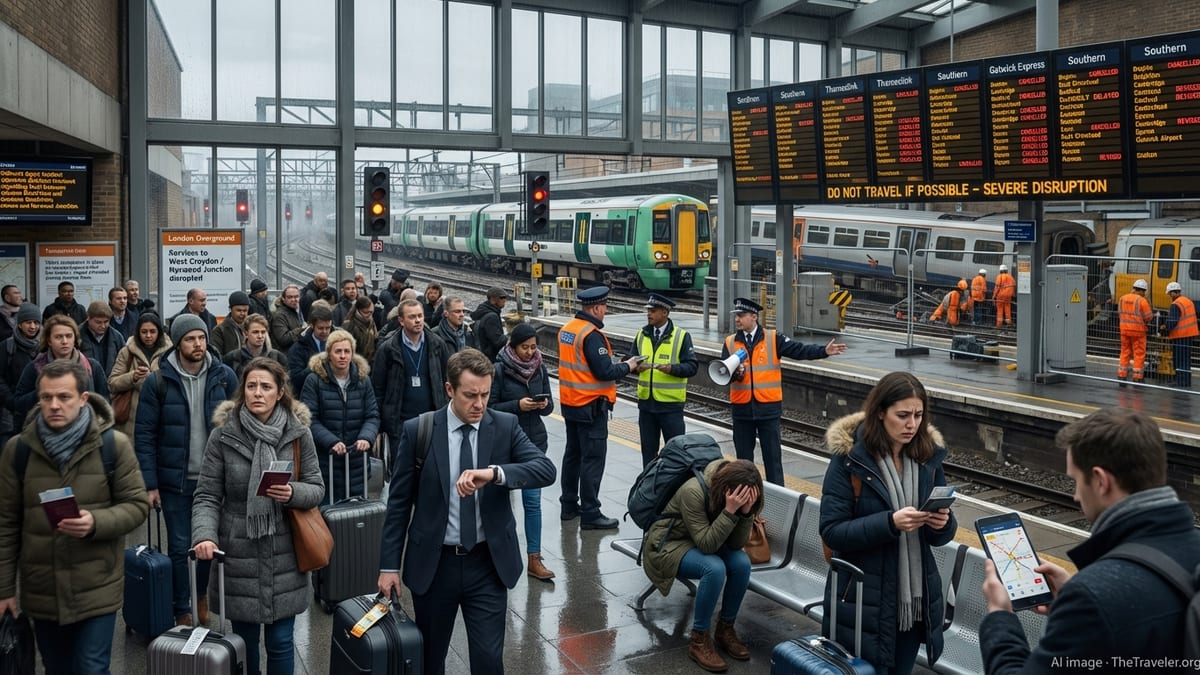
Rail passengers across south east England faced major disruption on Wednesday 4 February as a combination of a train derailment and serious signal failures brought large parts of the region’s rail network to a standstill, triggering widespread delays, cancellations and an unprecedented morning “do not travel” warning from the country’s biggest rail franchise.
More News
- TSA Rolls Out $45 ConfirmID Fee for Travelers Without REAL ID at Security
- Flying Blue Launches February 25% Promo Rewards on Transatlantic and Regional Routes
- United Fast-Tracks Starlink Wi‑Fi Across Fleet, Free for MileagePlus Members
Derailment at Selhurst Depot and Signal Failure Cripple Key Routes
The immediate cause of the chaos was a train derailment inside the Selhurst depot in south east London, which blocked lines towards Norwood Junction and central London at the height of the morning rush hour. The incident prevented multiple trains from leaving the depot, sharply reducing the number of services that operators could run on already busy commuter corridors.
Compounding the problem, a fault developed in the signalling system between London Blackfriars and Norwood Junction. With fewer lines available and safety rules requiring trains to run at reduced speeds on affected sections, capacity through this critical bottleneck collapsed, triggering knock on disruption across a wide area of south London, Surrey, Sussex, Kent and beyond.
National Rail and Network Rail engineers were dispatched to the scene of the derailment and to work on restoring the signalling system. Early reports indicated there were no confirmed injuries linked to the Selhurst derailment, but rail bosses warned that clearing the affected train and fully restoring signalling would take many hours.
‘Do Not Travel’ Plea From Southern, Thameslink and Gatwick Express
As the scale of the disruption became clear, Govia Thameslink Railway (GTR) which operates Southern, Thameslink and Gatwick Express issued an extraordinary message to passengers early on Wednesday, urging people not to travel “if at all possible” on its services. The rare warning reflected the combined impact of the derailment and signal failure, plus a series of knock on delays and congestion across the network.
In statements to passengers, the operators said a “number of incidents” were affecting all lines across their networks, with trains liable to be cancelled, severely delayed by up to 60 minutes or revised at short notice. The message was reinforced across customer information screens, social media and station announcements as commuters arrived expecting a normal weekday service.
By mid morning, the formal “do not travel” alert was lifted, but GTR warned that severe disruption would continue throughout the day. Passengers were told to expect ongoing cancellations, diversions and extended journey times as services were gradually reintroduced and trains and crew were moved back into the correct locations.
Services Suspended, Diversions Introduced and Overground Hit
The derailment and signalling failure had a particularly severe effect on routes linking south London and Sussex with central London. Services on key corridors, including London Bridge to East Grinstead, Brighton to Cambridge, Three Bridges to Bedford and London Bridge to Epsom, were reported as suspended for significant periods on Wednesday as operators struggled to route trains around the blockages.
Other lines were kept running only by significant diversions. Trains that would usually run via Norwood Junction were rerouted through Selhurst or alternative lines, while some Great Northern services that connect through central London were curtailed or delayed as congestion spread. Passengers reported packed trains, long queues at stations and hurried platform changes as staff tried to cope with rapidly changing service patterns.
The disruption also hit London Overground, with services on the route between Highbury & Islington and West Croydon severely affected. Overground trains were unable to serve several south London stations, including Norwood Junction and West Croydon, for much of the morning, and some services were diverted to Crystal Palace or turned back early to avoid the worst of the congestion.
Commuters Stranded, Airports and Long Distance Links Affected
The timing of the incidents during the busy morning peak saw thousands of commuters stranded at stations across south east England. Many reported waiting on concourses for information before being advised to return home or seek alternative routes by bus, Underground or car. Others faced long, crowded journeys on the limited number of trains still in operation.
Gatwick Express services were among those heavily disrupted, affecting passengers travelling to and from Gatwick Airport. While some airport journeys remained possible using Southern or Thameslink services where available, the reduced frequency and unreliability of trains prompted warnings for air travellers to allow much longer than usual for rail connections or to consider road based alternatives.
Long distance passengers heading to destinations such as Brighton, Cambridge, Bedford and other major commuter towns found themselves caught up in the disruption as interurban services were thinned out, diverted or cancelled outright. On some routes, operators advised passengers to postpone non essential journeys until later in the day or to replan travel for another date.
Operator and Network Rail Response Under Scrutiny
With disruption expected to continue through Wednesday, questions were already being raised about the resilience of rail infrastructure in south east England and the contingency plans in place for handling multiple incidents. The combination of a depot derailment and a signal failure on a separate but strategically connected section of track highlighted the vulnerability of a network that often runs close to capacity during peak times.
GTR issued repeated apologies to passengers and said teams were working closely with Network Rail to clear the derailed train, repair signalling equipment and restore a normal timetable as swiftly as possible. Network Rail, which owns and maintains the tracks and signalling, confirmed that engineers were on site at Selhurst and along the affected corridor between Norwood Junction and London Blackfriars.
Early indications suggested that the derailment occurred at low speed within the depot complex, which helped to prevent injuries but still created a major operational headache by blocking lines needed to release trains into service. Investigations are expected to focus on the condition of track and points within the depot, as well as any technical or human factors that may have contributed.
Passenger Guidance, Ticket Acceptance and Travel Alternatives
Throughout the morning and into the afternoon, operators urged passengers to check the latest travel information before setting out. With service patterns changing rapidly, real time updates at stations and via apps became crucial for anyone attempting to navigate the disrupted network.
Ticket acceptance arrangements were put in place across parts of the south east, allowing affected rail passengers to use alternative operators and selected bus and Tube services at no extra cost. While this helped some travellers to complete journeys, it also placed additional strain on other parts of the transport system, particularly busy Underground lines and key bus corridors through south London.
Passengers who chose not to travel were advised that they may be entitled to refunds or compensation under Delay Repay schemes, depending on the length and nature of their disruption. However, customer groups pointed out that financial compensation offers limited comfort for commuters who missed work, appointments or flights because of the chaos.
Wider Impact on South East Rail Reliability
Although derailments within depots are relatively rare, Wednesday’s incident reinforced growing concerns about reliability across the south east rail network, which handles some of the highest passenger volumes in the country. In recent years, commuters have contended with a combination of infrastructure failures, industrial action and capacity constraints, prompting regular criticism of both operators and rail authorities.
Transport analysts noted that while any individual failure may be unavoidable, the cascading effect of multiple incidents on such a tightly scheduled network exposes structural weaknesses. When key junctions or depots are compromised, there is often limited spare capacity elsewhere to absorb the shock, resulting in widespread cancellations rather than localised delays.
Calls are likely to grow for further investment in modern signalling technology, additional turnback points and greater redundancy in critical areas of track to enable services to be maintained during emergencies. The government and industry will also face renewed pressure to improve communication with passengers during fast evolving disruption, ensuring information is accurate, timely and easily accessible.
FAQ
Q1: What exactly happened to cause the disruption in south east England?
On Wednesday 4 February a train derailed at low speed inside Selhurst depot in south east London, blocking lines used to bring trains into service, while a separate fault affected signalling between London Blackfriars and Norwood Junction, sharply reducing the number of trains that could safely operate through the area.
Q2: Were there any injuries reported in the Selhurst derailment?
Early reports from Network Rail and the train operators stated that there were no confirmed injuries associated with the derailment at Selhurst depot, although engineers and investigators were dispatched to the scene to carry out checks and begin examining the cause.
Q3: Which rail operators and services were most affected?
Southern, Thameslink and Gatwick Express services all operated by Govia Thameslink Railway were hardest hit, with routes linking London Bridge and London Blackfriars to destinations such as East Grinstead, Brighton, Cambridge, Bedford and Epsom facing cancellations, diversions and severe delays.
Q4: Did London Overground services also suffer disruption?
Yes, London Overground services on routes serving south London were disrupted, particularly on trains running to and from West Croydon and Norwood Junction, with some services diverted to alternative destinations such as Crystal Palace or turned back short of their normal end points.
Q5: Is the “do not travel” warning still in place?
The formal “do not travel” alert issued on Wednesday morning by the operators was lifted later in the morning, but passengers were warned that knock on disruption including cancellations and long delays would continue for the rest of the day as services were gradually restored.
Q6: How long are delays expected to last on the affected routes?
Operators advised passengers to expect delays of up to 60 minutes and, in some cases, longer journey times where trains were diverted or running less frequently, with a warning that service patterns might not fully return to normal until later in the day and potentially into the evening.
Q7: What should passengers do if they have a ticket for travel today?
Passengers are being urged to check live journey planners before setting out, consider postponing non essential trips, and if they decide not to travel they may be able to claim a refund or compensation under the relevant operator’s Delay Repay or refund policies.
Q8: Are alternative transport options being provided?
In many cases train operators arranged ticket acceptance on other rail services and on certain bus and Underground routes, allowing affected passengers to complete journeys by alternative means, although these options have become busy and journey times may still be extended.
Q9: Will there be an investigation into the cause of the derailment and signal failure?
Yes, Network Rail and the relevant safety authorities are expected to investigate both the low speed derailment at Selhurst depot and the signalling failure between London Blackfriars and Norwood Junction to determine the exact causes and identify any steps needed to prevent a recurrence.
Q10: How can travellers keep up to date with the latest service information?
Travellers are advised to use live journey planning tools from National Rail and the individual operators, listen to station announcements, and monitor electronic display boards for the latest information on cancellations, revised timetables and alternative routes throughout the day.