

More news on this day
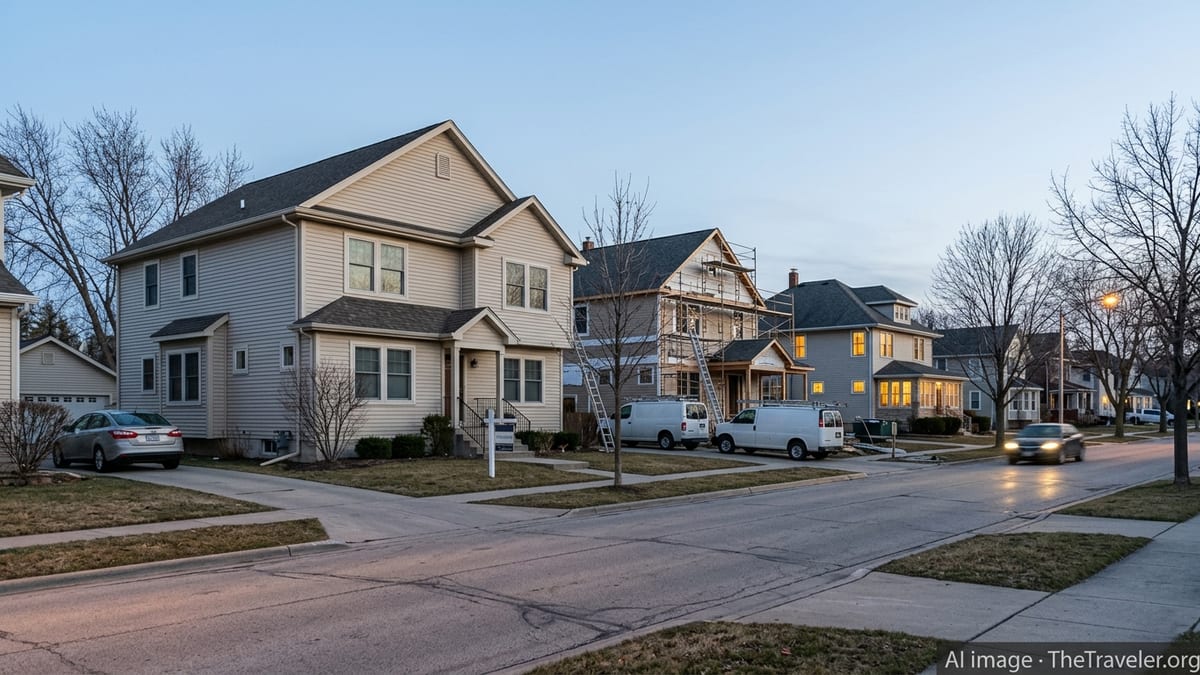
As the U.S. housing market shifts from the frenzied highs of the pandemic era into a slower, more balanced 2026, homeowners are facing a pivotal choice: sell into a cautious recovery, stay put and ride out uncertainty, or reinvest in the homes they already own.
Get the latest news straight to your inbox!
A Housing Market Defined by Cautious Recovery
Forecasts for 2026 point to a housing market that is neither booming nor collapsing, but grinding toward equilibrium. National housing organizations and private forecasters describe a backdrop of modest home price gains, slightly higher sales volumes and more inventory compared with the ultra-tight conditions of 2021 to 2023. After years of double-digit appreciation in many metros, several outlooks now emphasize stability, with price growth in the low single digits and some regions even flattening out.
Publicly available forecasts from real estate research groups indicate that existing-home sales are expected to edge higher in 2026 after largely stagnant activity in 2025. More listings are returning to the market as owners who delayed moves during the rate spike reassess their options. Analysts at major brokerages and trade associations describe this as a transition from an extreme seller’s market toward conditions that give buyers more leverage, narrowing the gap between list prices and what buyers are willing to pay.
For owners, this means the decision to sell in 2026 is less about timing a runaway price surge and more about navigating a slower, data-driven market. Homes that are well priced, move-in ready and located in markets with strong job bases are still expected to attract interest. Properties that require major work or carry clear functional drawbacks may linger longer and face steeper discounts.
Regional differences are becoming more pronounced, adding another layer to the decision. Some fast-growing Sun Belt and Mountain West metros are still projected to post above-average price growth, while parts of the West Coast and upper Northeast could see softer or nearly flat price changes. Owners weighing a sale need to look closely at local employment trends, new construction pipelines and migration patterns, rather than relying on national averages alone.
The New Mortgage-Rate Reality and the Fading Lock-In Effect
Mortgage rates remain the central factor in the sell-versus-hold equation. After peaking near 8 percent in 2023, the average 30-year fixed rate has drifted down to just above 6 percent in early 2026, according to widely cited lender and financial data. Some investment banks and housing economists project that rates could slip closer to the mid-5 percent range by mid-2026 before stabilizing, while others expect them to hover around 6 percent for much of the year.
That shift is beginning to loosen what has been described as the “lock-in effect,” where millions of owners with mortgage rates under 3 percent were reluctant to list their homes and take on a far costlier loan. Recent coverage in personal finance and housing outlets notes that as more borrowers now hold mortgages closer to current rates, the financial penalty for moving is shrinking. For a subset of owners, the trade-off between a slightly higher payment and the benefits of relocating, upsizing or downsizing is becoming easier to justify.
Still, the new rate environment represents a structural reset rather than a return to the ultra-cheap money of the late 2010s and early 2020s. Financial institutions and policy-focused housing groups increasingly describe rates in the 5 to 6 percent range as a likely “new normal” for the next several years. That backdrop reduces speculative buying and favors more measured decisions based on long-term affordability and lifestyle needs.
For owners deciding whether to sell or hold, the rate picture has several implications. Those with very low fixed rates may still find that staying put and improving their existing home delivers the best financial outcome, particularly if comparable properties carry significantly higher monthly costs. Others, especially repeat buyers with substantial equity or cash, may see opportunity in a less competitive market and choose to sell despite the rate reset.
Renovate or Move: How Construction Costs and Design Trends Factor In
Renovation has emerged as a serious alternative to selling, particularly for households that need more space or updated layouts but are wary of taking on a new mortgage at today’s rates. Surveys of contractors and renovation professionals conducted in late 2025 suggest continued strong demand for projects that reconfigure existing space, add accessory units or improve efficiency, even as material and labor costs remain elevated compared with pre-pandemic levels.
Industry reports highlight several trends shaping renovation decisions in 2026. Multigenerational living features are gaining traction, with more owners carving out separate suites for extended family or long-term guests. Energy-efficiency upgrades, such as improved insulation, high-performance windows and heat pumps, are also climbing priority lists, helped by tax incentives and heightened awareness of utility costs.
At the same time, price-sensitive buyers are increasingly favoring move-in-ready homes. Analyses published by national real estate outlets indicate that properties requiring extensive work often command a discount relative to homes that are fully updated. For owners, that dynamic can cut both ways. Investing in targeted renovations may help a property stand out and capture a stronger price if they do choose to sell, but over-improving a home beyond neighborhood norms can limit the return on every dollar spent.
Construction inflation remains a critical variable. While some input costs have cooled from their peaks, labor shortfalls and supply bottlenecks continue to push timelines and budgets higher than many owners expect. Experts in housing economics caution that renovation plans in 2026 should incorporate contingencies for cost overruns and delays. That reality means the renovate-or-move decision is increasingly tied to a household’s tolerance for disruption as much as to straightforward return-on-investment calculations.
Timing the Market: When Selling Makes the Most Sense in 2026
Seasonal patterns are reasserting themselves after several years of pandemic-related volatility. Recent analyses from financial news and real estate research firms point to a familiar trend: spring, and particularly mid-April, is shaping up as a strong window for sellers in 2026. Data on list-to-sale price ratios, days on market and online search activity all suggest that listings hitting the market during this period may see stronger demand and fewer price reductions than those posted later in the year.
This does not mean there is a single “perfect” week for every homeowner, but it underscores how timing can influence outcomes. Families with school-age children may prefer summer closings even if that means slightly more competition. Retirees or remote workers might target late summer or early fall, when buyer traffic typically remains healthy but some would-be competitors have already sold.
Broader economic signals also influence the timing decision. Outlooks from major banks and housing research groups anticipate moderate job growth and slowly improving affordability in 2026, rather than a sharp downturn. If that consensus holds, owners who can wait for local conditions to firm up may find more stable pricing later in the year or in 2027. Conversely, those concerned about potential economic slowing, new supply in their area or changing local tax policies may decide that listing sooner reduces the risk of softer demand ahead.
Given these crosscurrents, analysts often emphasize aligning market timing with personal milestones rather than chasing a theoretical peak. For many households, events such as a new job, a growing family or a planned retirement will matter more than incremental changes in prices over a few quarters.
What Owners Should Weigh Before Choosing a Path
Against this complex backdrop, homeowner decisions in 2026 are less about quick wins and more about long-term fit. Financial planners and housing-market commentators consistently highlight three pillars for owners to review: current equity, future housing needs and risk tolerance. Substantial equity built up over the past decade gives many households options, whether that means selling and relocating, tapping equity for improvements, or holding the property as a long-term residence or rental.
Demographic and lifestyle factors are just as important. Surveys of recent and prospective buyers show that remote work, changing household sizes and preferences for walkable neighborhoods or specific school districts are reshaping where people want to live. An owner whose current home no longer matches their day-to-day needs may find that a move, even at today’s interest rates, has value that cannot be captured in a spreadsheet.
On the other hand, holding a property through the current phase of the cycle can be a rational choice for owners satisfied with their location and monthly costs. With many forecasts calling for modest but positive price appreciation nationally and a gradual easing of financing conditions, simply staying put and maintaining the property could preserve flexibility for a future move when circumstances are clearer.
Analysts stress that there is no universal answer for owners weighing whether to sell, hold or renovate in 2026. The market has shifted away from the speculative exuberance of the early 2020s into a period that rewards careful planning. By grounding decisions in local data, realistic cost estimates and personal priorities, owners can navigate this new landscape with more confidence, regardless of the path they choose.