

More news on this day
Air travel through some of the United States’ busiest hubs is buckling under the weight of a protracted Department of Homeland Security shutdown, as senators in Washington race to assemble a final funding offer while Transportation Security Administration staffing shortages trigger hourslong waits and mounting delays from Houston to New York.
Get the latest news straight to your inbox!
Senate Negotiators Seek Last-Ditch Deal in Washington
Talks in the U.S. Senate have intensified in recent days as lawmakers search for a way to restore funding to the Department of Homeland Security without resolving the broader clash over immigration enforcement. According to published coverage from Washington, competing proposals have circulated that would reopen most of DHS, including the TSA, while carving out or reshaping funding for controversial immigration operations that ignited the standoff.
Reports indicate that a small, bipartisan group of senators has been working on what is being described as a final or near-final offer to the White House, seeking to limit further disruption to critical security functions. The contours of these discussions center on short-term funding for DHS and potential side agreements on immigration enforcement, but there is little sign yet that the dispute’s core issues have been bridged.
The prolonged uncertainty has heightened pressure from aviation and travel industry groups, which are warning that the shutdown’s impact is no longer confined to Washington’s budget debates. Publicly available statements from airline trade associations and travel advocates emphasize the risks to the national air system as security officers and air traffic controllers work without pay and attrition climbs.
While Congress weighs its options, the operational strain is being felt daily at security checkpoints. The longer the shutdown persists, the more difficult it becomes for any eventual compromise to quickly unwind the staffing shortfalls and backlogs now rippling through major airports.
Houston Emerges as a Flashpoint for TSA Delays
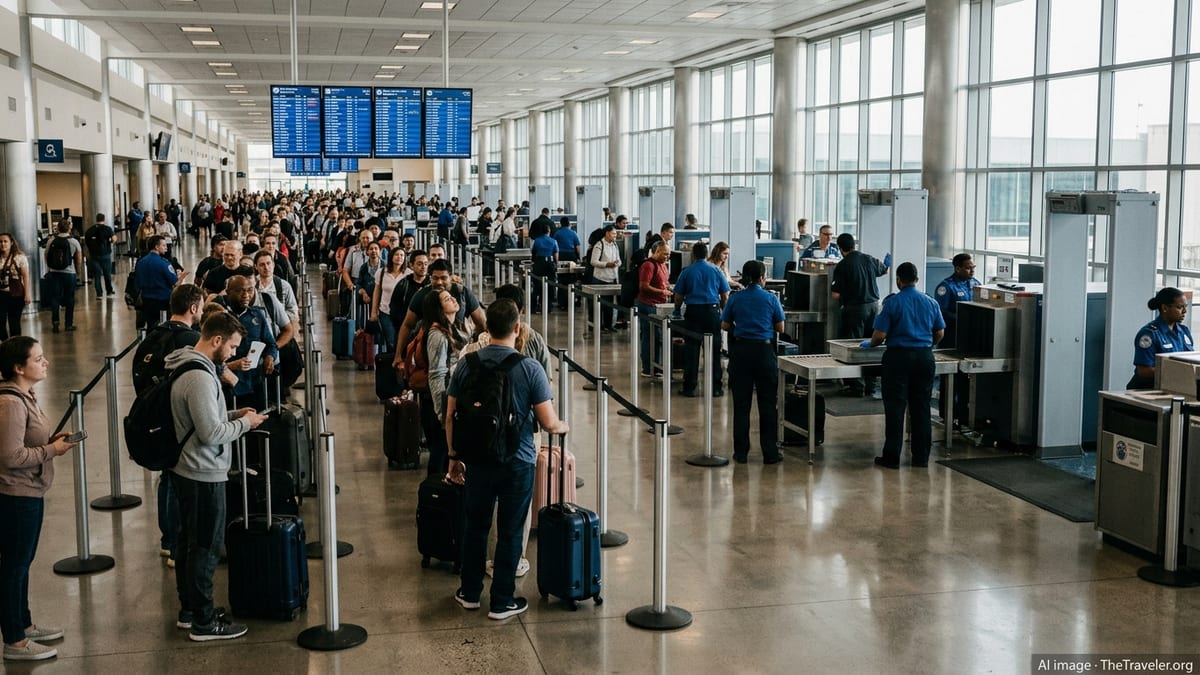
Houston’s George Bush Intercontinental and William P. Hobby airports have become some of the clearest examples of how the funding lapse is reshaping the travel experience. Local airport advisories and national media reports describe waves of disruption over the past several weeks, with standard security wait times at Bush Intercontinental stretching to three and even four hours during peak periods.
Publicly available information from Houston Airports urges travelers to arrive significantly earlier than usual and notes that the shutdown can affect TSA operations on a shift-by-shift basis. At times, only a limited number of checkpoints have been open, and some passengers have reported missing flights despite arriving hours before departure as lines snaked through terminals and toward curbside areas.
Analyses of the current disruption often draw comparisons with the 2018 to 2019 federal shutdown, when staffing shortages forced the closure of a checkpoint at Bush Intercontinental and other large hubs. Current reports, however, point to an even more acute strain, with TSA officers working prolonged stretches without full pay and some choosing to resign rather than continue under the financial pressure.
Travel industry commentary suggests that Houston’s role as a major connection point is magnifying the shutdown’s effects. Severe delays at security not only affect local origin and destination passengers but can also cascade through the wider network as flights wait for late-arriving travelers and crews, further tightening already busy spring schedules.
Washington and New York Airports Feel the Ripple Effects
Beyond Texas, airports in and around the nation’s capital and New York City are also reporting elevated wait times and operational stress tied to TSA staffing. Coverage from regional outlets in Washington notes that delays have periodically flared at Reagan National and Baltimore/Washington International, with some security lanes consolidated and passengers urged to arrive earlier than typical guidance.
In the New York region, a combination of TSA shortages and thinner air traffic control staffing has periodically slowed flows at LaGuardia and other major airports, according to transportation and aviation reports. While some days have passed with only modest disruption, others have seen ground delays and extended security lines as absences tick higher and backup personnel are redeployed from less busy locations.
Experts cited in national coverage point out that the New York and Washington airspace is among the most complex in the country, meaning even small drops in staffing can quickly generate outsized impacts. When TSA officers call out or resign during a shutdown, the result is fewer open lanes, less flexibility during peak banks of departures and a greater chance that screening bottlenecks will translate into missed flights and rolling schedule adjustments.
Memories of the 2018 to 2019 shutdown, when staffing shortages contributed to a temporary ground stop at New York’s LaGuardia Airport, loom large over current conditions. Travel analysts warn that, absent a swift political resolution, the system could again approach the kind of tipping point at which safety-related slowdowns become unavoidable rather than precautionary.
Record Strain on TSA Workforce Raises Safety and Service Questions
Across the country, publicly available TSA data and news reports indicate that officer absences have climbed to their highest levels since the current round of shutdowns began earlier this year. More than 450 officers have resigned since funding for DHS first lapsed in mid-February, according to recent national reporting, compounding the impact of routine attrition and sick calls during a busy travel period.
Industry analyses highlight that the vast majority of TSA officers are required to report to work even when paychecks are delayed, because aviation security is deemed essential to life and property. However, as the shutdown drags on, many officers face mounting financial strain. Advocacy groups and union representatives quoted in various outlets have described workers turning to short-term loans, side jobs and charitable support to cover basic expenses.
Travel experts warn that strained staffing can have both service and safety implications if it persists. Longer lines and traveler frustration are the most visible effects, but there are also concerns about fatigue among officers who remain on duty and the potential for training and technology upgrades to slow as agencies operate under constrained budgets.
Security specialists who study previous shutdowns note that TSA performance has historically remained robust despite these pressures, but caution that there are limits to how long an agency built on continuous staffing can function without predictable funding. Each day of the shutdown makes it harder to rebuild morale, replace departing officers and restore a reliable level of service once the political impasse ends.
What Travelers Can Expect in the Days Ahead
For passengers passing through Houston, Washington and New York in the near term, most travel advisories and expert analyses share a common message: plan for unpredictability. Wait times can fluctuate dramatically within a single day as staffing levels shift, with some morning peaks melting into relatively normal conditions by afternoon, only to surge again when another wave of travelers arrives.
Travel organizations and airport operators are recommending that passengers flying from heavily affected hubs arrive at least three hours before domestic departures and even earlier for international travel. They also suggest checking airport and airline communications frequently on the day of travel, as some terminals may temporarily consolidate checkpoints or redirect passengers between screening locations in an effort to balance loads.
Despite the challenges, the national transportation system continues to operate, and many travelers are still clearing security with only modest delays. The problem, according to observers, is the growing unpredictability: a trip that is uneventful one day can be significantly disrupted the next, depending on the mix of staffing levels, flight schedules and local traffic.
Until senators in Washington reach an agreement capable of reopening DHS and restoring full pay to TSA officers, the strain on the system is expected to continue. For now, the nation’s airports are functioning as an early warning system for a political standoff whose impact is being measured less in abstract budget figures than in hours spent in line at security checkpoints.