

More news on this day
Seoul is preparing for a sweeping “purple renaissance” as BTS’s upcoming album “Arirang” turns the South Korean capital into a citywide sanctuary for fans, blending K pop spectacle with heritage landmarks and riverfront spaces in an ambitious urban festival.
Get the latest news straight to your inbox!
A City Becomes a Stage for BTS’s Return
The comeback surrounding “Arirang,” scheduled for release on March 20, 2026, is being framed as much an urban event as a musical one. Publicly available announcements describe “BTS The City Arirang Seoul” as a 23 day program running from March 20 to April 12, transforming key districts of the capital into interconnected fan zones and cultural spaces.
This latest edition of the group’s “The City” concept, previously tested in destinations such as Las Vegas and Busan, is designed to overlay the city with branded experiences, interactive art and curated hospitality. Reports indicate that the initiative will extend beyond conventional concert promotion, using media art, themed lounges and outdoor installations to keep BTS visible across the cityscape for weeks.
The timing positions Seoul as the natural epicenter of the group’s return after a multiyear hiatus, with tourism commentators noting that March and early April also coincide with early cherry blossom season and a traditional uptick in international arrivals. Travel platforms and fan communities are already tracking flight and hotel availability around the comeback dates, underscoring expectations that “Arirang” will generate a significant influx of visitors.
Landmarks Washed in Purple Light and Media Art
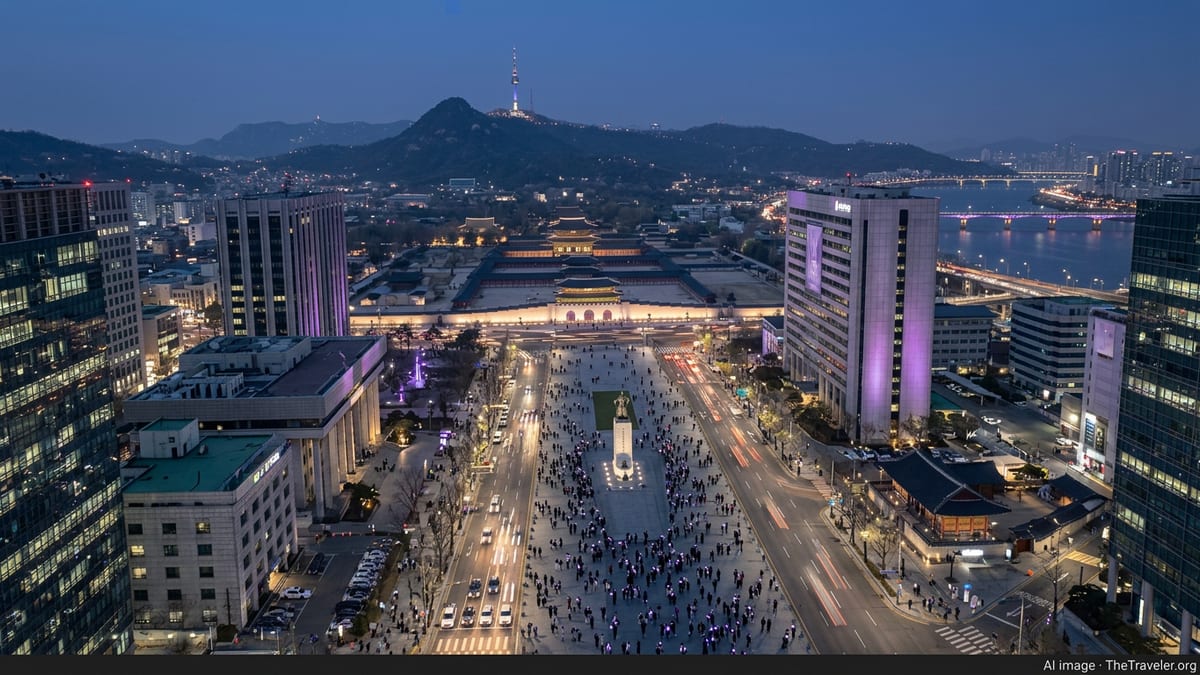
On release day, a number of Seoul’s most recognizable landmarks are expected to become focal points of the purple themed transformation. Coverage of the program outlines plans for large scale media facades at historic Sungnyemun Gate and N Seoul Tower, where lighting, projection and video art will reference the new album and the aesthetic language associated with the BTS fandom.
These media installations build on a now familiar BTS visual vocabulary that has previously seen entire skylines tinted purple, from Las Vegas casino marquees to major bridges and civic buildings. In Seoul, the approach is being adapted to sites that carry deeper historical resonance, pairing modern K pop imagery with centuries old architecture and panoramic city views.
The illuminated landmarks are expected to serve multiple roles at once, operating as de facto photo zones for visiting fans, nighttime orientation points within the wider festival and marketing anchors for the album itself. Observers suggest that the concentration of activity around central landmarks could also encourage visitors to explore adjacent neighborhoods, potentially spreading economic benefits into surrounding streets and small businesses.
Gwanghwamun Square and the Heritage Backdrop of ‘Arirang’
Central to the purple reinvention of Seoul is Gwanghwamun Square, where “BTS Comeback Live: Arirang” is scheduled to take place around March 21. Public information indicates that the performance will use the ceremonial avenue and the axis leading to Gyeongbokgung Palace as a live stage, with the show also set to be broadcast globally.
Cultural commentators have highlighted the symbolism of staging a comeback titled “Arirang” against a backdrop of royal palaces and statue lined boulevards. The traditional folk song that lends its name to the album is often described as an unofficial Korean anthem, and programming details suggest that the opening sequences of the concert will spotlight surrounding heritage sites to reinforce that connection.
In anticipation of large crowds, additional standing and viewing areas have reportedly been added around the square, while nearby public spaces such as Seoul Plaza and parks along the Han River are being folded into related side events. For visitors, the result is likely to be an extended festival corridor stretching from palace gates to waterfront, with purple themed installations, pop up experiences and branded wayfinding linking each node.
Han River, Design Hubs and Fan Gathering Zones
Beneath the headline landmarks, a network of smaller sites is set to provide what organizers describe in public materials as “urban play park” experiences. Along the Han River, Yeouido Hangang Park will host a dedicated lounge concept where fans can listen to the new album, exchange merchandise and participate in music centered activities within view of the city’s skyline.
Elsewhere, Dongdaemun Design Plaza is slated to become home to an “ARMY Madang,” extending BTS motifs into one of Seoul’s most distinctive contemporary design complexes. Descriptions of the program refer to historic stone walls, stairways and tree lined streets in central districts being turned into exhibition style spaces that incorporate lyrics and visual themes from “Arirang.”
Taken together, these sites create a patchwork of purple themed micro destinations that travelers can move between over several days. Tourism analysts note that this distributed model mirrors broader trends in destination marketing, where cities use large scale cultural moments to disperse visitors beyond a single venue and encourage deeper urban exploration.
Travel Impact and the Global ‘Purple Renaissance’
Well before the album’s release, online travel forums and fan communities have filled with practical advice on navigating Seoul during the festival window, from using airport rail links to timing visits to major viewing spots along the river. Hotel search data referenced in local business coverage points to elevated interest for stays around the late March weekend of the comeback show, particularly in central districts with easy access to Gwanghwamun and the Han River parks.
While precise visitor projections have not been made public, the scale of the citywide programming suggests that “BTS The City Arirang Seoul” is intended as both a fan celebration and a tourism catalyst. The project aligns with ongoing efforts in South Korea to position K pop as a driver of inbound travel and to spotlight Seoul’s mix of historic and modern attractions.
As “Arirang” leads into an announced world tour, observers expect the Seoul edition of the project to serve as a template for similar urban festivals in other destinations. For now, the city is preparing for its own purple renaissance, as bridges, gates, towers and riverbanks ready themselves to double as both concert backdrop and canvases for one of the year’s most closely watched comebacks.