

More news on this day
Seoul is accelerating its push to become a city where visitors can stay online without paying roaming charges, unveiling an expanded network of “data-free” zones that offer free public WiFi across major tourist and transit areas.
Get the latest news straight to your inbox!
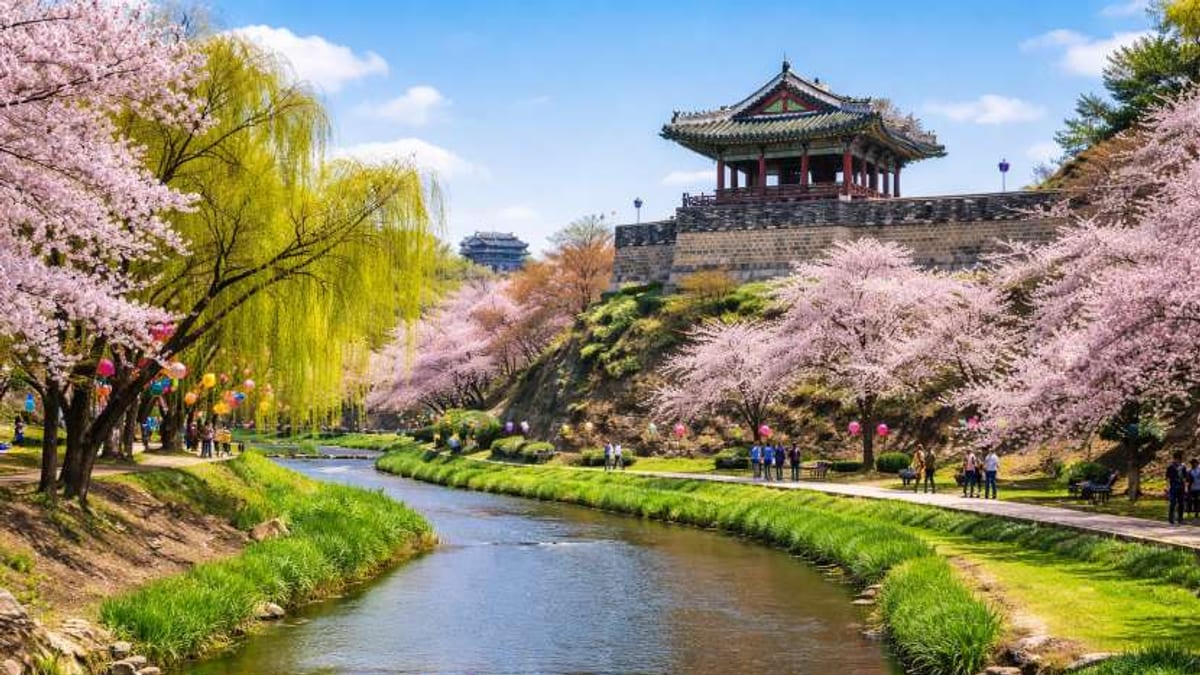
Image by Travel And Tour World
A Long-Term Vision for a Data-Free Capital
Publicly available information shows that Seoul has spent much of the past decade positioning itself as an “internet data free” city, with free municipal WiFi gradually installed in streets, parks, cultural venues and government buildings. The latest phase focuses on making that connectivity more visible and accessible to international travelers who may arrive with limited mobile data or expensive roaming contracts.
City documents and recent tourism materials indicate that the initiative is designed to give anyone in Seoul access to free WiFi wherever they go, building on earlier rounds of infrastructure investment that blanketed thousands of public spaces. The current rollout emphasizes foreign visitor hotspots, with coverage promoted as a practical alternative to buying local SIM cards for short stays.
Travel guidance for 2025 and 2026 highlights that Seoul’s strategy is not limited to a handful of central districts. Instead, the network of data-free zones now extends across a dense urban area that includes commercial hubs, residential neighborhoods and riverside parks, offering visitors a near-continuous online experience as they move around the city.
For Seoul, the project also carries a branding dimension. By framing the city as a place where both residents and tourists can access fast, no-cost connectivity, the capital reinforces its reputation as one of the world’s most digitally advanced urban centers.
From Tourist Streets to Subways: Where Visitors Stay Connected
Recent English-language guides produced by Seoul’s tourism authorities describe an extensive grid of free WiFi that covers many of the places first-time visitors are most likely to explore. Networks under names such as “SEOUL_Public WiFi Free” and “SEOUL_Secure” are promoted as standard options in shopping districts, historic neighborhoods and around major landmarks.
Publicly available information on the subway system shows that free WiFi is accessible in all stations and trains, effectively turning one of the world’s busiest metro networks into a moving data-free zone for commuters and tourists alike. International travelers can use the connection to navigate transfers, check real-time directions and access translation apps without tapping into mobile data.
Official materials on urban transport and smart-city policy also point to widespread WiFi coverage on city buses and at bus stops, as well as in riverfront parks and open plazas. For visitors, this means that the journey between districts is often as connected as time spent at a hotel or café, reducing gaps in service that typically force reliance on roaming.
In practical terms, travelers arriving in Seoul can expect to encounter free WiFi at airports, major train hubs, tourist information centers, museums, markets and city squares. The expanding network of access points underpins the city’s description of itself as a place where mobile internet is treated as a basic public service rather than a premium product.
Cutting Roaming Costs for Short-Stay International Travelers
Travel industry reporting consistently shows that South Korea has historically ranked among countries with relatively high mobile data prices, making roaming particularly costly for short-term visitors. Against that backdrop, Seoul’s data-free zones are designed to reduce the financial burden for tourists who might otherwise rely on international day passes or prepaid SIM cards.
Recent coverage of Seoul’s WiFi policy notes that the city’s goal is to let overseas visitors handle everyday online tasks without purchasing large data bundles. Navigation, messaging, restaurant searches and attraction tickets are among the activities that can now be managed largely on free public networks, especially for travelers who spend most of their time in central districts.
Tourism guides still point out that mobile hotspots and eSIMs remain popular options for heavy data users or those planning to travel widely across South Korea. However, the breadth of free WiFi coverage in Seoul reduces the need for additional spending, particularly for budget-conscious travelers or those on brief stopovers.
For many international visitors, the most immediate benefit of the data-free zones is predictability. When a city guarantees access to free internet in key public spaces and on transit, travelers can plan around those touchpoints rather than budgeting for unpredictable roaming charges.
How to Use Seoul’s Data-Free Zones Safely and Effectively
Visitor-facing materials advise travelers to look for clearly labeled public networks operated by the city, often branded with “Seoul” or “Public WiFi Free” in the network name. These services are typically available without registration, although some locations may request a simple confirmation screen before granting access.
Digital inclusion reports and consumer guides also stress basic security practices when using public WiFi. Travelers are encouraged to avoid accessing sensitive financial accounts on open networks, to keep device software up to date, and to consider using secure connections such as virtual private networks for added protection.
Experts on urban connectivity note that connection speeds on public WiFi can vary depending on time of day and crowd levels, but Seoul’s infrastructure is widely regarded as fast by international standards. In many tourist areas, the service is considered sufficient for high-bandwidth tasks such as video calls and media streaming, as well as more common travel needs.
Tourism information further indicates that multilingual signage and staff at visitor centers can help newcomers identify official networks and troubleshoot connection issues. This support is intended to make public WiFi feel like an integral part of the visitor experience rather than an afterthought.
Positioning Seoul as a Model for Connected City Tourism
International case studies on digital cities frequently cite Seoul’s public WiFi network as an example of how connectivity can be integrated into urban planning and tourism strategy. The city’s move to formalize data-free zones for visitors aligns with broader efforts to make public services more accessible through smartphones and online platforms.
Seoul’s approach is being closely watched by other destinations that are weighing investments in municipal WiFi as a way to support tourism recovery and differentiate themselves in a competitive travel market. By demonstrating that large-scale, free connectivity can be maintained across dense urban areas, the city provides a reference point for similar projects elsewhere.
For travelers, the emergence of data-free zones in Seoul contributes to a shift in expectations about what a modern city break should include. Alongside efficient public transport and digital payment options, reliable free internet access is increasingly viewed as part of the basic infrastructure of a global destination.
As international arrivals to South Korea grow and travel patterns return to pre-pandemic norms, Seoul’s expanded WiFi network positions the capital as a place where visitors can stay seamlessly connected while keeping roaming expenses under tight control.