

More news on this day
As bookings surge for 2026, Serengeti National Park in northern Tanzania is positioning itself as a flagship destination for travelers seeking close wildlife encounters paired with stronger eco-friendly standards across lodges, vehicles and community projects.
Get the latest news straight to your inbox!
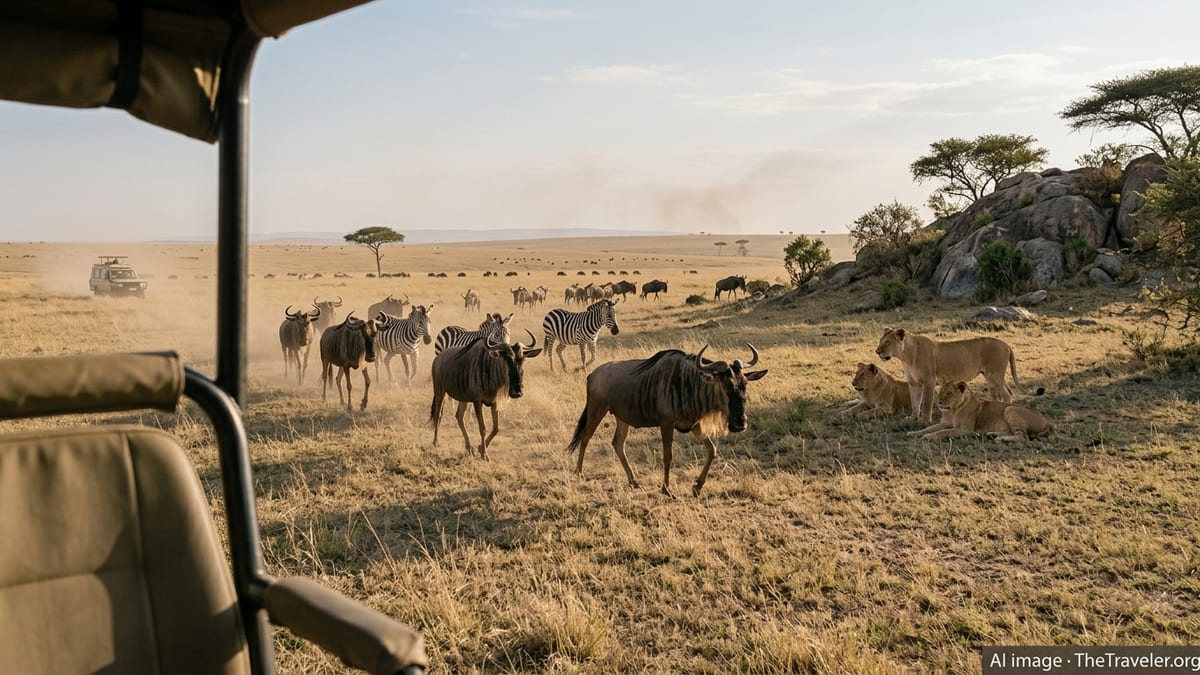
Unmatched Wildlife Encounters On Africa’s Famed Plains
Serengeti National Park remains one of Africa’s most reliable stages for dramatic wildlife viewing, and travel planners report that 2026 is shaping up as a busy year for visitors hoping to witness the spectacle first-hand. The park’s vast grasslands, granite kopjes and seasonal rivers continue to support large populations of lions, leopards, cheetahs and hyenas, along with sizeable herds of elephants, buffalo and giraffes that can be seen year-round.
The Serengeti’s role in the annual Great Migration, when over a million wildebeest and hundreds of thousands of zebra and gazelles move through the wider Serengeti Mara ecosystem, remains a key draw for 2026 itineraries. Specialist safari operators are encouraging travelers to book earlier than in previous years, noting that prime dates around river-crossing seasons in the western and northern corridors are filling faster as global demand for big-game viewing returns to pre-pandemic levels.
Industry briefings for 2026 highlight a trend toward longer stays and slower travel, with visitors opting to spend several nights in one region of the Serengeti rather than racing between parks. This approach, widely promoted by safari companies, can lead to more rewarding sightings as guides spend time tracking particular prides of lions, cheetah coalitions or resident leopard territories, while reducing the environmental impact associated with frequent transfers.
Published guidance for travelers planning 2026 trips also stresses the importance of seasonality. High wildlife densities can be seen in central Serengeti throughout the year, while the southern plains are particularly active during the calving period early in the year and the remote northern sector offers intense predator action as herds approach the Kenyan border later in the dry season.
Eco-Friendly Lodges And New Camps Shaping 2026 Safaris
A wave of upgrades and openings is reshaping how visitors will stay inside and around Serengeti National Park in 2026, with operators emphasizing reduced footprints and renewable energy. Reports from the hospitality sector describe longstanding lodges in central Serengeti completing multi-year refurbishment programs that include expanded solar power systems, more efficient water treatment and low-impact building materials designed to blend with the landscape.
Press material from one of the park’s best-known luxury properties details the rollout of eco-conscious roofing and cladding solutions aimed at improving insulation while limiting disturbance to local birdlife. At the same time, several tented camp brands are investing in lighter, semi-permanent structures that can be removed or relocated with minimal imprint on soils and vegetation, an approach that has become a benchmark for responsible safari operations across East Africa.
Industry blogs tracking “what is new on safari in 2026” point to fresh offerings in the southern Serengeti, where new camps have been introduced in the Kusini area to provide high-end experiences in a relatively lightly visited sector. Travel trade coverage indicates that these properties are positioning themselves as low-density options, focusing on small tent counts, off-grid power and carefully managed game-drive routes that prioritize both guest experience and habitat protection.
New openings also extend to mobile-style camps designed to follow wildlife movements. Early 2026 coverage of a recently launched tented camp on Serengeti’s open plains describes a focus on wide spacing between vehicles at sightings, staff training on wildlife etiquette and operational policies that limit night-time noise, reflecting a broader shift toward more wildlife-sensitive guiding standards.
Greener Game Drives And Lower-Impact Logistics
Alongside changes in accommodation, safari logistics in and around the Serengeti are evolving toward greener models for 2026. Travel companies are increasingly promoting shared vehicles and longer game drives to reduce the overall number of trips on popular tracks. Advisory notes for the coming seasons highlight that guests are encouraged to spend full mornings or afternoons in the field rather than returning frequently to camp, which cuts back-and-forth driving and reduces congestion at key wildlife viewing points.
Some operators serving the Serengeti region have begun trialing hybrid or fully electric safari vehicles on select routes, according to industry-focused travel updates. While the transition is still limited by charging infrastructure and cost, these pilots are being closely watched as potential blueprints for broader fleet changes over the next several years. Even conventional vehicles are increasingly subject to internal guidelines that limit idling, control maximum numbers at sightings and cap driving hours after dark.
Tour planning resources for 2026 also emphasize the role of small-group departures and private guides in managing environmental impact. By consolidating travelers into fewer vehicles and tailoring routes to avoid crowded hotspots at peak times, operators aim to lower pressure on heavily visited valleys and river lines. Some itineraries now integrate structured “vehicle-free” time around camp, encouraging walks on designated trails outside core wildlife zones or time spent at viewpoints and photographic hides.
Information from park-focused travel guides further notes that enforcing speed limits and designated track usage remains central to Serengeti’s conservation strategy. Visitors booking 2026 safaris are being urged to select companies that publicly commit to these rules and that train guides to balance guest expectations for close sightings with safe distances that respect animal behavior.
Community Partnerships And Conservation Funding Around The Park
The eco-friendly positioning of Serengeti safaris in 2026 is closely linked to community and conservation initiatives operating in villages that border the park. Tanzanian media coverage in 2025 highlighted significant funding being directed through Tanzania National Parks into local projects such as schools, health facilities, water schemes and road improvements, particularly in communities that support wildlife corridors and anti-poaching efforts along the park’s western and northern edges.
Conservation organizations active in the Serengeti ecosystem report that tourism revenue remains a vital source of funding for anti-poaching patrols, habitat monitoring and research on migratory species. Publicly available project summaries describe cooperation between park authorities, international NGOs and community-based groups on initiatives ranging from ranger training and aerial surveillance to livestock management schemes designed to limit conflict between predators and pastoralist households.
Several ecotourism development programs in the Serengeti region have also supported the establishment of community-run lodges, cultural tourism enterprises and small-scale handicraft cooperatives. These ventures allow residents to benefit directly from visiting safari traffic while promoting conservation messaging that encourages the protection of wildlife and rangelands. Analysts following Tanzania’s tourism sector say such models are increasingly cited as examples of how protected areas can help underpin broader rural development.
Regional conservation reports indicate that maintaining wildlife connectivity between Serengeti and neighboring reserves remains a priority for 2026 and beyond. Work on coordinated water management in the Mara River basin and efforts to secure key migratory corridors are seen as essential for the long-term health of the ecosystem that underpins the park’s appeal to visitors.
Planning A Responsible Serengeti Safari In 2026
For travelers considering a Serengeti safari in 2026, available guidance underscores the importance of early planning and careful operator choice. Park tariff documents and rate sheets released for the 2026 season show continued use of peak and low-season pricing, with conservation fees charged per person per night inside the park. Safari specialists recommend that visitors factor these charges into their budgets alongside lodge or camp rates, domestic flights and transfers, as part of a realistic total trip cost.
Travel advisories suggest that prospective guests inquire about a company’s environmental policies before booking, including waste management, energy use and vehicle practices. Checking whether a lodge invests in solar power, treats water on-site, manages grey water responsibly and supports local employment can offer a clearer picture of its overall footprint. Many of the camps being promoted for 2026 now publish sustainability information as a standard part of their marketing material.
Booking patterns for 2026 also point to growing interest in combining Serengeti with lesser-visited parks in Tanzania to spread tourism benefits more widely. Tour designers are packaging itineraries that start with intensive game viewing on Serengeti’s plains before moving on to quieter reserves or coastal areas, a pattern that can reduce pressure on the country’s most famous park while still delivering varied landscapes and experiences.
As the 2026 season approaches, observers note that Serengeti National Park is increasingly presented as a test case for balancing high visitor demand with strict conservation obligations. For travelers willing to look closely at how their safari is organized, the year ahead offers the chance to experience one of Africa’s most celebrated wildlife theaters while contributing to a model of tourism that seeks to keep those wild scenes intact for generations to come.