

More news on this day
One of Britain’s most celebrated rail journeys is preparing for a record-breaking year, as the Settle–Carlisle Railway marks its 150th anniversary of passenger services in 2026 with forecasts indicating more than one million people are set to travel the scenic route through the Yorkshire Dales and Cumbrian fells.
Get the latest news straight to your inbox!
A Landmark Year for an Engineering Icon
The Settle–Carlisle line, a 73-mile stretch of railway linking the North Yorkshire market town of Settle with the border city of Carlisle, is widely regarded as one of the most scenic in Europe. Built by the Midland Railway in the 19th century, it threads through remote moorland, limestone country and high Pennine passes, crossing a series of imposing viaducts and passing through hand-cut tunnels that highlight the ambition of Victorian railway engineering.
Passenger services on the route officially began on 1 May 1876, following the introduction of freight traffic the previous year. In 2026, the line’s “S&C 150” anniversary programme is being framed as a showcase not only of heritage but of the line’s contemporary role as a sustainable transport corridor serving local communities, walkers and long-distance rail tourists.
Publicly available information from the Settle–Carlisle Railway Trust and partner organisations indicates that timetable enhancements, special charter trains and expanded tourism marketing are expected to push annual patronage on the route above the one million mark for the first time during the anniversary year. The figure reflects both regular Northern-operated services and additional heritage and charter traffic connected with the celebrations.
The anticipated rise in demand comes on the back of several years of growing interest in rural rail tourism across Britain, supported by national initiatives such as Railway 200 in 2025 and a renewed focus on lower-carbon domestic travel options.
Steam Specials, Station Events and Community Celebrations
At the centre of the 150th anniversary programme is a calendar of rail-led events designed to attract enthusiasts and casual visitors alike. According to published details from the Settle–Carlisle Railway Development Company, a flagship steam-hauled charter from Carlisle to York is scheduled for the late May bank holiday in 2026, retracing historic main line links while giving passengers a rare opportunity to experience the line by steam over its entire length.
A second steam charter, the Border City Express, is planned to run later in 2025 and into the anniversary period, complementing the May 2026 train and tying the Settle–Carlisle’s story into broader national commemorations of 200 years of passenger railways. These high-profile workings are expected to draw enthusiasts from across the United Kingdom and overseas, adding to already strong demand on regular services.
Alongside the headline trains, stations along the route are preparing open days, photography competitions, heritage displays and guided walks. Reports from community rail publications describe plans for events at Settle, Appleby and other intermediate stations, many of which retain period architecture and traditional details that appeal strongly to photographers and history-minded visitors.
The Friends of the Settle–Carlisle Line, local authorities and tourism bodies in Yorkshire and Cumbria are also promoting linked activities, from walking festivals that start and finish at stations to heritage bus connections and village fairs timed to coincide with peak anniversary dates. Organisers aim to spread visitor numbers throughout the year, helping manage crowding while maximising economic benefits for communities along the line.
Digital Innovation Meets Living Heritage
While steam locomotives and restored station buildings provide the most visible symbols of the line’s past, the anniversary year is also being used to showcase new technology aimed at deepening the visitor experience. In late 2025, the Settle–Carlisle Railway Development Company unveiled a free mobile app, Traxplorer, which offers audio commentary, points-of-interest mapping and historical context triggered by GPS along the line.
According to published coverage, the app is designed to help passengers interpret features that might otherwise pass by unremarked, from the geology of the Three Peaks to the engineering challenges of constructing Ribblehead Viaduct and Blea Moor Tunnel in the 1870s. It also promotes lesser-known stops and local businesses, supporting efforts to encourage visitors to break their journey and explore off the train.
The digital tools form part of a wider shift in how Britain’s heritage rail corridors are presented, blending traditional enthusiast interest with broader experiential travel trends. Operators and partner organisations are increasingly positioning trips on the Settle–Carlisle as full-day or multi-day experiences, combining rail travel with hiking, cycling, heritage attractions and food tourism.
This approach aligns with the anniversary organisers’ ambition to use 2026 as a springboard for long-term growth, rather than a one-off spike. By investing in interpretation and information rather than solely in special trains, stakeholders hope to ensure that first-time visitors drawn by the anniversary return in future years.
Engineering Mastery on Show: Ribblehead and the High Fells
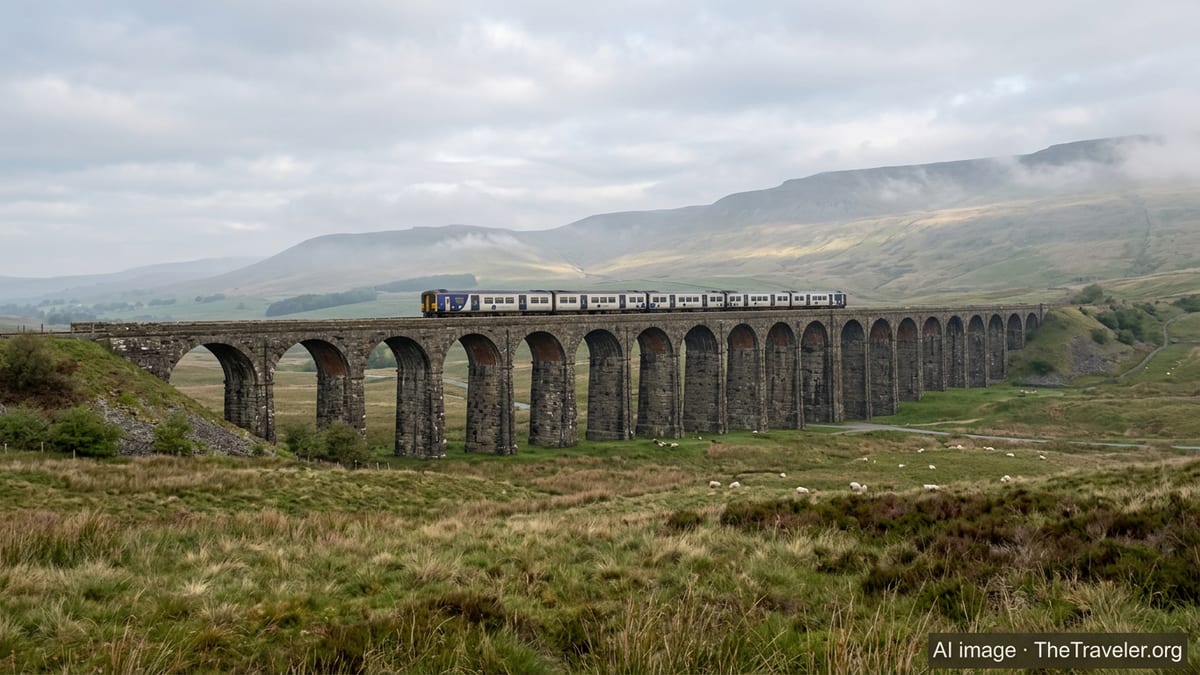
Central to the Settle–Carlisle’s enduring appeal is its dramatic infrastructure, much of it built in particularly harsh and exposed locations. The most famous example is Ribblehead Viaduct, a 24-arch stone structure that carries the line across the Ribble Valley at the foot of Whernside, one of Yorkshire’s Three Peaks. Rising around 30 metres above the moor, it has become a defining image of northern England’s railway landscape.
Historical accounts underline the human cost of building the line, with hundreds of navvies and their families living in temporary shanty settlements near the work sites in the 1870s. The anniversary programme is expected to highlight this social history, with exhibitions and interpretation boards at Ribblehead and other locations focusing on the lives of the workforce as well as the technical achievements of the engineers.
Beyond Ribblehead, the route includes a chain of tunnels and smaller viaducts as it climbs to its summit at Ais Gill, where trains traverse an exposed Pennine watershed before descending through the Eden Valley towards Carlisle. Rail industry features regularly describe the line as both an operational challenge in winter and a key diversionary route when the West Coast Main Line is disrupted, underscoring its ongoing strategic importance.
For visitors, the combination of working main line and living heritage offers a layered experience: contemporary rolling stock running to regular timetables over infrastructure that retains much of its original character, all within protected landscapes that have become a focus for conservation and outdoor recreation.
Tourism Growth and the Future of a Saved Line
The expectation that more than one million journeys will be made on the Settle–Carlisle during the 150th anniversary year marks a sharp contrast with the line’s situation in the 1980s, when it was threatened with closure amid declining freight traffic and questions over maintenance costs. A high-profile public campaign helped secure its future in 1989, and the route has since evolved into a flagship example of how rural railways can support both local mobility and visitor economies.
Recent community rail documentation points to rising passenger numbers over the past decade, with leisure travel forming an increasing share of use. The anniversary programme is being framed as an opportunity to strengthen that trend, particularly by encouraging off-peak and shoulder-season visits that benefit businesses outside the traditional summer holiday period.
The line also sits within a broader policy context that favours greener forms of domestic tourism. As climate-conscious travellers look for alternatives to car-based trips, well-promoted scenic rail routes such as the Settle–Carlisle are being highlighted in regional and national tourism strategies. Improvements at major hubs such as Carlisle station, where government-backed investment is aimed at creating a more accessible and attractive gateway, are expected to complement the anniversary activities along the route.
With a packed programme of steam specials, community events and digital innovations, the Settle–Carlisle’s 150th anniversary year is set to demonstrate how a once-threatened railway has become a modern success story. If forecasts of more than one million journeys are borne out, 2026 could prove a defining year in the continuing life of this iconic line.