

More news on this day
One of Britain’s most storied rail routes is stepping into the spotlight again, as the Settle to Carlisle Railway marks its 150th anniversary with new experiences that invite travelers to slow down and savour northern England’s epic landscapes from the comfort of a carriage window.
Get the latest news straight to your inbox!
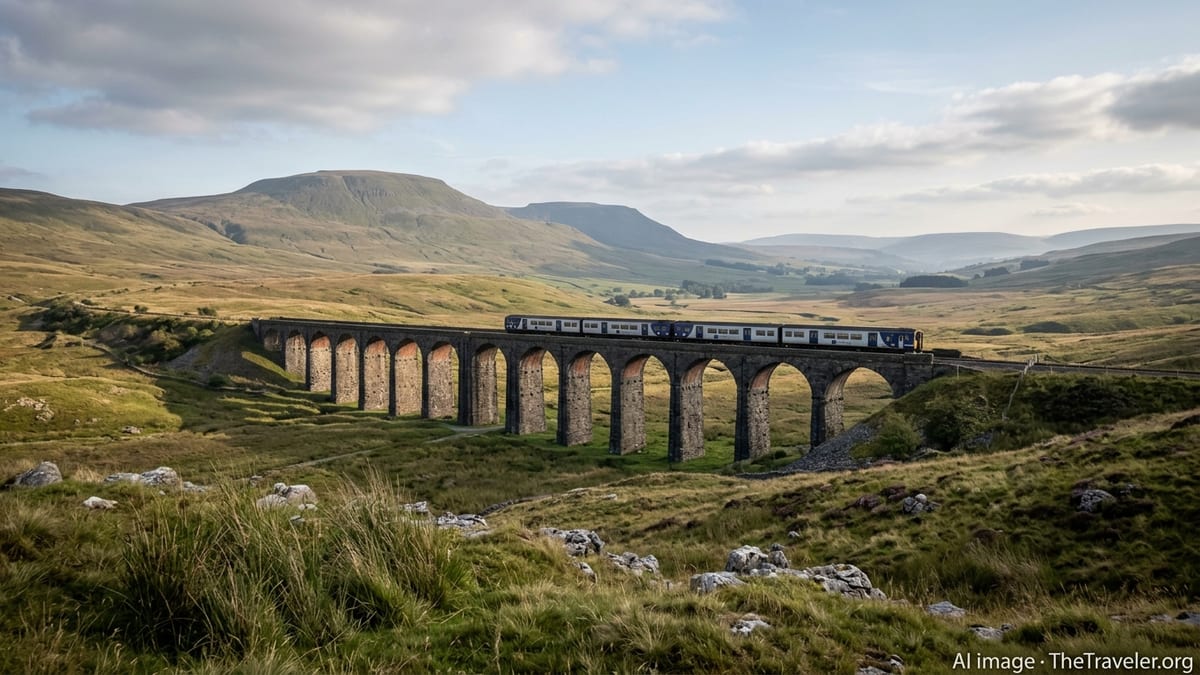
A Historic Line Turned Modern-Day Scenic Icon
Completed in the 1870s as a strategic main line through the Pennines, the 73‑mile Settle to Carlisle Railway has evolved into one of the United Kingdom’s most celebrated scenic routes, famed for its sweeping views across the Yorkshire Dales and North Pennines. Today it is a working railway and a growing tourist draw, carrying regular Northern services between Leeds and Carlisle alongside heritage excursions and special charters.
The route’s reputation has been reinforced in recent years by reports and travel coverage that consistently rank it among the world’s great railway journeys. Northern describes the line as one of its best performing, noting that almost all trains between Leeds and Carlisle ran without cancellation during a recent performance snapshot, adding reliability to its scenic appeal.
Rising interest in low‑carbon travel and renewed enthusiasm for rail holidays in the UK are helping to push the Settle to Carlisle line further into the tourism spotlight. Publicly available information indicates that tour operators, heritage rail groups and local development bodies are investing in new products that frame the route not only as a means of transport, but as a destination in its own right.
150th Anniversary Brings Steam, Charters and Celebrations
The year 2025 marks 150 years since the line opened to freight, with 2026 highlighting 150 years of passenger services, and a packed programme of commemorative journeys is taking shape. Coverage from community rail groups and regional media points to a series of special steam charters, including the Settle Carlisle 150 Express Charter Train, due to run from Carlisle to York via the line on 25 May 2026, with stops at Appleby, Settle and Skipton.
Another high‑profile event, the Border City Express, is scheduled for October 2025, running from Bradford to Carlisle and back over the Settle to Carlisle route. The charter, promoted as part of the wider Railway 200 celebrations and Bradford’s City of Culture year, will cross famous viaducts, skirt the Yorkshire Three Peaks and give passengers time to explore Carlisle before returning south.
These heritage workings build on a strong base of regular leisure traffic. Reports indicate that steam locomotives such as Tornado and other main line engines continue to feature on excursions over the route, drawing enthusiasts to the line’s summits, tunnels and open fells. For many travelers, the chance to experience traditional carriages, Premier Dining options or observation cars adds a layer of nostalgia to the already dramatic backdrop.
Digital Innovation Enhances the Onboard Experience
Alongside heritage steam, the Settle to Carlisle Railway is turning to digital tools to interpret its history and landscapes for a new generation of passengers. In late 2025, the line’s development company announced a free mobile app, Traxplorer, designed to provide real‑time commentary and curated content as trains progress through the Dales and over the high Pennine moors.
The app uses location data to highlight landmarks such as Ribblehead Viaduct, Blea Moor Tunnel and remote stations like Dent, often described as England’s highest mainline station. It also points out walking routes, viewpoints and local stories, from Victorian engineering feats to the community campaign that saved the line from closure in the 1980s.
This blend of physical journey and digital storytelling reflects a wider trend in European rail tourism, where heritage infrastructure is being paired with modern interpretation to appeal to independent travelers, families and international visitors. For the Settle to Carlisle Railway, it adds depth to what might otherwise be a simple point‑to‑point journey, encouraging passengers to treat the line as a moving gallery of northern England’s cultural and natural heritage.
An Engineering Epic Through England’s Wild Uplands
Visually, the Settle to Carlisle Railway is dominated by the Ribblehead Viaduct, a 24‑arch structure that strides across open moorland at around 300 metres above sea level. Built in harsh conditions by thousands of Victorian navvies, the viaduct is now an emblem of the line and a magnet for photographers, walkers and trainspotters who gather to watch passenger and freight trains cross its long stone arcades.
Beyond Ribblehead, the line threads through a succession of tunnels and cuttings, including the 1.5‑mile Blea Moor Tunnel, before descending past secluded farms, limestone scars and river valleys dotted with small stations. From the window, travelers can see the distinctive silhouettes of Pen‑y‑Ghent, Ingleborough and Whernside, the famed Yorkshire Three Peaks, along with dry‑stone walls and field barns that define the region’s traditional landscape.
The northern section of the route continues beside the River Eden, passing through market towns such as Appleby and Eden Valley farmland before arriving at Carlisle. For many visitors, the gradual transition from rugged upland scenery to the historic streets and sandstone architecture of the border city gives the journey a narrative arc that feels more like a curated tour than a simple rail connection.
Intercity Diversions Put the Route Back in the National Spotlight
Recent infrastructure work on the West Coast Main Line has unexpectedly given more passengers a taste of the Settle to Carlisle experience. In early 2026, Avanti West Coast began diverting selected intercity services between Preston and Carlisle over the scenic line during a planned closure of their usual route for bridge refurbishment near Penrith.
Regional news outlets report that this is the first time in more than a decade that modern intercity trains have used the Settle to Carlisle line in regular service. The temporary diversions, implemented to keep long‑distance services running during engineering work, have also exposed a wider audience of business and leisure travelers to views that are normally the preserve of local trains and charter excursions.
Travel industry commentary suggests that the diversions are reinforcing the line’s profile as both a practical diversionary route and a tourism asset. While the Settle to Carlisle remains primarily a secondary main line served by Northern, its role as a backup for the busy West Coast corridor highlights the continuing strategic value of this Victorian feat of engineering.
Planning an Epic Rail Journey Between Settle and Carlisle
For travelers considering the route, publicly available timetable information shows that Northern operates multiple services daily between Leeds and Carlisle, with key stops at Settle, Horton‑in‑Ribblesdale, Ribblehead, Garsdale, Kirkby Stephen, Appleby and Armathwaite. Standard off‑peak fares make it accessible as a day trip, with many visitors choosing to travel in one direction and break the journey for walks or village visits along the way.
Tourism boards and local rail groups often recommend planning around the dramatic central section between Settle and Appleby, where the scenery is at its most rugged and the line climbs to its 356‑metre summit at Ais Gill. On clear days, wide views open out across heather moorland and green valleys, while in winter the same vistas can be dusted with snow, creating a stark but striking contrast.
With anniversary steam specials, digital guides and occasional appearances by diverted intercity trains, the Settle to Carlisle Railway is entering its next 150 years with renewed momentum. For visitors, it offers an increasingly rich combination of history, engineering drama and slow‑travel escapism that underscores why this historic line is widely regarded as one of England’s most epic rail journeys.