

More news on this day
Travel through Oman faces fresh disruption as Qatar Airways, IndiGo and Oman Air cancel a cluster of key flights from Muscat and Salalah, cutting links to Doha, Kochi, Bangkok and other major hubs just as regional air corridors struggle to reopen.
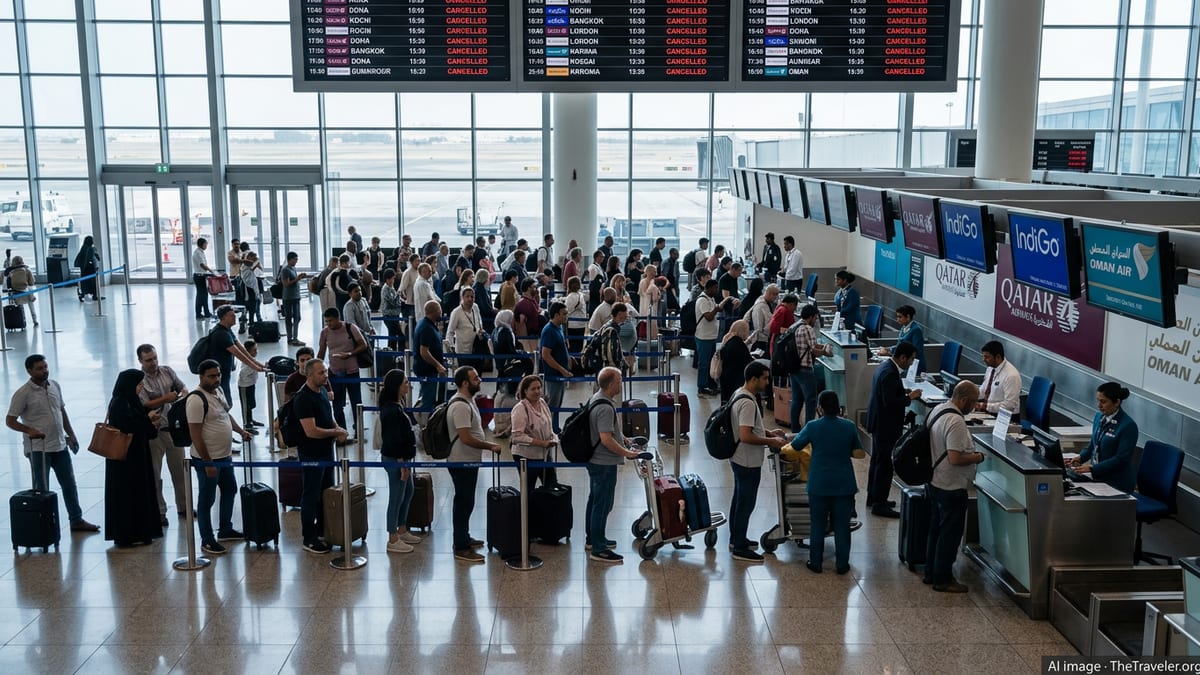
Seven Flights Scrapped as Regional Turmoil Hits Oman Routes
Authorities and airline advisories on March 10 confirm that at least seven passenger services involving Qatar Airways, IndiGo and Oman Air have been withdrawn from schedules at Muscat International Airport and Salalah, Oman’s two main gateways. The cancellations follow a turbulent ten days of airspace closures and rerouting across the Gulf and wider Middle East, triggered by escalating regional hostilities and associated security concerns for civilian aviation.
While Oman’s airspace and airports remain technically open, carriers using Muscat and Salalah as connectors to Doha, South Asia and Southeast Asia are trimming operations or suspending select rotations. Aviation coordination notices show Muscat limiting additional flights to embassy-approved repatriation services, a move that has pushed airlines to prioritise rescue operations and essential links over regular commercial frequencies.
The result for travellers is a patchwork schedule in which flights appear and disappear with little warning. On peak disruption days, analysts estimate that close to one third of departures from Muscat have been cancelled or heavily retimed, with regional routes to Doha and other Gulf capitals among the hardest hit.
Industry watchers say the seven latest cancellations from Muscat and Salalah are symbolically important because they slice into high-demand corridors: Doha for onward long haul, Kochi for the Indian expatriate market and Bangkok for both tourism and labour traffic. These routes normally underpin Oman’s role as a stable alternative hub in a volatile region.
Qatar Airways: Limited Operations and Muscat as a Backup Gateway
Qatar Airways remains one of the most affected carriers in the region, with its home airspace still subject to restrictions that have forced a broad suspension of normal passenger services. The airline has been operating only a skeleton network of relief and special flights, many of them routed through secondary gateways such as Muscat instead of its own hub in Doha.
Travel advisories and passenger reports indicate that some of these Qatar Airways services touching Muscat and Salalah have now been pulled from the schedule, including at least one Bangkok to Doha rotation and connecting sectors that were intended to funnel travellers onward to Europe. Stranded passengers have described being rebooked multiple times, only to see subsequent dates also cancelled at short notice as the carrier recalibrates its plan around evolving airspace permissions.
Qatar Airways has signalled an intent to add limited flights back into Doha when safe corridors allow, including services linking to Kochi, Muscat and other high-demand cities. However, capacity remains extremely tight and the latest cancellations in Oman underscore how fragile those tentative plans are. Travellers booked on any service that relies on transit through Doha are being advised to treat their itineraries as provisional until confirmed within a short window before departure.
For now, Muscat is functioning as a pressure valve for Qatar Airways and other Gulf carriers, absorbing rerouted traffic and emergency operations. Yet the withdrawal of several Oman-linked flights shows that even this comparatively stable corridor is not immune to the knock-on effects of the wider regional crisis.
IndiGo and Oman Air Trim Gulf and South Asia Links
India’s IndiGo, which has emerged as a crucial bridge between Kerala’s airports and the Gulf, has also been forced to adjust its Oman schedule. Recent days saw the budget carrier mount limited services connecting Kochi and other South Indian cities to Middle East destinations, but coordination notices and local airport updates now indicate that at least one Kochi flight pairing touching Oman has been among those affected by the latest round of cancellations.
For Kerala’s enormous expatriate community, these changes carry outsized consequences. Flights from Kochi to Muscat and onward to Doha or other Gulf hubs are a key artery for workers on rotation and families returning home. With IndiGo trimming rotations and rivals facing their own constraints, demand has spilled onto the remaining Oman Air and Air India services, pushing up fares and leaving fewer options for last-minute travel.
Oman Air, the national carrier, has simultaneously announced an extended suspension of flights to a string of regional cities, including Doha and several other Gulf and Levant destinations, as airspace closures complicate safe routing. Although these suspensions cover a wider portfolio than the seven headline cancellations in Muscat and Salalah, they intersect directly with the disrupted schedules of Qatar Airways and IndiGo, amplifying the impact on passengers trying to link Doha, Kochi and Bangkok via Oman.
To partially offset the cuts, Oman Air has added extra services on certain still-viable routes and is prioritising seats for travellers whose original flights have been scrapped. Even so, capacity remains well below normal, and airport coordination agencies have warned that additional ad hoc cancellations are possible if security conditions or insurance constraints tighten further.
Muscat and Salalah Stay Open but Strain Under Overflow Traffic
Unlike several neighbouring countries that have closed airports outright or dramatically restricted civilian flights, Oman has kept Muscat and Salalah open to commercial traffic. This status has transformed the sultanate into an indispensable detour for carriers evacuating stranded travellers and rerouting long haul services away from closed or high-risk airspace to the north.
However, that relative openness comes with pressure. With many airlines funnelling diversions and special services into Oman, runway slots and terminal capacity at Muscat in particular have become scarce. Airport planners moved earlier this month to halt the approval of additional flights except for embassy-backed repatriation operations, a step intended to prevent gridlock and ensure that essential missions can proceed.
For passengers, the practical effect is growing congestion and uncertainty. Flight-tracking data and first-hand accounts describe packed departure halls, long queues at check-in and security, and sudden gate changes as carriers shuffle aircraft and crew to chase available corridors. Even travellers whose flights are running often face extended detours around closed airspace, adding hours to journeys and complicating tight connections.
Salalah, normally a quieter leisure gateway in Oman’s south, has also seen its modest capacity stretched by diversions and rerouted services. The cancellation of several flights there removes options for travellers hoping to bypass Muscat altogether, reinforcing the sense that the entire Omani system is now operating close to the edge of what it can comfortably handle.
What Travellers Through Oman Need to Do Now
With schedules in flux and seven more key flights from Muscat and Salalah now off the board, travellers bound for or transiting through Oman need to adopt a far more hands-on approach to their itineraries. Airlines and airports across the region are urging passengers to reconfirm their bookings repeatedly in the 24 to 48 hours before departure, watch for notifications via apps and text messages, and avoid turning up at the terminal without proof that their specific flight is operating.
Agents and airline customer service teams report heavy call volumes as customers seek rebooking and refunds, especially from Qatar Airways passengers holding tickets that involve Doha connections. Industry experts advise that travellers be prepared with flexible date ranges, alternative routings that avoid the tightest airspace pinch points, and a clear understanding of each airline’s disruption policy before they call or visit a ticket office.
Those still considering fresh bookings through Muscat or Salalah are being advised to treat Oman as relatively safer from an operational standpoint but by no means immune from disruption. Additional cancellations remain possible if regional tensions spike or insurers reevaluate risk in the coming days, and analysts warn that the path back to anything resembling a normal timetable will likely be gradual rather than sudden.
For now, the cancellation of seven key flights by Qatar Airways, IndiGo and Oman Air serves as a sharp reminder that even the Gulf’s most resilient hub is navigating an exceptionally fragile moment. Anyone relying on Oman as a bridge to Doha, Kochi, Bangkok or beyond should plan for contingencies, allow generous buffers in their itineraries and brace for last-minute changes as the situation continues to evolve.