

More news on this day
Hundreds of travelers passing through Toronto Pearson International Airport are facing severe disruptions as a fresh wave of operational issues and knock-on delays triggers 16 flight cancellations and more than 280 delays across routes linking Canada, Mexico, the United States and Europe.
Get the latest news straight to your inbox!
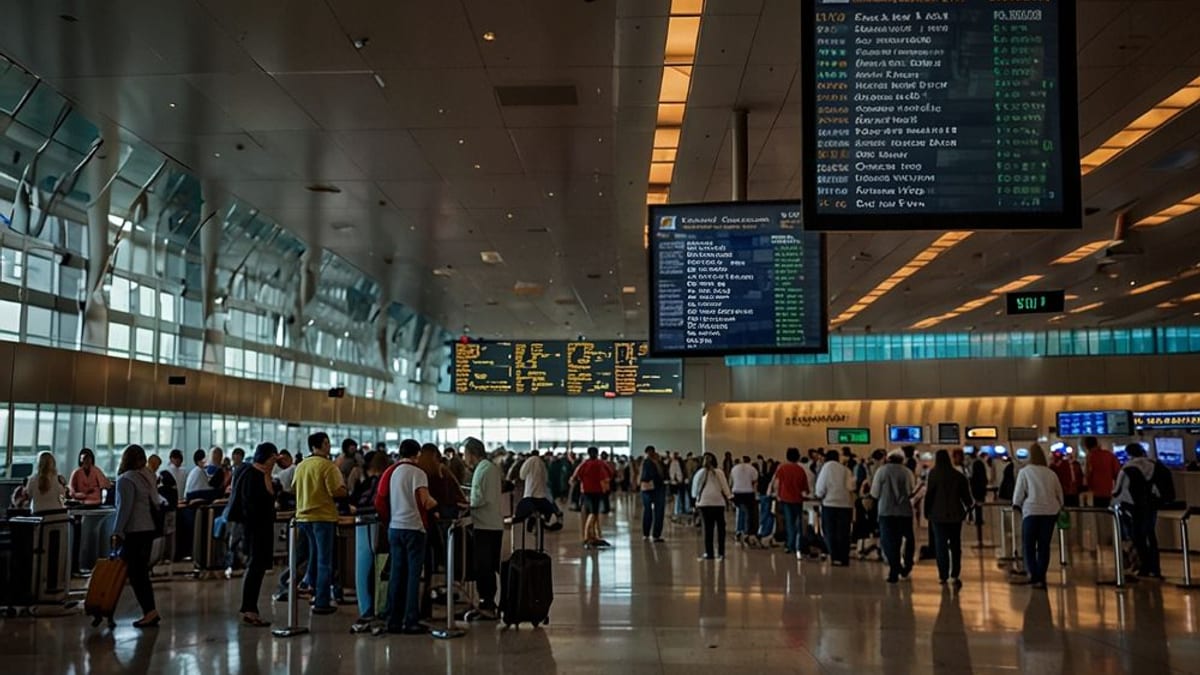
Image by Travel And Tour World
Ripple Effects Across Major Carriers and Routes
Publicly available tracking data and airline status boards indicate that the latest disruption at Toronto Pearson is affecting a wide mix of domestic and international services, touching everything from short hops within Ontario and Quebec to long haul departures bound for the United States, Mexico and European hubs. Air Canada and its regional partner Jazz appear among the hardest hit, alongside WestJet, Lufthansa, American Airlines and several other carriers that rely on Pearson as a critical gateway.
The 16 cancellations reported within a short window represent only part of the picture. More than 280 delayed flights are contributing to extensive knock-on impacts across airline networks, with late-arriving aircraft and crews struggling to reset schedules. Some services are operating hours behind timetable, stretching into late evening and early morning arrival banks.
Routes connecting Toronto with major U.S. cities such as New York, Chicago and Dallas are showing particular strain, while holiday and leisure services to sun destinations in Mexico and the Caribbean are also displaying extended delays. European links, including transatlantic services to major hubs in Germany and the United Kingdom, are similarly experiencing schedule disruption as carriers work to reposition aircraft and crews.
Travel industry monitoring suggests that the pattern at Pearson is feeding into wider congestion at connecting airports downline, creating a chain of missed connections and rebookings for passengers traveling beyond their first destination.
Operational Strain at a Key North American Hub
Toronto Pearson has been under sustained operational pressure over recent travel seasons, with earlier episodes involving weather, infrastructure incidents and system outages contributing to repeated waves of disruption. Recent industry reports describe how ground delay programs, runway closures and diversions can leave airlines with aircraft and crew out of position, making it difficult to restore normal schedules quickly.
During the latest episode, flights arriving from Western Canada and the U.S. Midwest have been particularly vulnerable when earlier weather or air traffic control constraints cause late departures. By the time those aircraft reach Toronto, their onward rotations to international destinations frequently face crew duty-time limits and congestion in departure banks, adding to the tally of delayed or canceled services.
Operational updates from airlines and airport data services show departures being held at gates for extended periods while crews wait for new wheels-up times, or while ground handlers work through backlogs of aircraft needing turnarounds. When delays reach several hours, national and international aviation rules on crew duty time can force cancellations if fresh crews are not available.
Observers of Canadian aviation trends note that despite investments in technology and staffing, Toronto Pearson remains particularly sensitive to any system shock, with even short incidents sometimes cascading across the schedule for an entire day or longer.
Passengers Face Long Lines, Missed Connections and Rebookings
For passengers, the disruption is translating into long security and check in lines, congested boarding areas and extended waits on the tarmac. Social media posts and traveler forums describe hours-long queues, missed onward connections and difficulty securing alternative itineraries, particularly for those traveling on peak weekend and holiday dates.
Families bound for Mexico and U.S. sun destinations are reporting last minute departure time changes, some within hours of scheduled boarding, while business travelers on tight schedules between Toronto and U.S. financial centers are being forced to rebook or downgrade from nonstop flights to multi stop routings. Reports describe some travelers arriving at Pearson only to learn that earlier delays to inbound aircraft have pushed their departure well into the night.
Travel advisers and consumer advocates monitoring the situation suggest that passengers with tight connections through Pearson, especially those continuing on to Europe, are at higher risk of misconnection during the current disruption. Overnight hotel demand near the airport appears to be elevated as stranded travelers look for accommodation while waiting for the next available flight.
In addition to missed connections, baggage handling has become more complex in the congested environment. Travelers recount instances of checked luggage remaining in Toronto while passengers are rebooked via alternative routings, creating additional delays in reuniting passengers with their belongings.
Airlines Adjust Schedules and Offer Limited Flexibility
Carriers operating at Pearson are responding with a mix of tactical cancellations, schedule adjustments and limited customer flexibility. Public updates from airlines show that some point to adverse weather, air traffic control restrictions or broader operational constraints when listing the reason for disruption, labeling many of the affected services as delayed due to “operational” issues.
To limit longer-term knock-on effects, some airlines are choosing to proactively cancel selected flights, especially duplicates on high frequency routes, in order to protect the remainder of their schedules. This strategy helps ensure that aircraft and crew are positioned for the following day, but it also increases the number of passengers in need of rebooking in the short term.
Where capacity allows, carriers are re-accommodating travelers on later same day flights or on partner airlines across North America and Europe. However, reports from passenger forums suggest that options can be limited on heavily booked routes, with some travelers facing waits of 24 hours or more for the next available seat, particularly on transatlantic services.
Some airlines are issuing travel waivers for affected dates and destinations, giving passengers the option to change travel plans without standard change fees. These waivers tend to be time limited and subject to availability, prompting advice from travel agents and industry observers that passengers act quickly if they wish to adjust their itineraries.
Advice for Travelers Heading to or Through Toronto Pearson
Given the scale of the latest disruption, aviation analysts and experienced travelers are urging passengers to build extra flexibility into any journey involving Toronto Pearson, especially those connecting onward to the United States, Mexico or Europe. Monitoring flight status closely via airline channels and airport information boards before leaving home is widely recommended.
For those with tight connections, publicly available travel guidance suggests considering earlier feeder flights into Pearson or, where feasible, nonstop alternatives that bypass the hub entirely. Travelers with checked baggage may wish to allow for longer layovers, as bags are more likely to miss short connections when schedules are under strain.
Passenger advocacy groups regularly advise keeping essential items, medications and one change of clothes in carry on luggage in case of irregular operations. In the current environment, such precautions appear particularly relevant for those departing on long haul flights or making international transfers involving customs and immigration processing.
With disruptions at Pearson showing few signs of vanishing from the North American travel landscape, industry observers expect airlines, airport operators and government agencies to remain under pressure to improve resilience. For now, however, passengers moving through Canada’s busiest airport continue to face a higher than usual risk of delays, cancellations and disrupted travel plans.