

More news on this day
Travelers passing through New York’s John F. Kennedy International Airport on Friday faced widespread disruption, as more than 120 delays and at least a dozen cancellations affected flights operated by JetBlue, American Airlines, Emirates and several other carriers on key routes to London, Dubai and major US cities.
Get the latest news straight to your inbox!
Ripple Effects Across Domestic and Long-Haul Routes
Publicly available flight-tracking data for Friday shows a sharp spike in disrupted operations at John F. Kennedy International Airport, with a concentration of delays on busy domestic corridors and transatlantic and transcontinental services. New York, already one of the most congested air travel hubs in the United States, saw departure and arrival times pushed back by anywhere from 45 minutes to several hours on affected services.
JetBlue and American Airlines, two of the largest operators at JFK, appeared among the carriers most visibly affected. Delays mounted on high-demand flights linking New York with major US cities such as Los Angeles, San Francisco, Miami, Dallas and Chicago. According to published coverage, some passengers reported rolling departure times, gate changes and extended waits on the tarmac as aircraft crews and ground staff worked to reposition planes and clear backlogs.
International routes were not spared. Services between New York and London experienced knock-on delays as aircraft arrived late from earlier segments, compressing turnaround times and straining already tight schedules. Emirates operations to and from Dubai were also disrupted, with late-running inbound flights from the Gulf affecting outbound departures and onward connections.
Aviation analysts note that when an airport operating near capacity experiences even a modest disturbance, the effects can quickly multiply. A handful of late arrivals early in the day can cascade into dozens of subsequent delays and cancellations, leaving airlines with limited flexibility to rebuild their schedules in real time.
Operational Strain and Weather Aftershocks
While there was no single catastrophic event at JFK on Friday, industry reports indicate that the disruptions stemmed from a combination of factors, including residual weather-related constraints across the Northeast and mid-Atlantic, ongoing staffing challenges and tight aircraft utilization. Earlier in the season, a series of winter storms had already exposed vulnerabilities in airline operations, forcing carriers to run with thinner margins for recovery on peak travel days.
Recent reporting on North American winter weather impacts has highlighted how storms sweeping through the region in January 2026 led to thousands of flight delays and cancellations nationwide. Although conditions on Friday were considerably calmer, the broader network continues to feel the aftershocks of that turbulent period, particularly at slot-constrained hubs such as JFK where schedules leave little room to absorb new disruptions.
Observers also point to chronic ground congestion as a contributing factor. Taxi queues, de-icing requirements, runway sequencing and the sheer volume of movements at JFK can slow operations even in clear weather, especially when combined with intermittent thunderstorms or low visibility at other points in the network. As a result, an aircraft held earlier in the day at a different airport may arrive into New York significantly behind schedule, forcing knock-on delays on its next sector.
According to aviation data specialists, this pattern of cumulative operational strain has become more common as airlines seek to maximize aircraft use and meet strong demand for both leisure and business travel. When demand is high and spare aircraft and crew are limited, even routine disruptions can tip an already stretched schedule into broader chaos.
JetBlue, American and Emirates Among Most Visible Carriers Affected
At JFK, JetBlue’s prominent role as a major base made its delays particularly noticeable to travelers. Recent analyses of JetBlue’s performance at New York airports suggest that the carrier has faced repeated weather and staffing challenges during the winter travel season, contributing to a higher incidence of delayed and canceled flights on busy holiday and weekend periods.
American Airlines, which operates a substantial portfolio of transcontinental and transatlantic services from JFK, also logged multiple delays on Friday. Publicly available information shows that American’s New York operations have been under pressure when weather or air-traffic issues arise along the East Coast, affecting high-value routes to cities such as Los Angeles, Miami and London.
Emirates flights connecting New York with Dubai and onward destinations played a central role in the international picture. Over recent weeks, coverage of Emirates operations has highlighted intermittent cancellations and reschedulings on certain US-bound routes, leading travelers to monitor flight-status updates more closely and adjust plans around potential last-minute disruptions.
Other international carriers serving JFK were also swept up in Friday’s difficulties, though to varying degrees. When a key hub experiences cascading delays, airlines often must make decisions about whether to hold flights for connecting passengers, cancel select services or reroute aircraft, each of which has implications for travelers across multiple continents.
Passengers Face Long Lines, Missed Connections and Rebookings
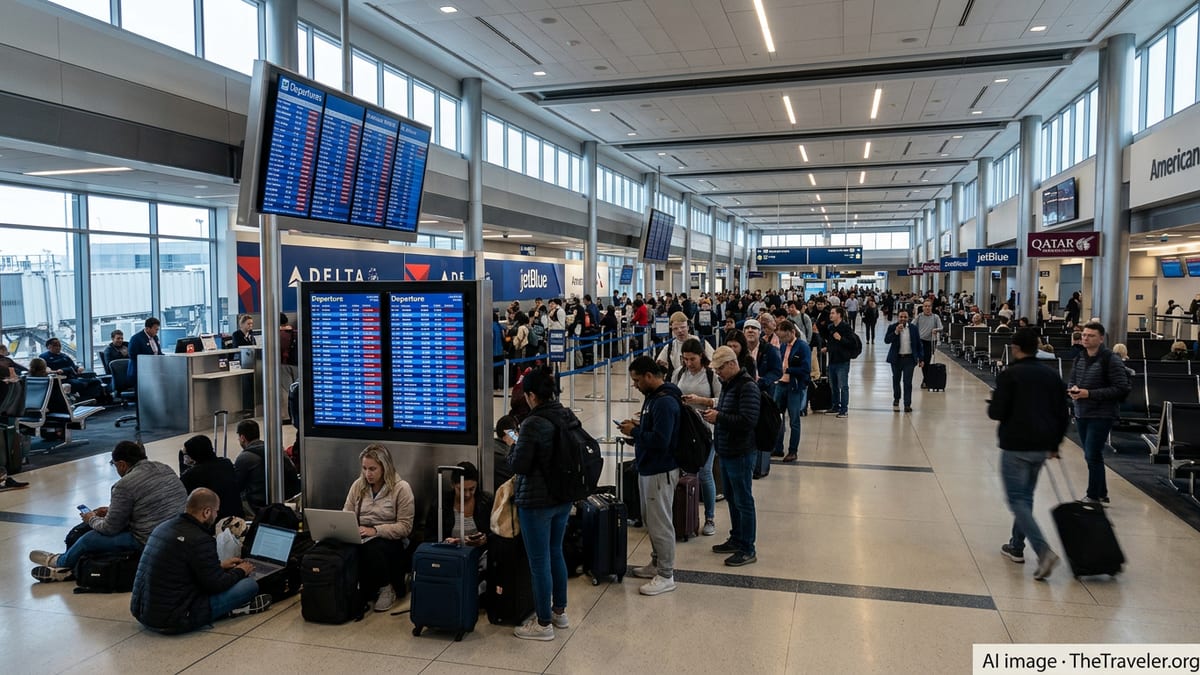
The operational problems at JFK translated into a familiar scene inside terminals. Reports from travelers described long queues at check-in counters and self-service kiosks, crowded gate areas and anxious lines at customer service desks as passengers tried to secure alternative itineraries. For those with onward connections in New York, London or Dubai, missed links created additional complications.
Travelers heading to London and other major European cities faced the risk of arriving too late for same-day connections to regional destinations, resulting in unexpected overnight stays or rerouting through secondary hubs. Passengers traveling via Dubai encountered similar challenges, with late arrivals into the Gulf reducing the availability of convenient onward flights into Asia, Africa and the Indian Ocean region.
Published guidance from consumer advocates stresses the importance for passengers in such situations to monitor airline apps and flight-status tools closely, as rebooking options can change quickly. In some cases, travelers may be able to secure earlier alternatives through nearby airports or different routings, particularly when multiple carriers serve the same city pairs.
Airlines generally encourage customers to complete as many changes as possible via digital channels when major disruptions occur, both to ease pressure on airport staff and to allow passengers to make decisions without waiting in long physical lines. However, when delays stretch into many hours or involve overnight stays, travelers often still need in-person assistance to address issues such as hotel arrangements or complex ticket changes.
What the Disruptions Mean for Upcoming Spring Travel
The latest wave of delays and cancellations at JFK arrives just as airlines prepare for the spring break travel period, traditionally one of the busiest stretches of the year for leisure itineraries. Analysts suggest that the events at JFK may serve as an early warning for carriers and passengers alike that the system remains vulnerable to congestion and weather-related shocks.
According to aviation planning experts, high load factors and tightly packed schedules heading into late March and April will leave operators with limited capacity to absorb additional disruptions. Any new bout of severe weather in the Northeast, Europe or the Gulf could quickly ripple across transatlantic and transcontinental networks, affecting flights similar to those that saw delays at JFK on Friday.
Travel industry observers recommend that passengers traveling through New York and other major hubs build more buffer time into their itineraries, especially when connecting to long-haul flights to destinations such as London and Dubai. Booking earlier departures, allowing generous layovers and considering flexible fares or travel insurance options are among the strategies frequently highlighted in published advice.
For airlines, the latest disruption underscores ongoing debates about schedule resilience, staffing levels and infrastructure investment at major airports. As demand continues to rebound and expand, the balance between high aircraft utilization and operational robustness at hubs like JFK is likely to remain a central issue in the months ahead.