

More news on this day
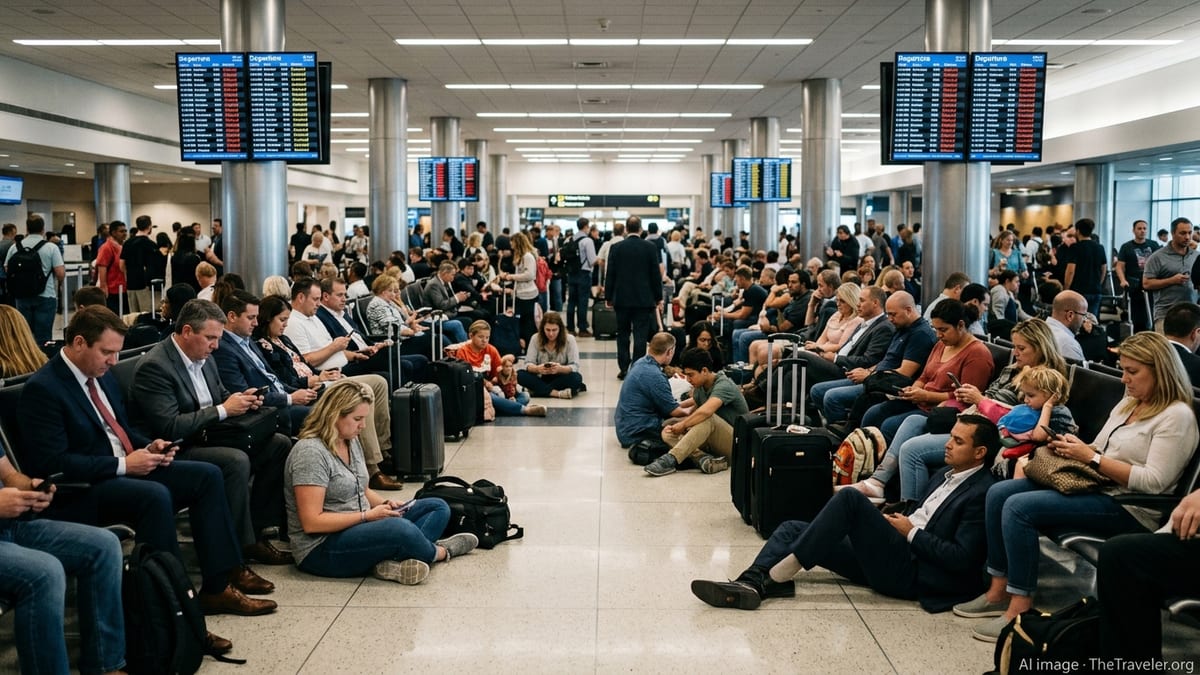
Severe disruption across the U.S. air network is stranding passengers from New York to Florida, as Dallas Love Field Airport reports dozens of delayed and canceled flights and major knock-on effects at hubs in Atlanta, Orlando and Tampa.
Get the latest news straight to your inbox!
Delays and Cancellations Mount at Dallas Love Field
Publicly available tracking data on March 24 indicates that Dallas Love Field, the primary base for Southwest Airlines, is grappling with a spike in operational disruption, with around three dozen departures delayed and roughly 80 flights canceled over the course of the day. The imbalance between a relatively modest number of late departures and a much higher volume of cancellations suggests that airlines opted to proactively cut services rather than attempt to operate severely delayed rotations.
Operational summaries show that the cancellations are concentrated on short- and medium-haul domestic routes, many of them linking Dallas with major connection points and leisure destinations across the eastern United States. As Love Field functions as a critical node in Southwest’s point-to-point network, each scrubbed departure has a multiplying effect, displacing aircraft and crew scheduled to operate onward flights later in the day.
Flight-status boards and passenger reports describe a familiar pattern of rolling delays that eventually convert into outright cancellations, leaving travelers scrambling to secure scarce rebooked seats. With gate space limited by long-standing restrictions on the number of commercial gates at Love Field, even modest disruptions can quickly translate into crowded concourses, long queues at customer-service desks and extended waits for updated flight information.
Ripple Effects From New York to Atlanta and Central Florida
The disruption in Dallas is landing on a national air system that has already been under stress from a series of weather and operational shocks in early 2026. In the weeks leading up to the latest issues, a powerful winter storm in late February disrupted thousands of flights across the Northeast, creating a backlog that left airlines with thinner schedule buffers and aircraft out of position.
Timetables show that many of the canceled and delayed flights at Dallas Love Field are tied to high-frequency corridors linking Texas with New York City’s airports, Atlanta’s dominant hub and major Florida gateways in Orlando and Tampa. When Love Field departures on these routes are pulled, the impact is felt in both directions, with arriving flights scrubbed and departures from the East Coast and Southeast left without inbound aircraft.
As a result, passengers in New York, Atlanta, Orlando and Tampa have reported being stranded for hours as airlines work to rebuild point-to-point operations around missing planes and time-limited crews. In some cases, carriers have consolidated multiple flights into single departures, while others have advised travelers to accept connections through alternative hubs, further straining capacity on routes that remain in service.
Weather, Network Strain and Infrastructure Limits Combine
Analysts reviewing the pattern of disruption point to a combination of lingering weather effects, network strain and the structural limits of key airports. The February 2026 blizzard left airlines facing heavy maintenance checks on aircraft that operated in severe conditions, along with lingering crew scheduling complications as staff and equipment remained out of position long after the storm had cleared.
In Texas, recent episodes of convective weather and low ceilings have periodically slowed traffic flows into and out of the Dallas region, forcing air traffic managers to cap arrival and departure rates. Although Dallas Love Field has recovered from earlier runway work and modernization projects, the airport remains a tightly constrained facility with a fixed gate count and limited room to absorb prolonged irregular operations.
Across the broader system, years of strong demand growth have pushed airlines to run tighter schedules with less slack for recovery. Public operational data from recent months show that when a disruption arises at a key node such as Dallas, Atlanta or New York, airlines have fewer spare aircraft and crews available to step in, making it more likely that a burst of delays will quickly evolve into widespread cancellations.
Passengers Face Extended Waits and Difficult Rebooking Choices
For travelers caught in the latest turmoil, the immediate impact has been long lines and tough choices. Social media posts and local coverage from Dallas report crowded terminals, with many passengers queuing to rebook after their flights shifted from delayed to canceled with little warning. Similar scenes have been described at New York, Atlanta, Orlando and Tampa, where travelers arriving early in the day have discovered onward flights unavailable or severely backed up.
Airlines operating through Dallas Love Field have been offering standard rebooking options and limited meal or hotel vouchers in line with published policies, but high load factors on remaining flights mean that many passengers are being pushed to departures one or two days later, especially on popular leisure routes to and from Florida. Some travelers have opted to reroute through alternative hubs or even travel overland to neighboring airports in an effort to find open seats.
Consumer advocates note that, despite recent government attention to airline performance and passenger rights, compensation and care obligations in the United States still depend heavily on the cause of disruption and each carrier’s internal rules. When disruptions are attributed to weather or air traffic management constraints, travelers often receive fewer guarantees than in the case of controllable mechanical or staffing issues.
Outlook for Recovery and Advice for Upcoming Travelers
Operational forecasts suggest that conditions at Dallas Love Field and its key partner airports could begin to stabilize within the next 24 to 48 hours, assuming no further adverse weather or technical issues. However, the scale of cancellations recorded today means that aircraft and crews will need time to return to their normal patterns, particularly on complex multi-leg routes that connect the central United States with the Northeast and the Southeast.
Travel specialists recommend that passengers scheduled to fly through Dallas, New York, Atlanta, Orlando or Tampa in the coming days monitor their reservations closely using airline mobile applications and flight-tracking tools, and consider adjusting plans where possible to earlier departures or less congested times of day. Flexible travelers may find better odds by accepting longer connections that avoid the most heavily affected hubs, or by departing from or arriving at secondary airports in the same metropolitan areas.
As the U.S. aviation system continues to navigate strong demand, volatile weather and infrastructure constraints, the current episode at Dallas Love Field underscores how quickly localized disruptions can cascade into widespread travel turmoil. For now, passengers across several major regions face a difficult combination of uncertainty, crowded terminals and extended journeys as airlines work to restore their schedules.