

More news on this day
Air travel to and from Germany has been thrown into turmoil as Lufthansa, Qatar Airways and several partner and codeshare airlines cancel more than 300 flights, disrupting connections to major cities including Amsterdam, Berlin, Barcelona, Dublin, Milan, Paris, New York, Chicago, Miami, Tokyo and Doha and leaving tens of thousands of passengers scrambling to rebook at the height of the spring travel period.
Get the latest news straight to your inbox!
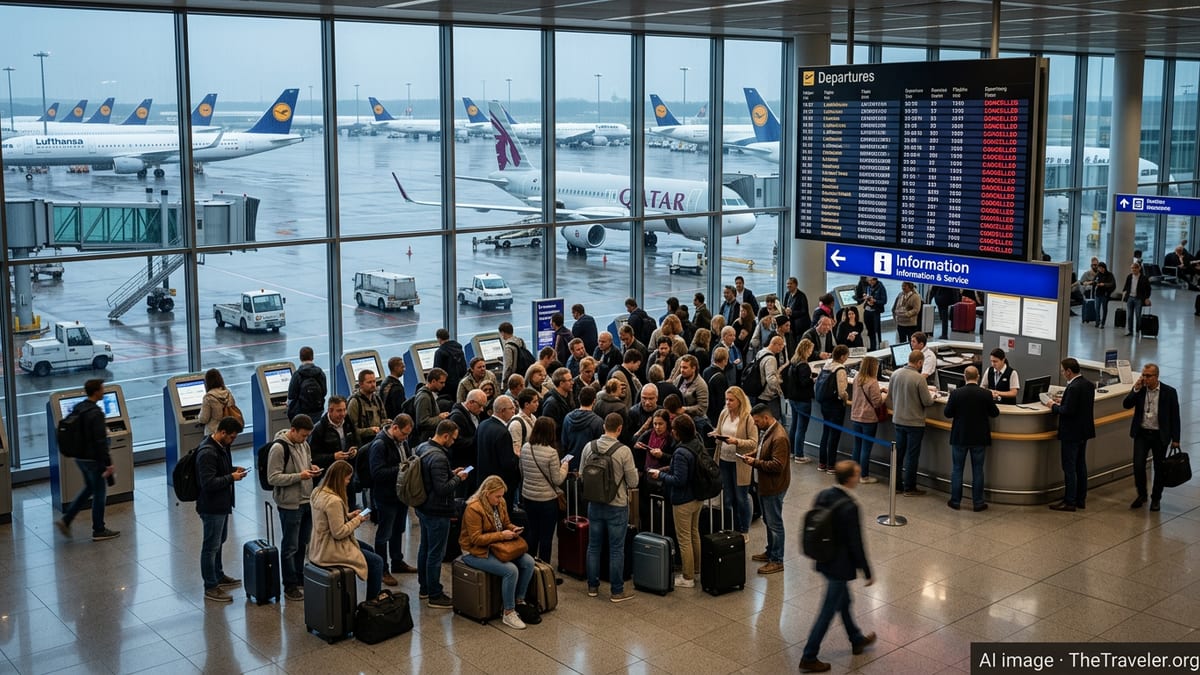
Strikes, Airspace Restrictions and Scheduling Cuts Collide
The latest wave of cancellations comes on the heels of a coordinated 24-hour strike by Lufthansa pilots and cabin crew in February, which forced the carrier to ground nearly 800 flights across Germany and exposed the fragility of current schedules. While that industrial action officially ended, knock-on crew rotations, aircraft positioning problems and residual congestion have continued to reverberate through March.
Compounding the challenge, Qatar Airways is still operating only a limited schedule after Qatari airspace closures triggered a temporary suspension of its regular commercial network. The airline has announced a patchwork of select flights in mid-March aimed at repatriating stranded passengers, but those services fall far short of normal frequencies and leave many itineraries via Doha partially or fully canceled.
German airports, particularly Frankfurt and Munich, are also adjusting to pre-planned structural cuts by Lufthansa to some domestic and European routes this year. As those capacity reductions intersect with strikes and Gulf-region disruptions, the result is a sharp spike in cancellations that has cascaded across alliance partners and codeshare routes.
The immediate impact for travelers is a tangle of missed connections and broken multi-leg journeys, with passengers who once relied on Germany and Doha as smooth transfer hubs now facing complex re-routing or multi-day delays.
Key Routes Hit: From European Hubs to US Gateways
Among the hardest-hit corridors are short-haul European links from Germany to Amsterdam, Paris, Barcelona, Milan and Dublin, where Lufthansa and its partners have pulled dozens of departures in recent days. These short flights are often used as feeders into long-haul services, so a single cancellation can unravel entire itineraries to North America, Asia or the Middle East.
Transatlantic links are also under pressure. Flights between Germany and New York, Chicago and Miami have seen cancellations or last-minute aircraft changes, with some passengers rebooked via alternative hubs such as London, Zurich or Vienna. Travelers report being offered re-routes on other Star Alliance members or rival carriers at short notice, frequently involving overnight layovers.
In the Gulf, Qatar Airways’ restricted operation has hit connections between Doha and key European cities such as Amsterdam, Milan and Paris, as well as long-haul links to New York and Miami. With regular schedules still suspended and only select relief flights running, passengers bound for Asia and Africa via Doha are facing uncertainty well into the second half of March.
Routes between Germany and major Asian hubs like Tokyo are feeling the strain as well, as disrupted feeder flights and limited wide-body availability force airlines to consolidate services. Some Tokyo-bound travelers are being shifted onto indirect routings via other European capitals or the Middle East, lengthening journey times significantly.
Thousands Stranded as Rebooking Systems Struggle
Travelers caught up in the chaos describe jammed customer service hotlines, unresponsive chatbots and airport help desks overwhelmed by queues. Some Lufthansa passengers only discovered their flights to or from Berlin, Frankfurt or Munich had been canceled when they checked their booking the day before departure, reporting little or no proactive communication.
Qatar Airways customers with mid-March itineraries via Doha, including connections to Amsterdam, Berlin and Chicago, say they are stuck in limbo as the airline updates its limited schedule in short increments, making it difficult to know whether to wait for an official cancellation or proactively book an alternative on a refundable fare.
Online communities are full of case studies of complex re-routes: Germany to Barcelona via an unexpected UK connection, Berlin to Southeast Asia via Istanbul, or Tokyo to Europe via an improvised combination of alliance partners. Many travelers are juggling hotel cancellations, missed tours and business meetings as they attempt to salvage their trips.
Airport operations staff warn that disruption can persist for several days after a major cancellation wave, as aircraft and crews slowly return to their intended rotations. Even passengers whose flights are still scheduled are being advised to monitor their bookings closely and arrive early at the airport in case of last-minute gate or timing changes.
What Airlines Are Offering Affected Passengers
Airlines involved in the disruption are emphasizing that passengers whose flights are canceled are entitled to rebooking or refunds, in line with European passenger rights rules for departures from EU and EEA airports. In practice, however, finding available seats during a period of widespread capacity constraints can be challenging, especially on popular routes between Germany and major hubs like Paris, Amsterdam and New York.
Lufthansa has activated flexible rebooking options on a number of routes to and from Germany, allowing affected customers to switch to alternative dates or other Lufthansa Group carriers at no additional fare cost, subject to availability. The airline says it is prioritizing same-day or next-day alternatives, but acknowledges that some travelers may be delayed by several days if flights are heavily booked.
Qatar Airways, which continues to operate under special waivers amid airspace restrictions, is focusing on repatriation-style flights and offering passengers free date changes, rerouting where possible or refunds when services are canceled. Travel agents report that in some cases the carrier is authorizing rebooking on partner airlines to restore connectivity to cities such as Amsterdam, Milan, Paris, New York and Miami.
Compensation eligibility will vary depending on the cause of each cancellation, with strikes generally covered under EU rules but airspace closures and certain security-related disruptions often classified as extraordinary circumstances, which can limit cash payouts even when passengers still receive assistance and rebooking.
How Travelers Can Navigate the Ongoing Turbulence
With schedules in flux and further adjustments likely in the coming days, seasoned travel agents are urging passengers with upcoming trips touching Germany or Doha to adopt a proactive approach. That means checking bookings daily, ensuring airlines and booking platforms have up-to-date contact details, and downloading carrier apps to receive push notifications of last-minute changes.
Experts also recommend building extra buffer time into itineraries where possible, particularly for journeys that rely on tight connections through Frankfurt, Munich or Doha. Where flexible tickets or fare classes are available, the added upfront cost can provide valuable options if schedules shift again.
Travelers who must book new tickets through affected hubs are being encouraged to favor routings with strong interline and alliance coverage, which can make it easier to be re-accommodated on partner airlines if things go wrong. Those already abroad should keep essential items, medications and a change of clothes in carry-on baggage in case unexpected overnight stays are required.
For now, the combination of industrial unrest, regional airspace constraints and structural schedule changes means Europe’s spring travel season is off to a turbulent start. Until operations stabilize at Germany’s major hubs and Qatar Airways can restore a more predictable timetable, passengers on routes linking Amsterdam, Berlin, Barcelona, Dublin, Milan, Paris, New York, Chicago, Miami, Tokyo and Doha should be prepared for a journey that may be considerably more complicated than the ticket suggests.