

More news on this day
Travelers across the United States faced another difficult day in the air as Hartsfield-Jackson Atlanta International Airport recorded 186 flight delays and 24 cancellations, triggering schedule disruptions for Spirit, Frontier, Delta, and other airlines on busy routes linking Atlanta with Fort Lauderdale, Miami, Philadelphia, and additional domestic hubs.
Get the latest news straight to your inbox!
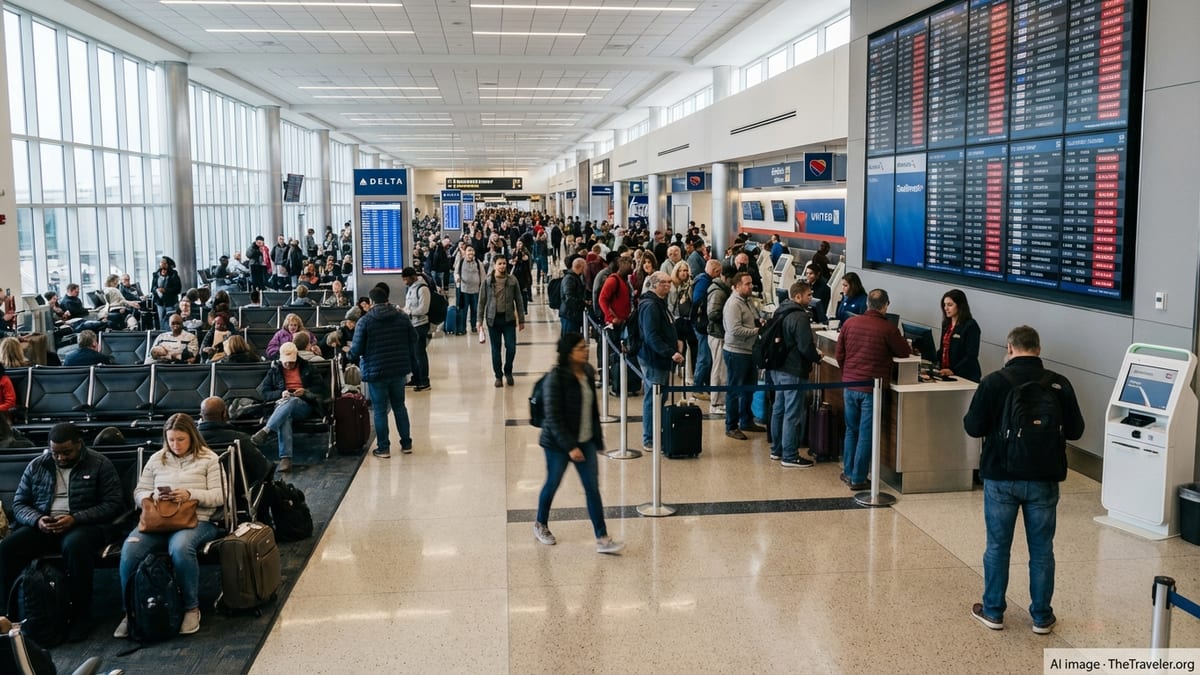
Atlanta Gridlock Sends Shockwaves Across the Network
The latest disruption at Hartsfield-Jackson Atlanta International Airport, the world’s busiest hub by passenger volume, created knock-on delays across multiple regions as aircraft and crews fell out of position. Publicly available tracking data shows that more than 200 flights either departed late or failed to operate from Atlanta, forcing airlines to reshuffle schedules and consolidate services.
Delta, which uses Atlanta as its primary hub, experienced the most significant operational strain as late-arriving aircraft cascaded into missed connections and rerouted passengers. Spirit and Frontier, which both maintain important operations at Atlanta, also saw their point-to-point networks affected, particularly on high-demand leisure routes to South Florida and the Northeast.
Because Atlanta connects extensively with both coastal and inland cities, schedule disruptions there tend to ripple quickly through the wider US system. Flights bound for secondary markets often depart from Atlanta later in the day, meaning even modest early delays can compound into missed curfews, aircraft swaps, and additional cancellations by evening.
Operational reports suggest that the combination of congestion, residual weather impacts on the national airspace system, and tight crew scheduling contributed to the 186 delays and 24 cancellations recorded at Atlanta, leaving passengers facing hours-long waits and complicated rebooking options.
South Florida Routes Bear the Brunt
Fort Lauderdale and Miami were among the most heavily impacted destinations as the Atlanta disruption unfolded. Both cities are key links in the domestic networks of Spirit, Frontier, and Delta, and are important spring and early summer gateways for leisure travelers heading to the Caribbean and cruise departures.
Tracking platforms and airport updates indicated elevated delay levels on Atlanta services to and from Fort Lauderdale and Miami, with some rotations departing out of sequence or operating with significant gaps between flights. In several instances, aircraft that arrived late into South Florida were then unable to turn around quickly enough to preserve onward schedules back to Atlanta or other connecting hubs.
The congestion was especially disruptive for passengers relying on tight connections between Atlanta and South Florida to reach long-haul itineraries. Travelers heading to Europe and Latin America through Atlanta’s international concourses found themselves rebooked on later departures or rerouted through alternative hubs when arrival delays from Fort Lauderdale and Miami pushed them past boarding cut-offs.
Publicly available information shows that South Florida airports have experienced repeated bouts of disruption in recent months, often tied to severe weather elsewhere in the country. The latest Atlanta-related delays added another layer of complexity, stretching gate availability, baggage operations, and ground transport services at both Fort Lauderdale-Hollywood International and Miami International Airport.
Philadelphia and Northeast Connections Disrupted
The impact of Atlanta’s operational difficulties also extended along the busy corridor to Philadelphia and other Northeast cities. Airlines commonly schedule multiple daily frequencies between Atlanta and Philadelphia, relying on the route to funnel both business travelers and connecting passengers onto transatlantic and domestic services.
According to publicly available flight status data, a series of late departures and equipment changes on the Atlanta to Philadelphia route led to extended waits at both ends, with some passengers facing missed connections onward to New England, the Midwest, and Europe. Delays on inbound services from the Northeast further complicated the picture in Atlanta, adding to the queue of aircraft awaiting gates and ground handling resources.
Other Northeastern hubs, including New York-area airports, felt secondary effects as airlines attempted to absorb displaced passengers whose original itineraries depended on smooth connections through Atlanta. This re-accommodation process pushed some flights close to capacity and limited same-day recovery options for travelers seeking alternative routes.
Aviation analysts note that disruptions at large southern hubs such as Atlanta often reverberate quickly into the densely scheduled Northeast airspace, where limited spare capacity makes recovery more challenging once delays begin to accumulate.
Spirit, Frontier, Delta and Other Carriers Under Pressure
The disruption placed particular pressure on Spirit and Frontier, which operate lean, point-to-point networks with fewer spare aircraft available for contingency use. When a rotation from Atlanta to Fort Lauderdale, Miami, or Philadelphia is delayed or cancelled, there are often limited options to substitute another aircraft or crew without causing further knock-on effects elsewhere in the schedule.
Delta, with its large Atlanta hub operation, faced challenges of a different scale. Publicly available metrics show that even a modest increase in delays at the carrier’s primary base can translate into missed connections for thousands of travelers, given the banked nature of its hub-and-spoke model. As the carrier worked to re-time flights and prioritize key trunk routes, some passengers on lower-frequency services saw their journeys pushed back by many hours.
Other major US airlines, including American, United, Southwest, and Alaska, experienced varying levels of disruption as they shared airspace, airport infrastructure, and connecting passengers with the most heavily affected carriers. While some routes operated close to schedule, the overall reliability picture for the day deteriorated as air traffic control initiatives and ground congestion contributed to rolling delays.
Recent data compiled by flight-tracking and passenger-rights platforms indicates that elevated levels of delays and cancellations have become more common during peak travel periods, especially when weather systems or airspace constraints intersect with already tight staffing and fleet utilization plans.
What Travelers Can Expect in the Coming Days
Industry observers indicate that the immediate disruption at Atlanta and on related routes to Fort Lauderdale, Miami, Philadelphia, and other cities may take at least one to two full operating days to fully unwind. Aircraft and crews need to be repositioned, and residual delays may persist while airlines clear backlogs of rebooked passengers.
Travelers with upcoming trips that involve connections through Atlanta are being advised by consumer advocacy organizations and travel experts to monitor flight status closely, allow longer connection times where possible, and be prepared for last-minute changes to routings or seat assignments. Those departing from South Florida and Northeast airports on services operated by Spirit, Frontier, or Delta are considered particularly likely to encounter schedule adjustments while carriers stabilize operations.
Public guidance from passenger-rights groups stresses the importance of understanding compensation and care policies in the event of long delays or cancellations. Depending on the cause of the disruption and the airline’s own commitments, affected travelers may be eligible for meal vouchers, hotel accommodation, or alternative transport, especially when disruptions are not directly tied to severe weather.
With the spring travel period ramping up and summer demand on the horizon, the latest wave of delays and cancellations at Hartsfield-Jackson Atlanta International Airport highlights the vulnerability of the US network when a major hub experiences concentrated disruption. For passengers, it underscores the value of flexible itineraries, proactive communication with airlines, and contingency plans when relying on tightly timed connections through the country’s largest airports.