

More news on this day
China’s domestic air travel network is facing a new wave of disruption, with operational data and local media reports pointing to extensive cancellations and delays at Beijing Capital, Zhengzhou and Shijiazhuang airports, affecting core state carriers such as Air China, China Southern, Shenzhen Airlines and Hainan Airlines at the start of the Qingming holiday period.
Get the latest news straight to your inbox!
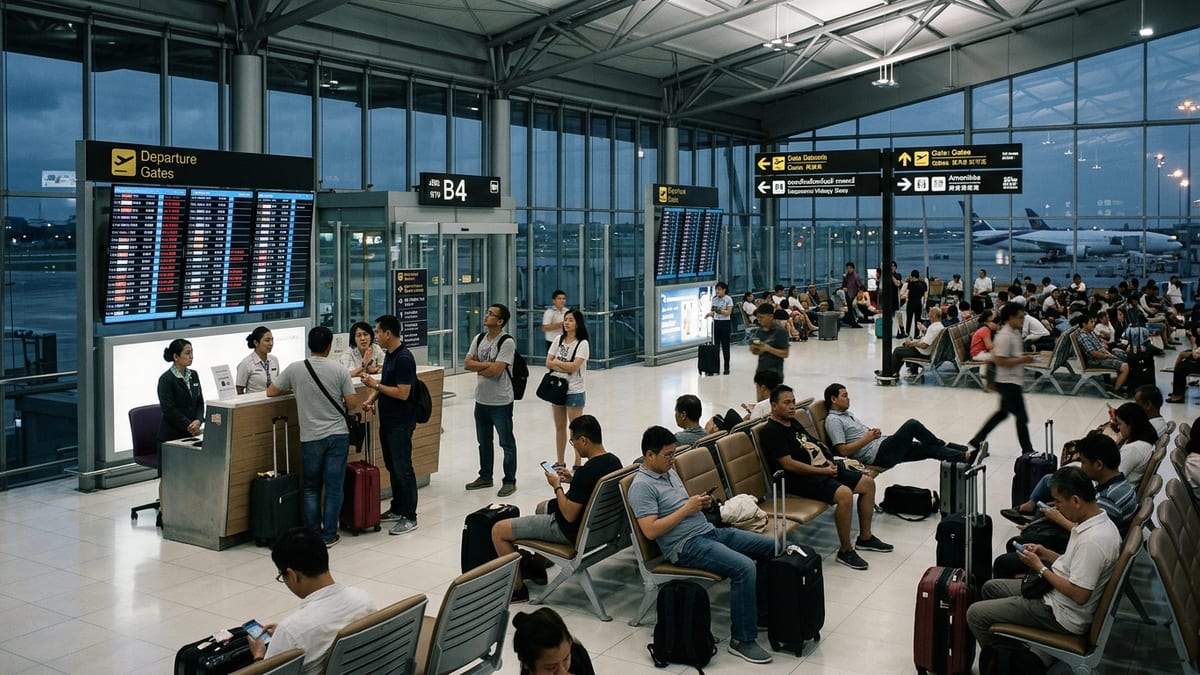
Operational Strain Intensifies at Northern Hub Airports
Recent tracking data and aggregated airport statistics show that northern China’s key aviation gateways have experienced a sharp rise in same day schedule changes, with Beijing Capital International Airport reporting elevated levels of cancellations and late departures across both morning and evening peaks. Reports indicate that the pattern mirrors a wider bout of turbulence seen this week across China’s busiest hubs, where hundreds of flights were either scrapped or pushed back by several hours.
At Zhengzhou Xinzheng International Airport in Henan province, publicly available flight boards and traveler reports highlight clusters of cancellations concentrated on short haul domestic routes, particularly to eastern and southern coastal cities. Shijiazhuang Zhengding International Airport in neighboring Hebei province has also recorded an uptick in irregular operations, compounding pressure on already stretched ground handling and customer service teams.
The latest disruption hits as airlines attempt to rebuild capacity after several years of pandemic related limits and a more recent series of weather and air traffic control constraints. Industry analysts note that the cumulative effect is a network that remains vulnerable to localized shocks, with congestion in one region rapidly cascading into delays across the wider system.
Major Chinese Carriers Face Widespread Cancellations
Air China, China Southern, Shenzhen Airlines and Hainan Airlines are among the most visibly affected operators at Beijing Capital, Zhengzhou and Shijiazhuang, according to live schedule snapshots and data compiled from flight tracking platforms. Many of the cancellations involve high frequency trunk routes, where carriers typically mount multiple daily services between major inland cities and coastal economic centers.
For Air China and China Southern, which together handle a significant share of capacity at Beijing Capital and Zhengzhou, the current wave of disruption coincides with efforts to stabilize finances following several loss making years. Recent financial coverage describes how these airlines have been working to rebuild international networks while grappling with higher fuel costs and lingering operational inefficiencies, adding sensitivity to any large scale schedule disturbance.
Shenzhen Airlines, a key feeder operator within the Star Alliance network, and Hainan Airlines, which has been restructuring and rebalancing its long haul portfolio, also appear prominently in delay and cancellation tallies at the affected airports. Although both carriers continue to operate the majority of their planned services, pockets of cancellations at northern hubs are creating knock on effects at secondary airports that rely on these airlines for connectivity.
Weather, Congestion and Cost Pressures Create a Volatile Mix
While specific causes for individual cancellations vary, patterns observed in recent weeks indicate a mix of adverse weather events, tight air traffic control slots and surging fuel costs contributing to a volatile operating environment. Earlier this spring, heavy storms in parts of eastern and central China led to waves of short notice cancellations and extensive rolling delays at multiple airports, underscoring the fragility of the domestic network when confronted with severe weather.
At the same time, Chinese airlines are navigating a challenging cost landscape shaped by sharply higher jet fuel prices following geopolitical tensions in the Middle East. Industry publications tracking airline performance in Asia report that China’s big three state controlled carriers, including Air China and China Southern, entered 2026 with renewed optimism about demand but with margins under strain as fuel expenses rose faster than ticket yields.
Congestion in busy air corridors over northern China further complicates recovery from any disruption. Once departure banks at Beijing Capital or Zhengzhou are pushed off schedule, subsequent rotations often depart late or are consolidated, forcing carriers to weigh on time performance against the need to position aircraft and crew for the next day’s operations. The result is a pattern of rolling irregularities that can persist for several days beyond the initial trigger.
Timing Clash With Qingming Travel Rush
The disruption coincides with the Qingming Festival period in early April, traditionally one of the busiest short break travel windows on China’s domestic calendar. Travel platforms and tourism market commentary have highlighted strong demand for both family visits and leisure trips this year, as more travelers return to flying for long weekend journeys after several disrupted holiday seasons.
As a result, even a modest percentage of cancellations translates into large numbers of affected passengers at major hubs. Published coverage of China’s broader air travel recovery notes that leading airlines have been adding capacity on popular domestic routes to capture resurgent demand, leaving little slack in the system when several flights are cancelled or delayed simultaneously.
For passengers already in transit, the concentration of irregular operations at key connecting airports like Zhengzhou increases the risk of missed onward flights and overnight stays. Social media posts and forum discussions in recent days describe travelers arriving at Beijing Capital or Shijiazhuang to find departure boards dominated by delayed statuses, with cancellation notices sometimes appearing close to scheduled boarding times.
What Travelers Should Expect at Affected Airports
Travel advisories from industry groups and consumer advocates suggest that passengers flying into or out of Beijing Capital, Zhengzhou and Shijiazhuang over the coming days should anticipate longer queues at check in, ticketing and rebooking counters, particularly for services operated by Air China, China Southern, Shenzhen Airlines and Hainan Airlines. With many flights departing later than scheduled, crowding around security checkpoints and boarding gates is also likely during peak periods.
Publicly available information on Chinese civil aviation rules indicates that travelers whose flights are cancelled are generally entitled to be rebooked or to receive a refund, though the precise arrangements depend on the airline, fare type and the cause recorded for the disruption. In practice, passengers may experience delays in receiving confirmation of new itineraries, especially when multiple carriers are adjusting schedules at the same time.
Travel experts recommend that passengers monitor flight status closely through airline channels and independent trackers, arrive at the airport earlier than usual, and prepare for potential schedule changes, including by building in additional connection time and having backup accommodation options in mind. For those planning trips during the remainder of the Qingming period and into the spring travel season, the latest disruptions serve as a reminder that China’s rapidly recovering air network still faces significant operational headwinds.