

More news on this day
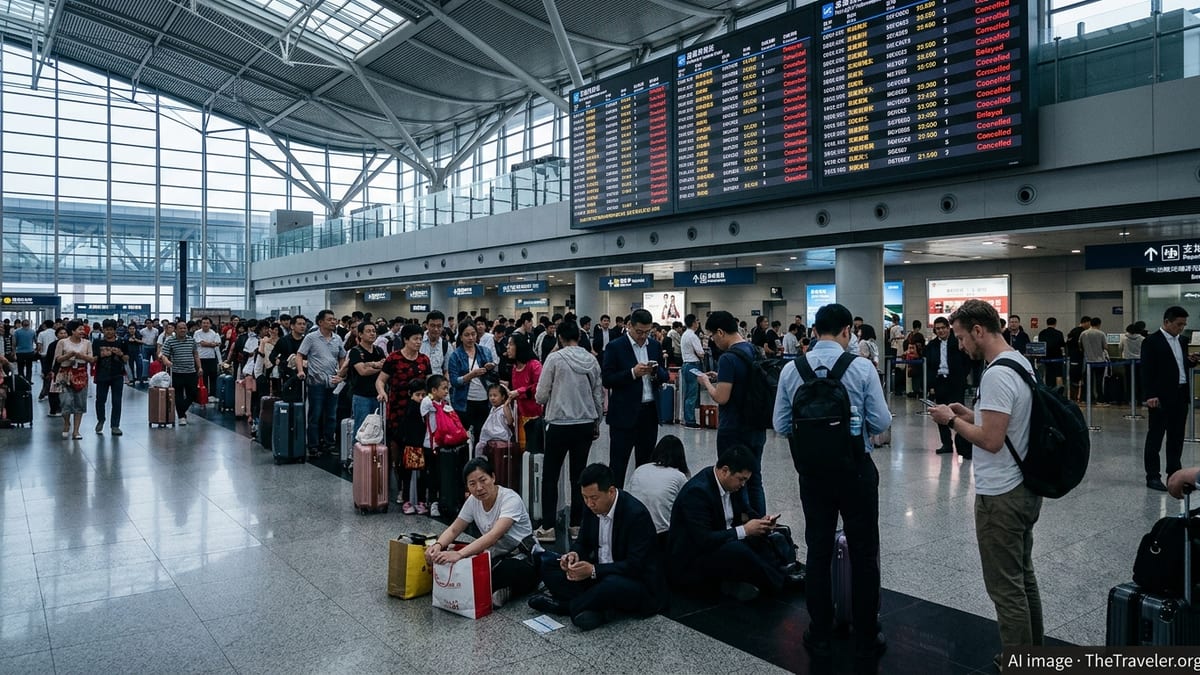
Hundreds of passengers across China faced extended waits and abrupt schedule changes as major hubs including Shanghai Pudong, Xi’an Xianyang, and Guiyang Longdongbao reported 560 delays and 24 cancellations, disrupting operations for carriers such as Air China, China Eastern, and China Southern.
Get the latest news straight to your inbox!
Wide Ripple Effects Across China’s Air Network
Published data from live flight-tracking boards and airport operations dashboards shows that a cluster of major Chinese airports experienced significant disruption, with a combined 560 delayed flights and 24 cancellations recorded over a short operating window. The impact has been concentrated at Shanghai Pudong, Xi’an Xianyang, and Guiyang Longdongbao, but secondary hubs and regional gateways have also reported knock-on delays as aircraft and crews struggled to stay within schedule.
China’s aviation network is heavily interconnected, and even localized disruption can quickly radiate along domestic and international routes. When departure slots are missed at major hubs, arriving aircraft often lose their return windows, pushing subsequent flights late into the day. As aircraft rotations extend into the night, airports that rely on carefully timed waves of departures and arrivals can see their schedules bunch up, compounding delay statistics.
Operational bulletins for the affected airports indicate that many of the delays fell into the range of one to three hours, with some services pushed further as ground operations and air traffic control attempted to clear backlogs. While the total number of outright cancellations remained relatively modest compared with the volume of delayed flights, each cancellation forced passengers to compete for limited remaining seats, extending the disruption beyond the original flight window.
Shanghai Pudong at the Center of the Disruptions
Shanghai Pudong International Airport, one of China’s busiest hubs for international and long-haul services, has been among the hardest hit. Real-time departure and arrival boards showed wave after wave of delayed departures, particularly among domestic trunk routes and key regional connections, with only a fraction of flights operating exactly on time during the disruption period.
Because Shanghai Pudong functions as a critical transfer point between domestic Chinese routes and long-haul flights to Europe, North America, and Southeast Asia, even moderate delays can have outsized consequences. Passengers with through-tickets who miss minimum connection times in Shanghai may be automatically reprotected onto later departures, while those traveling on separate tickets risk being stranded if they cannot reach check-in counters before cut-off times.
Publicly available data on airport movements suggests that Pudong’s heavy traffic volumes leave relatively little slack to absorb extended irregular operations. Once departure banks slip behind schedule, runway slots, gate availability, and ramp capacity all tighten. That dynamic has been visible in today’s disruptions, with afternoon and evening banks still reflecting the spillover of morning and midday delays.
Xi’an and Guiyang Highlight Strain Beyond Coastal Megahubs
Xi’an Xianyang International Airport and Guiyang Longdongbao International Airport have also reported elevated levels of delay and a share of the 24 cancellations currently recorded. While neither facility matches Shanghai Pudong’s traffic scale, both are important connectors within China’s central and southwestern regions, and disruptions there can strand travelers far from alternative gateways.
Xi’an Xianyang serves as a major hub for domestic routes stretching north to Inner Mongolia and west toward Xinjiang, while also maintaining links to coastal cities and select international markets. When departures from Xi’an are held on the ground, passengers bound for onward flights through Beijing, Shanghai, or Guangzhou face a heightened risk of missed connections and same-day rebooking challenges.
Guiyang Longdongbao, which anchors air connectivity for the mountainous province of Guizhou, has a different profile. Flight schedules there rely heavily on a limited number of daily services to key Chinese hubs. As a result, even a small cluster of delays or cancellations can remove entire travel options for the day, forcing passengers to wait for the next available operation or seek overland alternatives such as high-speed rail or long-distance buses.
Major Chinese Carriers Grapple With Operational Pressures
The disruption has directly affected services operated by China’s leading airlines, including Air China, China Eastern, and China Southern. Flight-tracking data shows delays across a mix of trunk and secondary routes for these carriers, particularly those touching Shanghai Pudong, Xi’an, and Guiyang. Smaller regional airlines operating feeder routes into these hubs have also encountered schedule challenges as aircraft rotations slowed.
Publicly available punctuality statistics indicate that while Chinese carriers have improved on-time performance in recent years, they remain highly sensitive to bottlenecks at major airports. When congestion builds, aircraft may be forced into holding patterns, and departure queues can lengthen rapidly, especially during peak travel periods or adverse weather windows. That operational reality has been on display in the current wave of disruptions, with individual airlines often unable to recover schedules within the same operating day.
For travelers, the effect is most visible at check-in counters and transfer desks, where staff must reassign seats, reissue boarding passes, and manage rebookings under time pressure. Although some passengers can rely on mobile apps and self-service kiosks to manage changes, many still seek in-person assistance when delays threaten tight connections, creating longer queues and additional strain on airport resources.
Traveler Impact and Practical Guidance
The immediate consequence for passengers has been a surge in extended waits at departure gates, crowded transfer areas, and rising demand for last-minute hotel rooms near affected airports. Travelers with early-morning delays have often seen their plans slip well into the evening, while those booked on canceled services have faced the added uncertainty of limited rebooking options on already busy routes.
Public information from flight-tracking platforms and airport boards suggests that conditions can change rapidly during such disruption events, with previously on-time flights slipping into delay categories within minutes as congestion builds. For that reason, travelers planning to transit through Shanghai Pudong, Xi’an Xianyang, or Guiyang Longdongbao are advised to monitor their flight status frequently on the day of travel and to allow for additional buffer time, especially when connecting to international long-haul services.
Experienced travelers in China often recommend maintaining flexible ground transport plans and being prepared to switch between rail and air if schedules deteriorate. With high-speed rail links expanding between major cities, some passengers may find it faster to complete certain journeys by train when flight delays exceed several hours. However, this option depends heavily on origin, destination, and ticket availability, making advance contingency planning valuable during periods of sustained aviation disruption.