

More news on this day
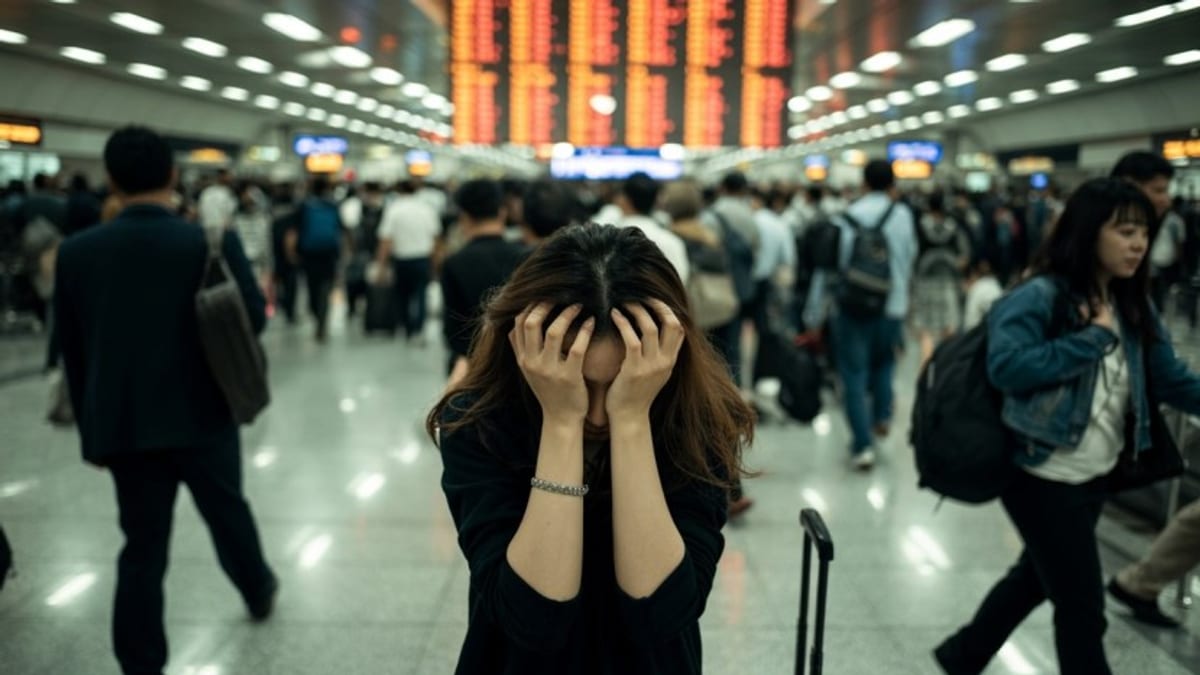
Thousands of air travelers across China faced widespread disruption on April 2 as publicly available tracking data showed hundreds of cancellations and several thousand delays affecting major carriers and hubs from Beijing and Shanghai to Guangzhou, Chengdu and smaller cities such as Hami.
Get the latest news straight to your inbox!
Widespread Operational Turbulence Across the Network
Data compiled from multiple flight-tracking and aviation analytics platforms on April 2 indicates that Chinese airports experienced a sharp spike in disruption, with reports citing at least 244 cancellations and about 3,700 delays nationwide. The impact stretched across core trunk routes, regional links and some remote destinations, creating rolling knock-on effects throughout the day.
Major state-owned and private airlines were among those most affected. China Eastern, China Southern, Air China, Sichuan Airlines and Hainan Airlines all showed elevated delay ratios and irregular operations, particularly on dense corridors linking Beijing, Shanghai, Guangzhou and Chengdu. Independent statistics for China’s domestic network in recent days already pointed to heavy congestion and a high number of delayed flights, especially at Shanghai Pudong, Guangzhou Baiyun and the Chengdu area airports.
The pattern of disruption mirrored broader pressure on China’s aviation system following a rapid recovery in demand and continuing capacity adjustments. Analysts monitoring the market have noted that carriers have been rebuilding schedules aggressively for the 2026 summer season, leaving limited slack in fleets and crews when weather or airspace constraints occur.
By late evening local time, live trackers still showed pockets of congestion at several hubs, suggesting that some irregularities could carry over into subsequent days as aircraft and crew rotations are rebalanced.
Major Hubs Bear the Brunt: Beijing, Shanghai, Guangzhou and Chengdu
Beijing’s airports, together with Shanghai’s Hongqiao and Pudong, appeared among the most stressed points in the network. On core routes such as Beijing to Shanghai and Beijing to Guangzhou, schedule and status pages reflected significant delay ratios, with some flights arriving substantially behind timetable and others removed entirely from the day’s operations.
Publicly available performance dashboards for Chinese airports have, in recent days, listed Shanghai Pudong and Guangzhou Baiyun among the country’s highest-volume and most delay-prone hubs, with hundreds of late departures recorded over a rolling seven-day period. Chengdu’s dual-airport system, including Chengdu Tianfu, has also featured prominently in national delay rankings, reflecting both heavy traffic and the complexity of operations in western China.
Individual flight status pages on April 2 highlighted numerous late departures and arrivals on trunk services linking Beijing to Chengdu, Guangzhou and Shanghai, as well as on routes connecting Shanghai and Chengdu. While each delay may have had differing causes, the aggregate picture pointed to system-level strain rather than isolated technical issues.
At Guangzhou Baiyun, which recently expanded capacity with a new terminal used by several of the country’s largest carriers, the surge in traffic for the spring and upcoming summer seasons appears to be testing airport and airline resources. Industry reporting over recent months has described Guangzhou as a focal point for both domestic and international network growth, which can magnify the impact of any operational snags.
Secondary Cities and Remote Destinations Also Affected
While the heaviest disruption was concentrated at the largest hubs, secondary cities and more remote airports also experienced irregular operations. Flight status records for routes touching smaller destinations, including Hami in Xinjiang, showed cancellations and extended delays, underscoring how quickly issues at major hubs can ripple into thinner regional networks.
Carriers such as Sichuan Airlines, Chengdu Airlines and other regional operators play a crucial role in linking inland provinces and remote communities to the national grid via Chengdu, Chongqing, Guangzhou and Shanghai. When long-haul or trunk routes into these hubs run late or are cancelled, regional sectors often face late aircraft, missed connections and shortened operating windows before night curfews or crew duty limits.
Aviation data from recent days illustrates that even when individual regional flights show on-time departures on some dates, small schedule changes or upstream delays can quickly convert into late operations or cancellations. This dynamic can be especially disruptive in areas where travelers have few alternative transport options or limited daily frequencies.
The disruption in and out of smaller airports also complicates cargo flows and business travel, particularly for industries that depend on fast links between coastal manufacturing centers and inland production hubs.
Possible Drivers: Weather, Congestion and Tight Summer Schedules
As of April 2, official, unified explanations for the day’s disruption were not immediately consolidated in a single public source, but available information and past patterns point to a combination of factors. Seasonal weather variability, constrained airspace around major metropolitan areas and the ramp-up to peak travel periods typically interact to strain capacity in China’s densely trafficked corridors.
Academic and technical studies of metroplex regions such as Shanghai have previously highlighted how multiple airports in close proximity can experience cascading delays when arrival and departure flows are not perfectly balanced. These studies show that even modest imbalances can sharply increase runway and control-area congestion, contributing to late departures and arrivals across several airports simultaneously.
Industry reports in early 2026 have also emphasized how Chinese airlines are pushing ambitious summer timetables after several years of pandemic-related disruption and gradual reopening. High aircraft utilization targets and tighter turn times can leave little margin for recovery once delays begin to accumulate, especially on days when weather or temporary airspace restrictions affect major hubs.
Without direct, unified attribution for each cancellation or delay, observers caution against assigning a single cause. However, the clustering of irregular operations at known congestion points, combined with evidence of heavy seasonal scheduling, suggests a systemic rather than isolated pattern.
Impact on Travelers and Potential for Continued Disruptions
The immediate impact for passengers on April 2 involved long waits, missed connections and the need for widespread rebooking, particularly on routes touching Beijing, Shanghai, Guangzhou and Chengdu. For some travelers heading to or from smaller cities such as Hami, the limited number of daily services increased the likelihood of overnight stays or significant detours.
Travel advisories from airlines and booking platforms in similar disruption episodes typically encourage passengers to monitor digital channels closely for gate and timing changes, make use of self-service tools where available and allow extra buffer time for connections. While specific guidance for the April 2 disruptions varied by carrier, the overall situation underscored the value of flexible tickets and contingency planning during periods of network stress.
Market observers note that Chinese carriers and airports have, in recent years, invested heavily in technology, new terminal capacity and more sophisticated scheduling tools intended to reduce the severity and frequency of such events. At the same time, sustained growth in demand and the complexity of coordinating multiple large hubs mean that occasional days of widespread disruption remain a risk.
With the busy spring and summer travel seasons intensifying, travelers planning itineraries through Beijing, Shanghai, Guangzhou, Chengdu and other major Chinese hubs are likely to watch closely for any further signs of strain in the country’s aviation system and may build additional flexibility into their plans to mitigate potential knock-on effects from future delays or cancellations.