

More news on this day
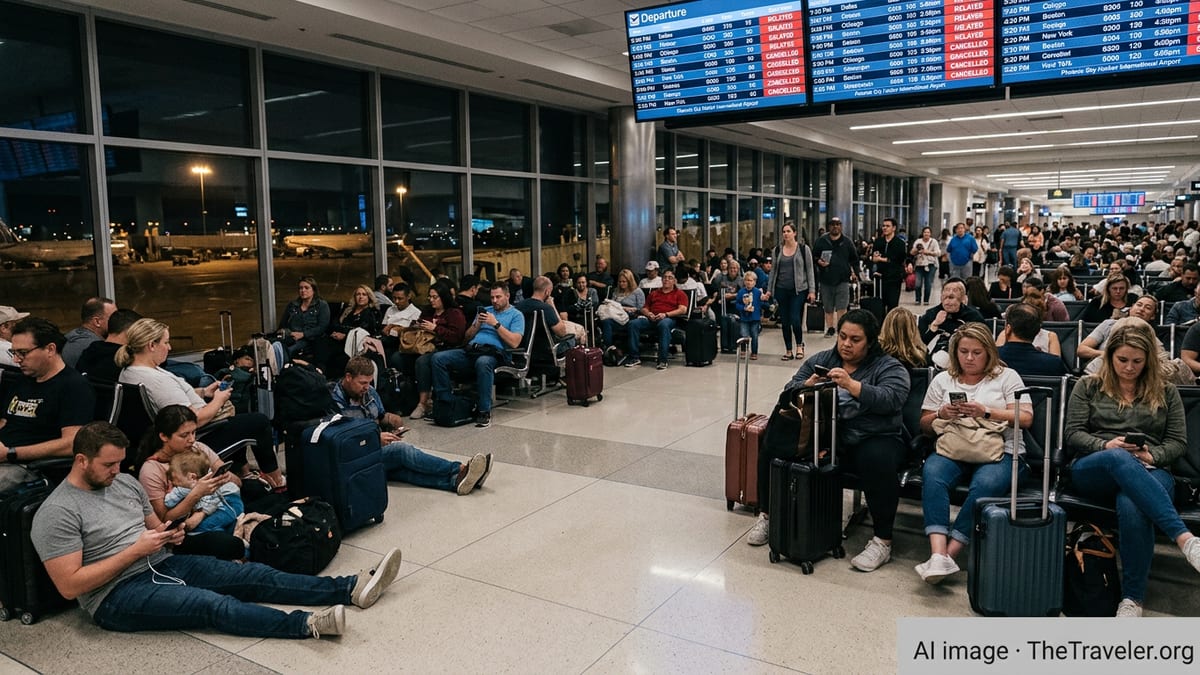
Hundreds of air travelers faced severe disruptions this weekend as 119 flights were delayed and 79 cancelled at Phoenix Sky Harbor International Airport, triggering a cascade of missed connections and overnight strandings across major hubs including Dallas, Chicago, Boston and New York.
Storm Systems and Network Strain Collide
The latest wave of travel chaos unfolded as winter weather systems swept across parts of the United States and Canada, tightening the screws on an airline network already operating near capacity. While Phoenix itself saw relatively stable local conditions at times, carriers struggled to maintain schedules on routes linking the desert hub with storm-battered cities in the Northeast and Midwest.
Operations data from airlines and tracking services showed that flights between Phoenix and Boston, New York and Chicago were among the hardest hit, with rolling delays that often stretched well past two hours. In several cases, aircraft pushed back from gates only to sit in long queues awaiting departure slots as ground stops and air traffic control programs rippled across the network.
Industry analysts note that Phoenix Sky Harbor, which handled more than 26 million departing passengers last year, has become a critical connector linking East Coast weather systems to travel outcomes nationwide. When storms or congestion sweep through New York, Boston or Chicago, repercussions are now felt quickly in Phoenix, Dallas and other inland hubs.
Carriers serving Phoenix have also been operating with tighter staffing and aircraft availability heading into the spring travel season. That leaves less margin for recovery when multiple hubs report weather alerts, forcing airlines to make difficult decisions about which flights to delay, which to cancel and where to rebook displaced passengers.
Travel Nightmares From Phoenix to Dallas, Chicago, Boston and New York
The operational statistics translated directly into personal crises for travelers attempting to move through Phoenix and its key connecting hubs. Passengers bound for Dallas and Chicago described hours-long waits on packed concourses, with departure times repeatedly pushed back as crews and aircraft failed to arrive from earlier legs slowed by weather and congestion.
On routes to Boston and New York, a significant share of the 79 cancellations were tied to aircraft originating in or bound for the Northeast, where winter conditions and air traffic flow restrictions reduced runway capacity. Many travelers found themselves automatically rebooked on next-day departures, only to see those flights also face fresh delays as carriers attempted to unwind backlogs.
For some, the disruption stretched into multi-day odysseys. Families reported being routed from Phoenix to secondary hubs, sleeping in terminal seating overnight before finally reaching their destinations via complex itineraries that added thousands of extra miles. Business travelers attempting same-day returns from Dallas or Chicago often abandoned trips altogether as rebooked options pushed arrival times into the following day.
At Phoenix Sky Harbor, gate agents and customer service desks were met with long, tense lines stretching down concourses at peak disruption periods. While vouchers for meals and hotels were issued in some cases, limited room availability near the airport meant many stranded passengers remained in terminals through the night, relying on charging outlets and makeshift sleeping arrangements.
Why a Single Airport Disruption Echoes Across the Continent
A disruption involving 119 delayed and 79 cancelled flights may sound modest compared with holiday meltdowns, but aviation experts emphasize how quickly such a shock can propagate through the system. Each cancellation can strand a full aircraft of travelers at a connecting hub, while each multi-hour delay can cause passengers to miss onward flights on entirely different routes.
Phoenix’s role as a bridge between East and West amplifies this effect. Flights from Boston, New York and Chicago frequently feed connections in Phoenix to destinations across the Southwest and into Mexico and Canada. When an inbound leg is delayed or cancelled, the onward passengers who planned to continue to smaller cities often have few alternative options, forcing longer layovers or overnight stays.
Dallas and Chicago, in particular, serve as secondary chokepoints in these scenarios. Travelers attempting to bypass Phoenix by rebooking through other hubs often find themselves contending with similar weather-related delays, crew scheduling challenges and congestion. This can compound missed connections, creating a rolling wave of disruptions that can take days to fully resolve.
Network planners say that while airlines have improved schedule resilience compared with the height of the pandemic recovery period, the system still remains vulnerable when several high-traffic hubs are stressed at once. Tight aircraft utilization and lean staffing models, while efficient in normal conditions, leave little room to absorb shocks without noticeable impacts for passengers.
Passengers Weigh Options and Rights Amid Disruption
As word of widespread delays spread through social media and airport departure boards, many passengers scrambled to understand their options. In the United States, airlines are generally not required to compensate travelers for delays caused by weather or air traffic control restrictions, though they often provide rebooking assistance and, in some cases, hotel and meal vouchers when disruptions stretch overnight.
Travelers connecting from or to Canada navigated a more complex landscape. Canadian regulations can provide cash compensation in certain circumstances when delays or cancellations are within the airline’s control, leading some cross-border passengers to press carriers for written explanations of the causes behind their disrupted flights.
Consumer advocates advise passengers facing severe delays to document everything, including boarding passes, receipts, and photos of airport information screens. Those records can be useful later when filing complaints with airlines or aviation regulators, or when submitting claims through travel insurance policies that cover missed connections and extended delay-related expenses.
Many stranded travelers also turned to airline apps and direct messaging channels for faster rebooking assistance, rather than waiting in long in-person lines. However, when hundreds of passengers are competing for a limited number of available seats on alternative flights, even the most tech-savvy efforts can be constrained by basic capacity limits.
What Travelers Can Expect in the Days Ahead
Operational experts say that while the sharpest disruptions tend to occur over a span of 24 to 48 hours, the aftershocks can last longer as airlines reposition aircraft and crews, clear backlogs of displaced passengers and rebuild regular schedules. Travelers with upcoming departures touching Phoenix, Dallas, Chicago, Boston or New York are being urged to monitor flight status frequently and to allow additional time for connections.
Airlines are expected to prioritize restoring reliability on core trunk routes, including high-frequency services between Phoenix and major hubs. Once those lines are flowing more smoothly, carriers typically turn their attention to restoring thinner, secondary routes that may have seen multiple consecutive cancellations.
For passengers, the episode serves as a reminder of how interconnected the modern air travel network has become. A cluster of delays and cancellations centered around one major airport can quickly translate into missed vacations, lost workdays and stressful overnight stays thousands of miles away, particularly during seasons when weather and demand combine to stretch the system to its limits.
With peak spring and summer travel still ahead, both airlines and travelers will be watching closely how quickly operations normalize after this latest disruption, and whether additional investments in staffing, infrastructure and schedule flexibility can help prevent similar waves of travel nightmares in the months to come.