

More news on this day
China’s largest air hubs have been hit by severe flight disruptions in recent days, with weather related delays and cancellations rippling across Beijing, Shanghai, Guangzhou, Shenzhen and other major cities just as spring travel demand accelerates.
Get the latest news straight to your inbox!
Wave of Cancellations and Delays Across Key Airports
Recent operational data compiled by aviation trackers and industry publications indicates that China’s main coastal and inland hubs have experienced an exceptional surge in disruption since late March. One roundup of operations reported more than 5,400 delays and over 450 cancellations nationwide in a single day, with the heaviest impact at Guangzhou Baiyun, Shenzhen Bao’an, and the twin Shanghai airports of Pudong and Hongqiao.
Further reporting on April 1 described a second wave of disruption, with over 500 additional cancellations and nearly 8,000 delays as conditions deteriorated again at Guangzhou, Shenzhen, Shanghai, Beijing and other cities. Flight status boards at these airports showed dense clusters of late and rescheduled departures, effectively paralyzing normal traffic flows during peak hours.
Major carriers including China Southern Airlines, China Eastern Airlines, Air China, Hainan Airlines, Shenzhen Airlines and several low cost operators have all seen schedules heavily affected. Publicly available figures suggest that some airlines faced delays on a large share of their planned operations, compounding congestion as aircraft and crews fell out of position.
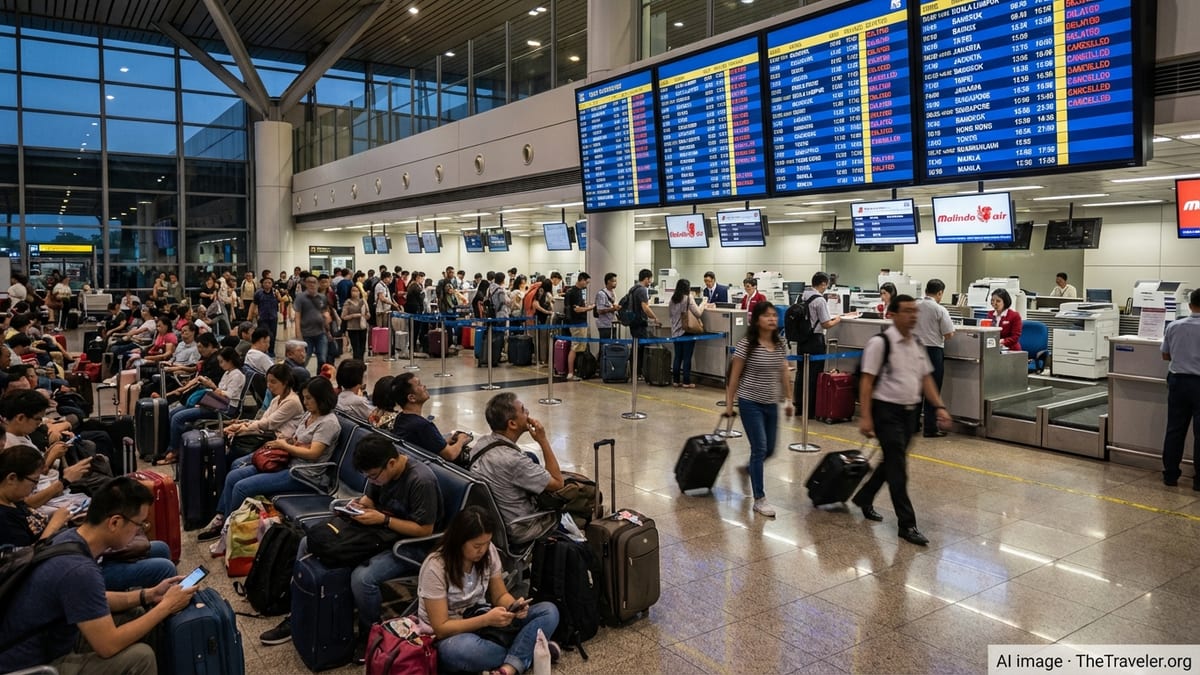
The disruptions have stranded thousands of passengers at terminals around the country. Travel industry coverage describes crowded departure halls, long queues at service counters and significant knock on effects for connecting itineraries within China and on international routes.
Severe Weather and Seasonal Pressures Drive the Crisis
Published coverage attributes much of the current disruption to persistent severe weather over southern and eastern China. Thunderstorms, low clouds and heavy rain around the Pearl River Delta and Yangtze River Delta have repeatedly affected approach, departure and en route traffic flows at Guangzhou, Shenzhen and Shanghai, where runway and airspace capacity is already heavily utilized.
At the same time, the problems are unfolding just ahead of the Qingming Festival holiday period, when travel demand typically spikes. Official forecasts for cross border movements released this week anticipate a sharp rise in passenger volumes from April 4 to 6, with Shanghai Pudong alone expected to handle close to 95,000 international arrivals and departures per day. This combination of weather and surging demand has reduced the margin for recovery when delays begin to accumulate.
Congestion at key waypoints and air routes has further constrained air traffic management options during storms. When convective weather cells line up along major corridors, controllers have fewer opportunities to vector aircraft around problem areas, forcing ground delays, inflight holding and in some cases outright cancellations to keep traffic at safe levels.
Industry analysts note that these conditions highlight ongoing structural challenges in China’s rapidly grown aviation network, where high utilization at major hubs leaves limited slack for irregular operations, particularly in complex coastal weather patterns typical of the spring transition period.
Major Hubs Bear the Brunt of Disruptions
Operational snapshots from the past several days show Guangzhou Baiyun International Airport among the hardest hit facilities. One daily tally cited more than 100 cancellations and nearly 1,000 delays at Guangzhou alone, meaning a substantial portion of scheduled movements were affected. As a central base for China Southern, disruption there has had outsized effects on domestic connections across the country.
Shenzhen Bao’an International Airport has reported similarly elevated levels of delay, with hundreds of flights departing significantly behind schedule. In the Yangtze River Delta, Shanghai Pudong and Shanghai Hongqiao have both seen high numbers of delayed departures and arrivals, snarling one of China’s busiest multimodal travel corridors linking air, high speed rail and urban transit.
Beijing’s two major airports, Capital and Daxing, have also experienced disruption, though to a lesser extent than the southern hubs on the worst affected days. Nevertheless, the cumulative effect of rolling delays at multiple large airports has complicated airline efforts to reposition aircraft and crews, especially on dense trunk routes such as Beijing to Shanghai and Guangzhou to Beijing.
Secondary airports in provincial capitals including Chengdu, Hangzhou, Chongqing, Nanjing, Wuhan and others have reported scattered cancellations and significant delay counts as well. As flights into and out of the largest hubs backed up, knock on effects radiated outward through regional networks, affecting travelers far from the main storm belts.
Passenger Impact and Limited Recourse
For travelers, the operational stress has translated into missed connections, unexpected overnight stays and uncertainty about onward plans. Social media posts and traveler forums describe long waits for rebooking assistance, with some passengers reporting that same day alternatives were unavailable on key routes once irregular operations peaked.
China’s current consumer protection framework does provide for assistance in some disruption scenarios, particularly when airlines are responsible for operational issues. However, many cases in the present episode appear tied to weather and air traffic control constraints, categories where compensation obligations are more limited. In practice, support has varied between carriers and airports, with some passengers able to secure hotel vouchers or meal coupons while others received only schedule updates.
Travel advisers monitoring the situation recommend that passengers flying into or through southern and eastern China build in additional connection time, especially over the Qingming period. They also suggest closely tracking flight status via airline apps and independent flight tracking tools, and considering voluntary rebooking to off peak hours when possible to reduce exposure to rolling delays.
For those already affected, consumer advocates emphasize the importance of retaining boarding passes, written delay notifications and receipts for any out of pocket expenses. These records can assist with later claims to airlines or travel insurance providers once operations stabilize.
Risks Ahead as Holiday Travel Peaks
The timing of the current disruptions so close to a major national holiday has raised concerns that recovery may be uneven in the coming days. With cross border and domestic demand both climbing, airlines face pressure to operate near full capacity just as weather patterns remain unsettled over parts of the country.
Industry observers note that Chinese carriers and airports have successfully managed heavy holiday flows in recent years, aided by expanded infrastructure and digital tools for passenger processing. Even so, the present combination of spring storms, dense schedules and high load factors increases the risk that relatively small operational issues could again cascade into wider network disruption.
Looking ahead, airlines are likely to adjust schedules, swap aircraft types and concentrate scarce resources on core trunk routes to stabilize operations. Travel planners expect that once the most intense weather systems move on and the Qingming peak passes, the network will gradually return to more typical levels of punctuality, although some backlog in repositioning aircraft and crews may linger.
For now, travelers with imminent itineraries through Beijing, Shanghai, Guangzhou, Shenzhen and other busy Chinese airports are being urged by travel outlets to monitor conditions closely and be prepared for last minute changes as the country’s aviation system works to absorb one of its most disruptive early spring episodes in recent memory.