

More news on this day
Thousands of passengers traveling through China’s busiest airports are facing cascading delays and cancellations this week, as severe weather and regional airspace bottlenecks combine to snarl operations at major hubs including Beijing, Shanghai, Guangzhou and Shenzhen.
Get the latest news straight to your inbox!
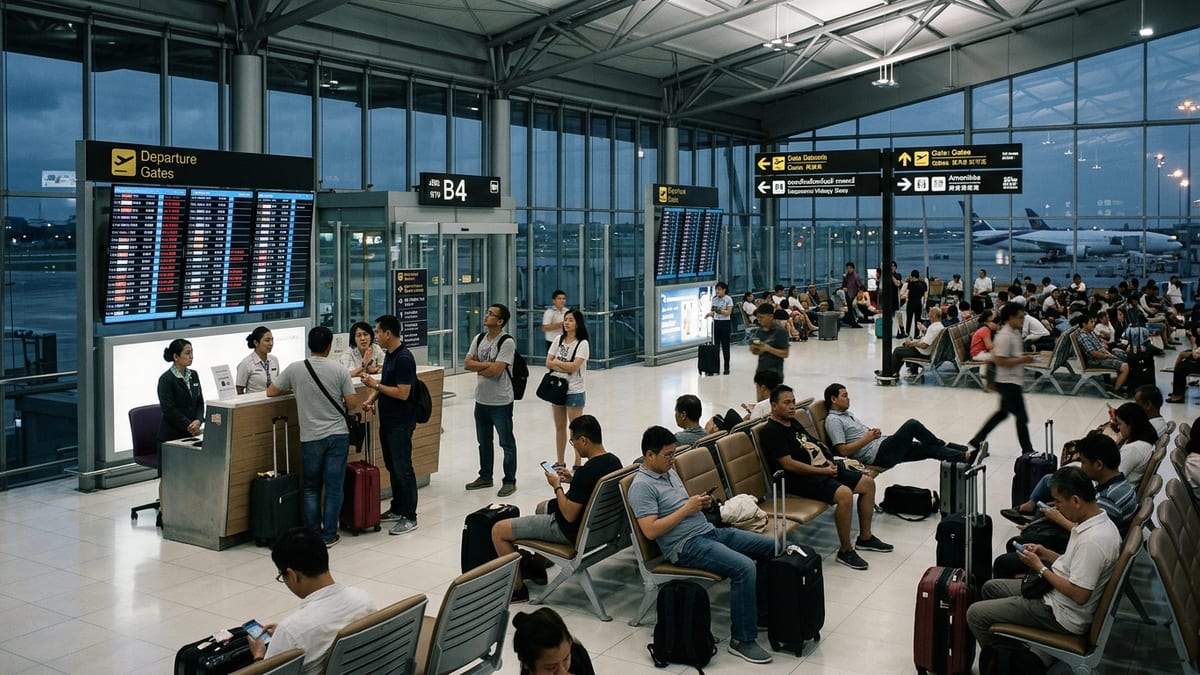
Major Hubs Log Thousands of Delays and Cancellations
Publicly available operational data and industry reports indicate that China’s core aviation gateways have been among the hardest hit in a fresh wave of disruption since late March 2026. Guangzhou Baiyun, Shenzhen Bao’an, Beijing Capital, Beijing Daxing and Shanghai’s twin airports at Pudong and Hongqiao have collectively logged thousands of delayed flights and several hundred cancellations over recent days.
One recent tally cited by regional travel industry coverage described more than 5,000 delays and over 450 cancellations in a single day across a cluster of Chinese airports, with Guangzhou and Shenzhen accounting for the largest shares. Separate coverage the following day referenced a further 7,900 delays and more than 500 cancellations nationwide, underscoring how quickly disruption has rippled through the network.
Carriers most exposed include China Southern, China Eastern and Air China, along with a wide mix of regional and low cost operators. With many of these airlines using Guangzhou, Shanghai and Beijing as key connecting points, schedule knock on effects have been felt not only on domestic routes but also on short haul services around East and Southeast Asia.
The disruption has come at a particularly sensitive time for China’s aviation sector, which only recently transitioned into the 2026 summer autumn schedule with expanded frequencies and new international routes planned from Beijing and Shanghai. The sudden wave of delays is straining efforts to showcase a smooth ramp up in capacity.
Weather Systems Collide With Structural Congestion
Meteorological conditions appear to be a primary trigger. Travel trade coverage in China has linked the worst days of disruption to intense spring storm systems sweeping across southern and eastern provinces, bringing heavy rain, low visibility and thunderstorms to airport catchment areas such as the Pearl River Delta and the lower Yangtze.
Yet analysts note that adverse weather alone does not fully explain the scale of delays. Commentary from aviation data services and regional travel outlets has highlighted chronic congestion in Chinese terminal control areas, particularly around multi airport metroplexes like Shanghai and Beijing, where rapid post pandemic growth is pressing against air traffic management capacity.
Research on metroplex operations has long pointed to the delicate balance required to coordinate arrivals and departures across paired airports sharing the same approach and departure corridors. When storms or low clouds force temporary runway closures or stricter separation, scheduling buffers can evaporate quickly, producing extensive holding patterns and departure queues.
In practice, this means that a relatively short disruption window at a hub such as Guangzhou or Shanghai can result in hours of knock on delays, as aircraft and crews fall out of position for subsequent rotations across China’s densely scheduled trunk routes.
Global Airspace Turmoil Adds Extra Strain
The latest problems at Chinese hubs are also unfolding against a backdrop of wider international airspace disruption. Corporate travel data and logistics bulletins released in March describe how conflict in the Middle East has forced the closure or partial restriction of several key corridors, compelling airlines to reroute long haul services between Asia, Europe and Africa.
Industry advisories indicate that Saudi Arabian airspace is currently one of the few major east west corridors operating with limited but critical capacity. This concentration of traffic has generated heavy air traffic control workloads at Gulf and Levant hubs, which then reverberate through connecting schedules in East Asia when inbound flights arrive late or are rescheduled entirely.
At the same time, freight market analyses show that cargo capacity from China to Europe and North America has tightened significantly since late February, with some estimates pointing to a reduction of up to one fifth of global widebody lift and steep increases in spot airfreight rates. Passenger flights, which carry a large share of bellyhold cargo, are being closely managed and in some cases consolidated, adding further complexity to schedule planning at major Chinese gateways.
This global squeeze on routings and capacity means that when weather or congestion hits airports such as Beijing or Shanghai, there is less flexibility to recover quickly by swapping aircraft or rerouting passengers through alternative long haul gateways.
Knock On Effects for Travelers Across Asia
The turbulence in Chinese airspace is feeding into a broader Asian aviation crunch. Recent regional roundups from travel and aviation publications describe simultaneous disruption at airports in Japan, South Korea, Thailand, Malaysia and the Gulf, with more than 6,000 delays and hundreds of cancellations recorded on some days across the wider region.
Because Chinese hubs act as essential connecting points between Northeast Asia, Southeast Asia and long haul markets, delays at Beijing, Shanghai, Guangzhou and Shenzhen can cascade into missed connections and rollovers in places as far apart as Tokyo, Bangkok and Dubai. Travelers connecting through China are therefore facing both primary delays at origin and secondary disruption at onward hubs.
Some carriers have introduced short notice schedule adjustments and equipment swaps to protect key trunk routes while trimming frequencies on secondary links. Travel advisories from corporate mobility and logistics providers are urging clients to allow longer connection windows through Chinese hubs, monitor airline communications closely, and brace for potential last minute changes to routings.
For leisure travelers, the impact is particularly acute at the start of the northern hemisphere spring travel period, when festival traffic within China intersects with outbound tourism demand to Southeast Asia and Japan. With demand rising faster than operational resilience, even minor disturbances in weather or airspace availability are translating into visible disruption for passengers.
Prospects for Recovery Remain Uncertain
Looking ahead, publicly available statements from Chinese aviation regulators and airline updates suggest efforts are underway to stabilize operations as the summer schedule beds in. This includes incremental capacity additions on domestic trunk routes, optimization of crew and aircraft rotations, and ongoing collaboration between airlines and air traffic management authorities to smooth peak hour flows.
However, the underlying drivers of the current disruption wave are not easily resolved. Seasonal storms in southern and eastern China are likely to persist through April, while the broader geopolitical environment affecting Middle East airspace and fuel costs remains volatile. Any further escalation in regional tensions could tighten routing options and push more traffic through already busy Chinese corridors.
For travelers planning to transit Beijing, Shanghai, Guangzhou or Shenzhen in the coming weeks, the emerging picture points to a period of continued unpredictability. Industry analysts recommend booking earlier departures where possible, allowing generous buffer times for connections, and considering alternate routings through less congested hubs when flexibility and budget permit.
China’s aviation sector has demonstrated a strong capacity for rapid growth and network expansion in recent years. The current episode of severe disruption across its main hubs underlines the parallel need for resilience investments in air traffic management, weather mitigation strategies and contingency planning, as the country’s airports assume an ever more central role in global air travel flows.