

More news on this day
Air travelers across the United States are facing severe disruption today as a wave of more than 250 flight cancellations and widespread delays by American Airlines, United, Delta, Qatar Airways, Lufthansa, and other major carriers ripples through major hubs including Chicago, Atlanta, Dallas, New York, Los Angeles, Miami, and dozens of secondary cities.
Get the latest news straight to your inbox!
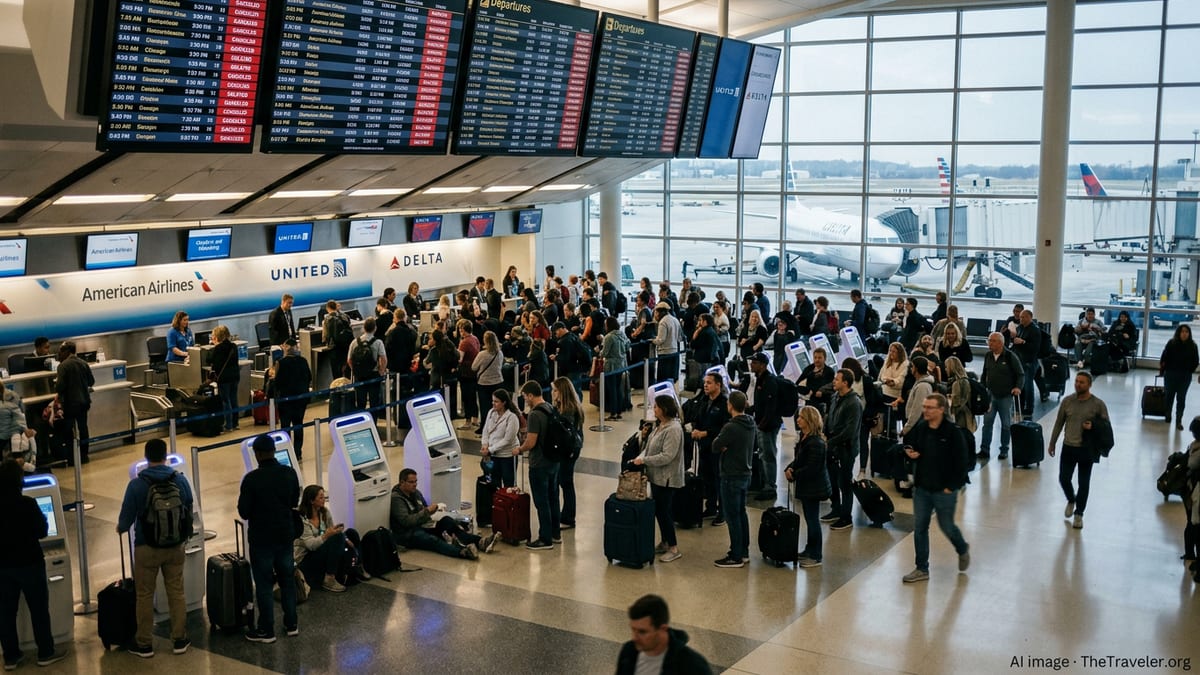
Weather and Operational Strains Converge on U.S. Air Network
Data compiled from airline operations and flight tracking services on March 11, 2026, show a tightly stretched U.S. air network buckling under the combined pressure of severe weather cells, crew and aircraft imbalances, and lingering knock-on effects from earlier storms. Airlines including American, United, Delta, Qatar Airways, Lufthansa, and several regional partners have grounded or scrubbed more than 250 flights while delaying hundreds more, turning routine travel days into marathon journeys for thousands of passengers.
Disruptions are concentrated at key connecting hubs that form the backbone of U.S. domestic and long haul traffic. Chicago, Atlanta, Dallas, New York, Los Angeles, and Miami are all reporting elevated levels of cancellations and rolling delays, with departure boards populated by late departures and rerouted services. For many travelers, disruptions are not isolated to a single airport, but cascade across multi leg itineraries, amplifying the impact of each cancellation.
Industry analysts note that the current wave of problems comes on the heels of an already fragile winter and early spring season, where tight schedules and high load factors have left airlines with little spare capacity to absorb new shocks. When weather, air traffic control restrictions, or technical issues collide with this thin margin, cancellations can spread quickly across multiple carriers and cities.
Major Hubs Bear the Brunt of Cancellations
At Chicago and New York area airports, a mix of low visibility, gusty winds, and air traffic flow management programs has forced airlines to thin out schedules. United, American, and Delta have all canceled selected departures and arrivals, while international partners including Lufthansa and Qatar Airways have trimmed or retimed transatlantic and transcontinental services to keep aircraft and crews on more stable rotations.
Further south, Atlanta and Dallas are under pressure as thunderstorms and fast moving frontal systems trigger ground stops and departure metering. Delta and American, which each rely heavily on these hubs to funnel domestic and international connections, have opted to proactively cancel some flights rather than risk widespread rolling delays deep into the night. For passengers, that has translated into crowded customer service lines, long waits for rebooking, and a scramble for scarce hotel rooms and alternative routings.
On the coasts, Los Angeles and Miami are also experiencing significant ripple effects. Passengers bound for and from these gateways on airlines such as Qatar Airways and Lufthansa have reported canceled or heavily delayed flights as aircraft arrive late from disrupted U.S. interior hubs or from international points where schedules have already been adjusted in response to weather and airspace constraints.
International Links Disrupted as Global Partners Adjust
The wave of cancellations is not limited to domestic routes. International connectivity has been hit as well, particularly on services operated jointly by U.S. carriers and their global alliance partners. American Airlines and Qatar Airways have been forced to adjust services connecting U.S. hubs to Doha and beyond just as broader Middle East airspace constraints and shifting security assessments complicate long haul planning.
Lufthansa, which feeds passengers between major European gateways and U.S. cities such as Chicago, New York, Miami, and Los Angeles, has also seen select flights delayed or canceled as operational buffers are eroded by the current disruption. Late arriving aircraft and displaced crews can quickly destabilize tightly timed transatlantic rotations, leading carriers to preemptively drop some services to protect the rest of the day’s schedule.
Travel experts note that when cancellations strike at both the domestic and international ends of a journey, recovery options narrow quickly. With many long haul flights operating close to full, rebooked travelers often face waits of 24 hours or more for replacement seats, especially on routes where multiple airlines are simultaneously trimming capacity.
Passengers Face Long Lines and Limited Options
For travelers caught up in the turmoil, the most visible impact has been on the ground. At major hubs, check in halls and customer service counters for American, United, Delta, and their partners have seen surging queues as passengers seek rebooking, refunds, or hotel and meal vouchers. Airport authorities in Chicago, Atlanta, Dallas, New York, Los Angeles, and Miami have deployed additional staff to help direct crowds and manage overflow at security and baggage claim.
Many passengers have taken to social media to report missed cruises, lost business meetings, and stranded families as they attempt to reassemble travel plans around canceled segments. Some travelers are piecing together alternative routes using secondary airports or mixing carriers, while others are abandoning air travel altogether in favor of trains or long distance driving where feasible.
Consumer advocates are urging passengers to carefully document their disruption, keep receipts for meals and accommodation, and review the specific conditions of carriage and service guarantees for their chosen airline. While U.S. regulations offer fewer automatic compensation rights than those in some other regions, carriers often provide travel credits, fee waivers, or vouchers during widespread operational meltdowns, particularly when rebooking options are constrained.
What Airlines and Travelers Are Doing Next
Airlines affected by today’s disruption are working to stabilize operations over the next 24 to 48 hours, prioritizing the restoration of core trunk routes and first wave morning departures that feed into domestic and international banks. Carriers including American, United, Delta, Qatar Airways, and Lufthansa have issued flexible travel advisories that allow customers on affected dates to change their itineraries without standard penalties, though fare differences may still apply on some routes.
Operational planners are racing to reposition aircraft and crews overnight so that Tuesday’s and Wednesday’s schedules can operate more reliably. Where possible, airlines are upgauging aircraft on busy routes to absorb rebooked passengers and consolidating lightly booked flights to free capacity for stranded travelers. However, with high demand at the tail end of the winter travel season, spare seats remain limited on many popular city pairs.
For travelers with upcoming trips, aviation experts recommend building in extra time for connections, checking flight status frequently in the 24 hours before departure, and making full use of airline mobile apps and text alerts. Those booked through Chicago, Atlanta, Dallas, New York, Los Angeles, or Miami in the next few days are being advised to consider earlier flights in the day, when recovery options are broader if disruptions continue.
While today’s wave of cancellations falls short of the most extreme meltdowns seen in recent years, it underlines the continued vulnerability of the U.S. air travel system to periods of intense weather and operational strain. With peak spring and summer travel on the horizon, both airlines and passengers are being reminded that even a few hundred canceled flights at key hubs can reverberate across the entire network in a matter of hours.