

More news on this day
Air travelers at New York’s John F. Kennedy International Airport faced mounting disruption on March 22, as six flights operated by Delta Air Lines, ITA Airways, Alaska Airlines, Qatar Airways and Kuwait Airways Corporation were cancelled and more than 100 services were delayed, triggering knock-on effects at major airports in Rome, Doha, Fort Myers, Toronto and other destinations.
Get the latest news straight to your inbox!
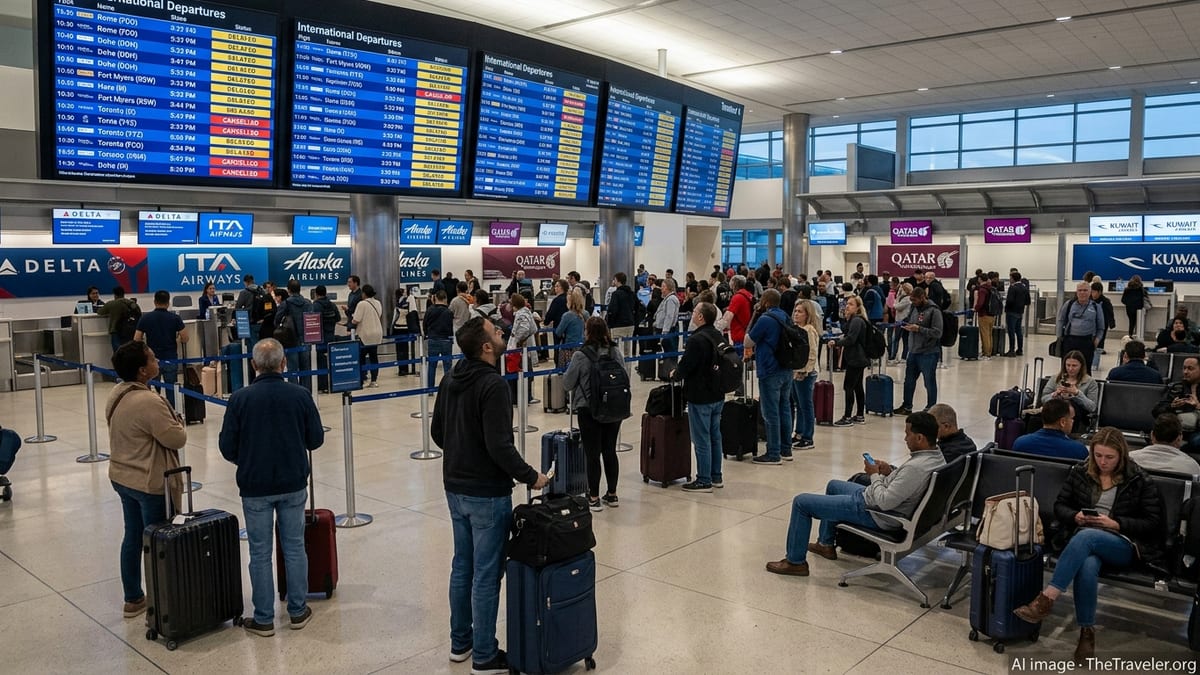
Wave of Cancellations and Delays at JFK
Publicly available flight-tracking data for March 22 indicates that John F. Kennedy International Airport entered the weekend with an elevated level of operational disruption, with more than 100 departures and arrivals running late and at least six international and domestic flights cancelled across five carriers. The affected services include long-haul routes to Europe and the Middle East as well as North American links to Florida and Canada, underscoring the growing vulnerability of global connections that depend on the New York hub.
Delta Air Lines, ITA Airways, Alaska Airlines, Qatar Airways and Kuwait Airways Corporation each recorded at least one cancellation tied to JFK’s schedule. The cancellations involved both outbound and inbound legs, tightening aircraft availability and crew rotations for subsequent departures. The disruption added fresh pressure to an already busy transatlantic and transcontinental schedule at the start of the spring travel period, when demand is steadily building toward Easter and early summer.
Operational metrics published for JFK in recent years show that the airport routinely handles thousands of flights per week with on-time performance typically near 80 percent, but the current pattern of clustered delays and targeted cancellations suggests a more acute, short-term shock. Travelers reported extended ground holds, rolling departure estimates and missed connections across multiple terminals as the day progressed.
International Routes to Rome and Doha Heavily Affected
The disruption has been particularly visible on long-haul routes linking New York to Rome and Doha, two of the most important overseas gateways served from JFK. ITA Airways’ service between JFK and Rome Fiumicino and Qatar Airways’ connection between JFK and Doha Hamad International are among those showing cancellations or substantial schedule changes, reducing capacity on corridors that normally carry high volumes of transatlantic and connecting traffic.
According to published coverage and flight-status dashboards, a cancelled ITA Airways flight between New York and Rome removed a key overnight option for travelers bound for Italy and onward destinations across Europe and the Mediterranean. The Rome hub functions as a critical transfer point for connections into southern Europe and North Africa, meaning a single cancellation can ripple through multiple onward itineraries the following morning.
Qatar Airways services between Doha and JFK have also been operating under strain in recent weeks amid broader regional airspace challenges that have already forced periods of suspension and revised schedules. Current disruption at JFK further complicates efforts to restore a stable pattern of operations, with the latest cancellation from the New York end limiting options for travelers relying on Doha for connections across the Gulf, South Asia and Southeast Asia.
North American Links to Fort Myers and Toronto Disrupted
JFK’s role as a gateway for North American leisure and business routes also came into sharp focus as delays and cancellations spread to services connecting New York with Fort Myers in Florida and Toronto in Canada. Delta Air Lines and Alaska Airlines, both significant players in the U.S. domestic and transborder markets, reported affected operations in the current disruption cycle.
Flight information platforms show that at least one Delta service involving JFK was cancelled, while multiple additional departures faced moderate to major delays. Routes to Florida, including Fort Myers, are especially sensitive at this time of year as travelers seek warm-weather getaways during school holidays and late-winter breaks, amplifying the impact of reduced capacity and missed connections.
Toronto, one of JFK’s busiest international partners in North America, has also seen knock-on schedule changes as late arrivals from New York compress turnaround times or require last-minute rebooking. These interruptions add to existing congestion at Canadian hubs, where winter-weather disruptions and strong demand have already stretched schedules over recent months.
Middle Eastern Carriers Face Added Operational Strain
The latest cancellations involving Qatar Airways and Kuwait Airways Corporation highlight the particular vulnerability of long-haul carriers that depend on tightly coordinated global networks. Qatar Airways has been managing a complex pattern of suspensions, limited corridors and revised timetables following regional airspace closures in early March 2026, and the removal of individual JFK services now further constrains connectivity at a critical moment for repatriation and onward travel.
Online discussions among travelers and publicly accessible airline updates describe repeated rebookings, changing departure windows and a patchwork of temporary schedules between Doha and major European and North American cities. In this context, a cancelled JFK rotation is not an isolated event but part of a broader recalibration of capacity, aircraft positioning and crew availability across the airline’s long-haul network.
Kuwait Airways Corporation, which serves JFK with non-alliance long-haul flights, has also drawn attention from passengers reporting limited real-time communication and uncertainty around schedule changes. While the current disruption at JFK appears modest in absolute terms, a single cancellation on a long-haul route can affect hundreds of passengers and significantly alter subsequent rotations for days afterward.
What Travelers Are Experiencing on the Ground
For passengers moving through JFK on March 22, the operational picture has translated into longer queues, shifting departure times and a greater reliance on self-service tools to manage rebookings. Travelers have reported on social platforms that departure boards at multiple terminals show clusters of flights with rolling delays of 30 minutes to several hours, along with a smaller set of outright cancellations.
Published consumer guidance emphasizes that causes for such disruption often combine several factors, including residual weather effects, airspace constraints, air traffic control flow programs and airline-specific operational challenges. When these elements converge on a high-volume hub such as JFK, even a limited number of cancelled flights, like the six recorded for the current period, can trigger a cascading effect through later departures and arrivals.
Airlines typically encourage passengers in similar situations to monitor mobile apps and airport displays closely, arrive early for check-in even if delays are expected, and review options for same-day changes or alternative routings via other hubs. While compensation rules differ by jurisdiction and carrier, especially on flights touching the European Union or the United Kingdom, travelers affected by long delays or cancellations on transatlantic or Middle Eastern services may have recourse to rebooking or refunds depending on the circumstances and governing regulations.