

More news on this day
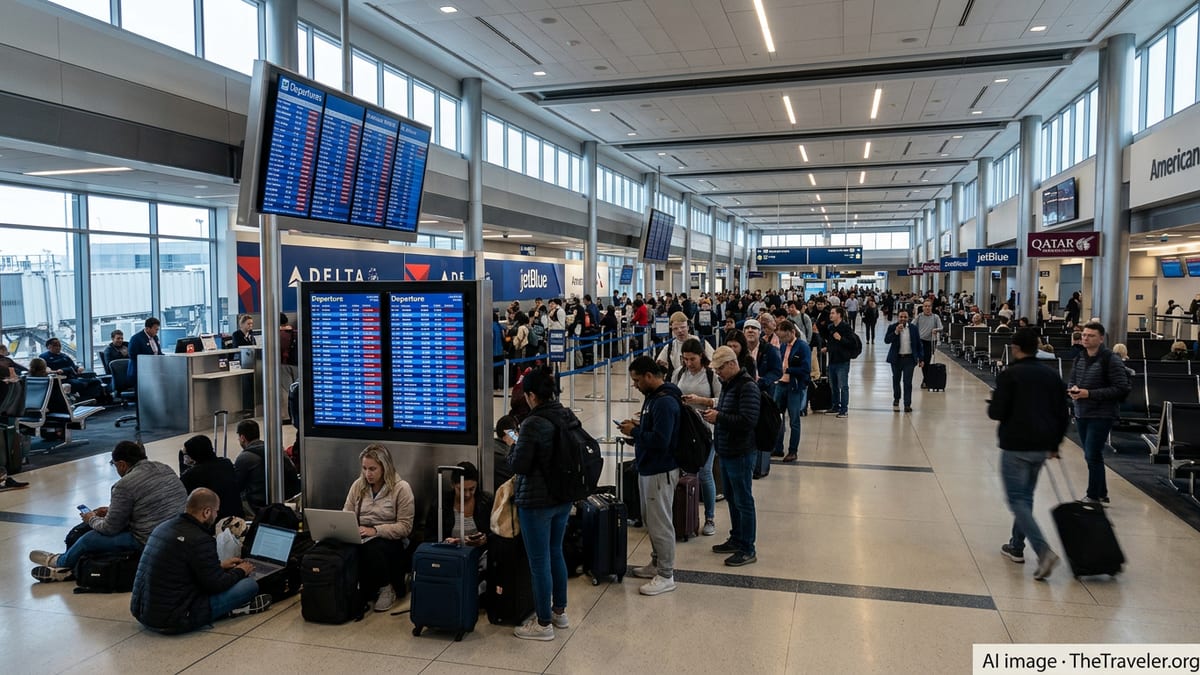
Travelers at New York’s John F. Kennedy International Airport faced mounting frustration on Saturday as at least 148 flight delays and 19 cancellations hit key routes operated by Delta Air Lines, JetBlue, American Airlines and Qatar Airways, disrupting connections to London, Dubai and major cities across the United States.
Knock-on Disruptions Hit Major Global Gateways
The wave of delays and cancellations at JFK rippled across some of the world’s busiest corridors, with transatlantic and transcontinental services among the hardest hit. Flights linking New York to London and other UK cities experienced rolling delays as aircraft and crews fell out of position, forcing airlines to reshuffle schedules throughout the day.
Services to and from Dubai and other Middle Eastern hubs also felt the strain, as long-haul operations depend heavily on precise aircraft rotations. Qatar Airways, which uses JFK as a pivotal North American gateway, was among the carriers reporting disrupted departure and arrival times, leaving passengers facing extended waits at the terminal and tighter-than-usual connection windows onward to Asia and Africa.
Within the United States, major business and leisure markets including Los Angeles, Chicago, Atlanta, Miami and Dallas reported late arrivals and missed connections. Because many domestic itineraries rely on JFK as a transfer point to Europe and the Middle East, even a modest number of cancellations quickly cascaded into a broader network challenge for airlines and travelers alike.
Airlines attempted to re-accommodate disrupted passengers onto later departures and alternative routings, but limited seat availability during peak weekend travel hours meant some travelers were forced to accept overnight stays in New York or significant changes to their itineraries.
Delta, JetBlue, American and Qatar Struggle to Recover Schedules
Delta Air Lines, JetBlue, American Airlines and Qatar Airways all reported operational disruption at JFK as delays mounted through the afternoon and evening. Delta and JetBlue, both with substantial operations at the airport, saw a mix of late inbound aircraft and prolonged turnaround times, which in turn pushed back already tight departure banks.
American Airlines faced pressure on its international and domestic services out of JFK’s Terminal 8, where even minor schedule slippage can cause congestion at gates and on taxiways. Qatar Airways’ long-haul operations, typically timed to connect with waves of flights at its Gulf hub, were particularly sensitive to any departure delay from New York, raising the risk of missed onward connections for passengers heading to destinations across the Middle East, South Asia and Africa.
By early evening, operational teams at each airline were working to stabilize their schedules, prioritizing long-haul departures and attempting to protect banked connection times where possible. However, with aircraft and crews displaced, full recovery was expected to take into the late night period, and some residual disruption was likely to carry into early Sunday departures.
Passengers reported crowded gate areas, long lines at customer service desks and limited information about new departure times as airlines juggled rolling updates to their schedules. Many carriers leaned heavily on mobile notifications and self-service tools to rebook affected travelers, but customer frustration remained high amid the uncertainty.
Passengers Face Long Queues, Missed Connections and Limited Options
For travelers on the ground, the impact was immediate and personal. Families returning from winter trips, business travelers racing to meetings, and international visitors transiting through New York all found themselves trapped in a maze of shifting departure boards and crowded concourses.
Missed connections were a particular problem for those headed to London, Dubai and onward destinations in Europe and the Middle East. With many long-haul flights operating only once per day on specific city pairs, a delay of several hours or a late arrival into JFK could easily translate into a full-day or overnight disruption before an onward seat became available.
Lines for food, restrooms and power outlets grew as departure times slipped, and passengers scrambled to secure hotel rooms near the airport when rebooking options pushed them into next-day departures. Some travelers reported spending several hours in queues for airline agents, only to be redirected to digital channels that were themselves overwhelmed by traffic.
For those already onboard delayed aircraft, extended tarmac waits added to the strain. While airlines worked to keep passengers informed and provided beverages and snacks where required, uncertainty about actual departure times compounded anxiety for those with tight onward itineraries or important events at their destination.
Advice for Travelers Heading to or Through JFK
With operations at JFK under pressure and knock-on effects likely to linger, travel experts urged passengers booked on Delta, JetBlue, American or Qatar services to treat schedules as fluid and to build in additional buffer time for any critical connections. Same-day connections through JFK, particularly onto long-haul flights to London, Dubai or other overseas hubs, were flagged as especially vulnerable to disruption.
Travelers were advised to monitor their flight status frequently using airline apps and to enable push notifications so that rebooking options could be actioned quickly if a delay or cancellation occurred. Where possible, carrying only hand luggage and ensuring valid electronic travel documents and transit permissions were in order could help travelers move faster between rebooked flights and alternative routings.
For those yet to depart for the airport, checking the status of both the outbound flight and any onward connections before leaving home was recommended, as was allowing additional time to clear security and reach the gate in the event of crowding. Passengers with flexible dates were encouraged to consider voluntary rebooking to less busy days or off-peak hours to reduce the risk of being caught in a fresh wave of delays.
Airlines at JFK indicated they would continue to adjust capacity and crew assignments in the short term to improve reliability, but warned that a combination of congested airspace, tight aircraft utilization and ongoing global disruptions meant that travelers should remain prepared for last-minute changes.
Broader Strain on an Already Stretched Aviation System
The turbulence at JFK came against the backdrop of a global aviation system still working to absorb a series of shocks, from severe winter weather to airspace restrictions in parts of the Middle East. These pressures have left airlines with less slack in their schedules, making major hubs like JFK more vulnerable to cascading delays when operational challenges arise.
Industry analysts noted that the clustering of delays and cancellations among major carriers at a single hub underscored how interconnected global air travel has become. A relatively contained disruption at one airport can quickly reverberate across continents, affecting passengers far beyond the original point of failure.
For New York, one of the world’s most important aviation markets, the latest bout of travel chaos at JFK is likely to rekindle debate over infrastructure, air traffic control resources and the resilience of airline scheduling practices. As carriers continue to rebuild networks and chase strong demand, the balance between high aircraft utilization and operational resilience remains a delicate one.
For now, passengers booked through JFK in the coming days are being urged to stay informed, remain flexible and prepare backup plans where possible, as airlines work to restore normal operations and untangle the latest web of delays and cancellations at the airport.