

More news on this day
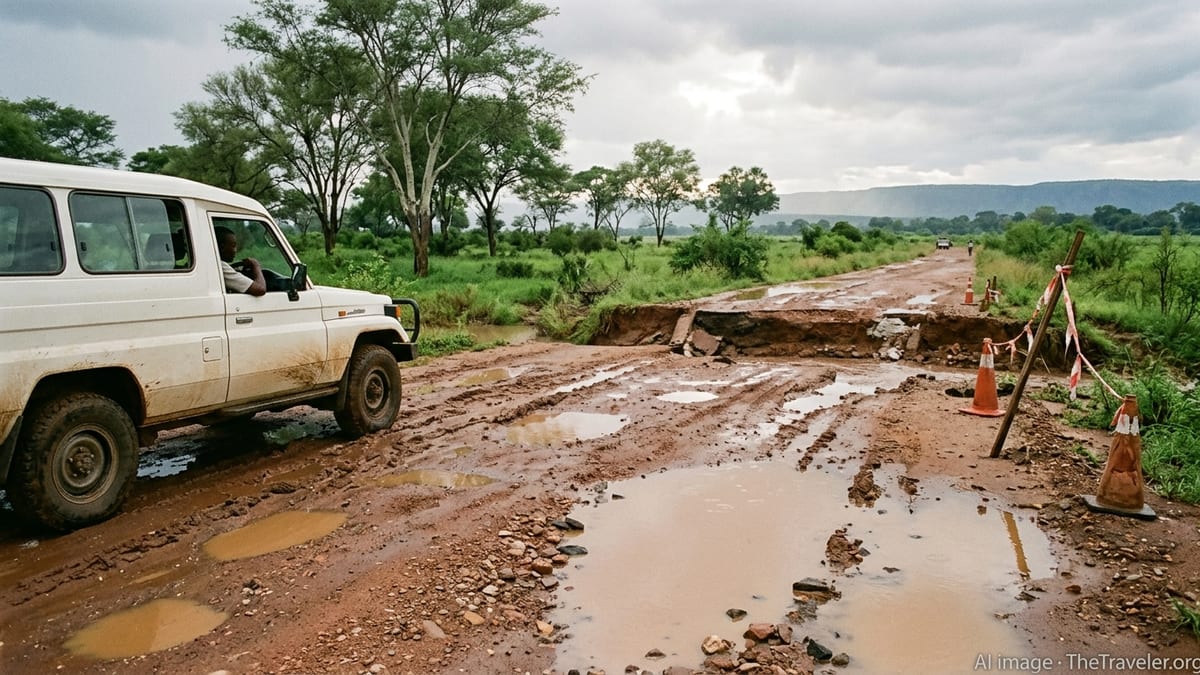
Heavy seasonal rains and rising river levels in northern Zimbabwe have severely damaged access roads and bridge infrastructure leading to Mana Pools National Park, temporarily cutting off standard vehicle access to one of the country’s flagship wildlife destinations and raising urgent questions for travelers with safaris booked in the coming weeks.
Get the latest news straight to your inbox!
What Is Happening Around Mana Pools Right Now
Recent reporting on regional flooding across southern Africa indicates that sustained heavy rainfall since mid-December has damaged road infrastructure and triggered river surges in several countries, including Zimbabwe. Publicly available information shows that low-lying routes and older bridges are particularly vulnerable when the Zambezi and its tributaries swell, a pattern that has repeatedly affected access to Mana Pools over the past decade.
Construction industry coverage has previously documented how intense rains in the Mana Pools area washed away bridges and sections of road, limiting access to the UNESCO-listed park and reducing tourism revenue. Those same access corridors are again exposed under current conditions, and local travel advisories now point to sections of the approach road becoming impassable after downpours, especially for standard two-wheel-drive vehicles.
Regional flood summaries by international agencies describe widespread damage to roads and critical infrastructure across southern Africa during the 2025–2026 rainy season. These broader assessments, combined with past reports of washed-out bridges on the Mana route, support current indications that road links into the park are once more disrupted and that some segments have been effectively cut for regular tourist traffic.
How Access Disruption Affects Upcoming Safari Plans
For travelers, the main impact is on overland access. Mana Pools is typically reached by a long, partly remote drive from Harare or via connections from other safari hubs. When seasonal flooding damages causeways and gravel sections, the final approaches can become unsafe or completely blocked, making it impossible for tour operators to guarantee road transfers into the park.
Tourism operators that specialize in Mana Pools generally advise that even in normal seasons, high-clearance four-wheel-drive vehicles and experienced drivers are recommended for the final stretches. Under current flooding conditions, publicly available operator guidance points to an elevated likelihood of deep ruts, standing water, and washed-out culverts, alongside reduced on-the-ground capacity to carry out rapid repairs while the rains continue.
Travelers with confirmed itineraries should be prepared for late changes to logistics. In past flood events affecting the region, parks and private camps have suspended road-based arrivals at short notice, either shifting guests to alternative destinations or rebooking for later dates once access was restored. Similar contingency measures are likely to be in play again while engineers and road teams assess damage on the main approaches to Mana Pools.
Flight Options, Detours and Possible Workarounds
Although road access has been heavily disrupted, the broader Mana Pools region remains reachable by air, and small-plane transfers have historically provided a key backup when heavy rains affect the roads. Charter services from Harare and other regional airstrips can, in principle, bypass damaged bridges and washed-out gravel sections, landing on bush airstrips closer to camps.
However, travelers should be aware that air access also depends on weather, airstrip conditions, and operator safety assessments. During extended wet spells, some dirt airstrips can become waterlogged or require temporary closure for grading and drying. Published information from safari operators across southern Africa during recent flood seasons highlights cases where aircraft loads were restricted or flights rescheduled around storm systems and saturated runways.
For those already in Zimbabwe and hoping to reroute, alternative destinations such as Hwange and Matobo are less dependent on the Zambezi corridor and may retain more reliable road access, depending on local rainfall. Regional reporting on Zimbabwe’s national road network notes ongoing rehabilitation work, but also emphasizes that intense storms can quickly reverse progress, so flexibility on routing and destination choice remains advisable for the rest of the rainy season.
Safety, Insurance and Booking Considerations
Travel risk specialists generally advise that self-drivers avoid attempting flooded causeways or badly eroded tracks in remote areas. In the Mana Pools context, that guidance becomes especially important because of the park’s isolation, the presence of wildlife, and limited on-site recovery resources. Published codes of conduct for visitors also stress that off-road driving is prohibited, which removes the option of attempting informal bypasses around damaged sections.
Given the current situation, travelers are encouraged to review their travel insurance policies with particular attention to coverage for natural disasters, trip interruption, and additional transport costs. Past flood-related disruptions in regional parks have led to scenarios where guests needed extra hotel nights in gateway cities, replacement flights, or rerouted itineraries. Policies that treat these events as covered hazards can significantly reduce the financial impact of last-minute changes.
Booking terms and flexibility from tour operators and camps will also play a major role. Many safari companies now apply more flexible change policies during active rainy seasons, especially when infrastructure issues outside their control prevent access. Travelers considering new Mana Pools bookings for the coming months may wish to prioritize arrangements that allow date shifts or destination swaps if access problems persist.
What Travelers Should Do Before They Depart
Anyone planning a trip to Mana Pools in the near term should monitor both national weather updates and publicly available road and park notices in the days before departure. Conditions along the Zambezi corridor can change quickly, with roads reopening once water levels fall or closing again after new storms. Checking for the latest information shortly before travel is critical for realistic planning.
Travelers are also advised to stay in close contact with their tour operator, lodge, or booking agent. These intermediaries are typically the first to receive operational updates from transport providers and local partners about washed-out bridges, changed access points, or new flight arrangements. In many cases they can propose alternative overnight stops, revised transfer times, or a temporary switch to another park while Mana access is constrained.
Finally, those intent on self-drive safaris should reassess vehicle choice and timing. A robust four-wheel-drive with high clearance, extra fuel, and recovery gear is often recommended even in good seasons. Under the present flood-affected conditions, travelers may find that postponing a Mana Pools visit until after the peak rains, or shifting to a fly-in itinerary arranged through a reputable operator, offers a safer and more reliable way to experience this celebrated stretch of the Zambezi valley.