

More news on this day
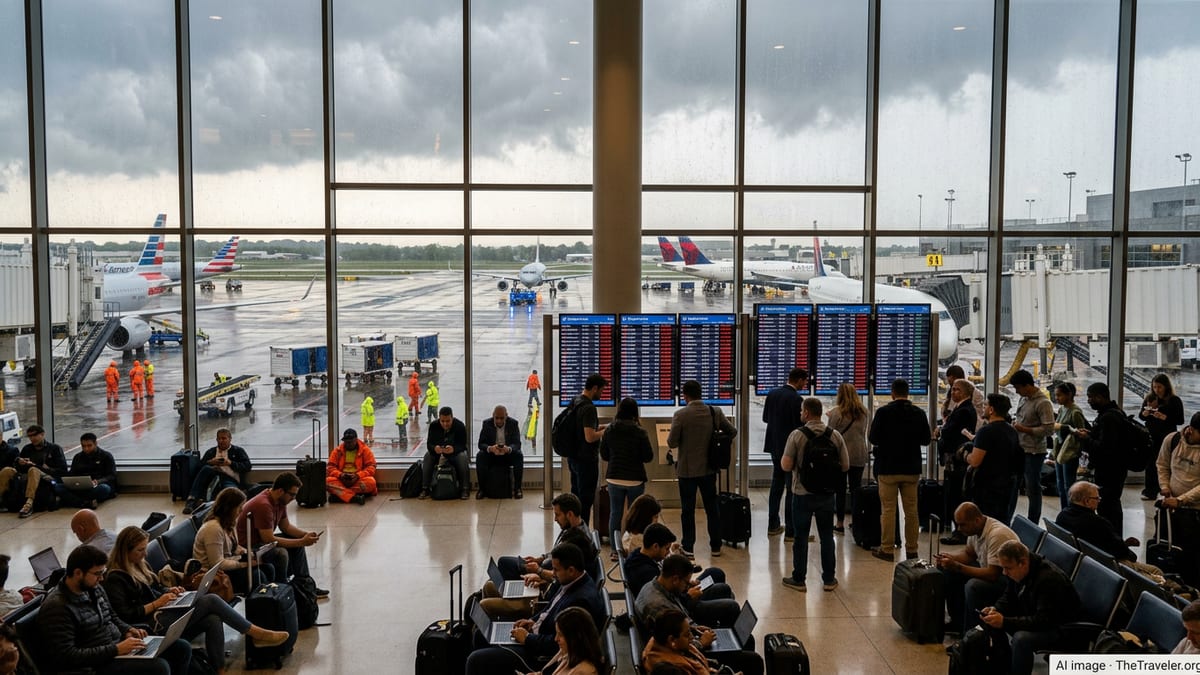
Severe storms sweeping across the eastern United States have triggered widespread flight cancellations and delays at Philadelphia International Airport, straining an already busy spring travel period and forcing many passengers to rapidly rework their plans.
Get the latest news straight to your inbox!
Storm System Slams an Already Busy Travel Week
A powerful March storm system affecting large portions of the eastern United States has pushed heavy rain, strong winds, and thunderstorms into the Philadelphia region, creating difficult conditions for flight operations at Philadelphia International Airport. Publicly available tracking data shows hundreds of flights disrupted across the East Coast as the weather system moves through, with Philadelphia among the airports experiencing significant schedule upheaval.
The timing is particularly challenging. Early spring brings a surge of leisure travelers heading out for school breaks and fans flying to college basketball tournaments, adding demand on top of already dense airline schedules. With the current storms layered onto that seasonal rush, even moderate airfield slowdowns and ground delays at Philadelphia rapidly cascade into cancellations, missed connections, and long rebooking queues.
National coverage of the storm complex indicates that the same system has affected major hubs from the Midwest to the Mid Atlantic and Northeast, compounding knock-on impacts at Philadelphia. When aircraft and crews are trapped at other airports or arrive hours late, airlines have fewer options to keep departures from Philadelphia on time, even when local conditions briefly improve.
The result for travelers at Philadelphia is a patchwork of last-minute gate changes, rolling departure times, and sudden cancellations that can change several times in a single day as airlines adjust to evolving weather and air traffic control constraints.
How Operations at Philadelphia International Are Being Disrupted
Reports from airline tracking services and passenger accounts indicate that Philadelphia has seen a mix of outright cancellations and extended delays, particularly on routes along the congested Northeast corridor and to major hubs in the Southeast and Midwest. Thunderstorms and periods of reduced visibility have led to spacing restrictions on arriving and departing aircraft, effectively reducing runway capacity.
When severe weather affects multiple major airports at once, Philadelphia is more exposed than some travelers might expect. The airport functions both as a key hub and a busy origin and destination gateway, which means it depends heavily on aircraft rotating in from other storm-hit cities. If an inbound flight from a southern or Midwestern hub is delayed or diverted, the aircraft that was scheduled to operate a later departure from Philadelphia is no longer available, leading to cancellations hours after the worst of the local weather has passed.
Ground operations are also affected. Lightning in the vicinity of the airfield can temporarily halt ramp work, keeping baggage handlers and fueling crews away from aircraft until conditions are deemed safe. Those pauses ripple into boarding delays, missed departure slots, and longer taxi times. Even short suspensions of ramp work can push back entire waves of flights, which then encounter further slowdowns as they join long departure queues.
Security and check-in have come under pressure as well. With multiple flights rescheduled into the same time windows, passenger surges are creating dense lines at ticket counters and security checkpoints. Travelers arriving at the terminal close to departure time are finding that even minor waits can cause them to miss flights that ultimately do depart, adding another layer of frustration.
What Travelers Should Do If Flying Through Philadelphia
For travelers with upcoming flights into or out of Philadelphia, preparation now can reduce stress later. Airlines and travel providers are increasingly posting weather-related waivers that allow passengers to change dates or reroute trips without typical change fees, particularly when storms are forecast over multiple days. Checking for an active waiver on the airline’s website or app before heading to the airport can open options to shift to earlier or later flights while seats remain.
Experts on airline operations and recent travel coverage consistently recommend that passengers rely first on official airline channels for the most accurate status information. Airline apps and text alerts generally update faster than third-party trackers when flights are retimed, aircraft are swapped, or a route is quietly canceled. Enabling push notifications and closely monitoring them during the 24 hours before departure can give travelers a head start on rebooking when schedules begin to unravel.
Travelers starting their trips in Philadelphia are also being advised by consumer advocates and aviation analysts to arrive at the airport earlier than usual during periods of severe weather. Leaving an extra hour for check-in and security can create a buffer for longer lines or unexpected terminal changes. Those with tight connections through Philadelphia should explore whether a longer layover is available, as storms often turn 45-minute connections into missed flights when incoming aircraft are held on the tarmac.
Where possible, passengers with time-sensitive plans, such as international departures or major events, may want to consider early-morning flights from Philadelphia. Historical on-time performance data shows that the first departures of the day tend to be more reliable, because aircraft and crews are already on the ground, rather than relying on delayed inbound flights from other storm-affected airports.
Planning Your Next Trip Around Increasing Weather Risks
The latest disruptions at Philadelphia highlight a broader trend in U.S. aviation: weather is playing an increasingly central role in when and how flights operate. Industry data compiled in recent years shows that weather accounts for a large share of cancellations nationwide, and analysis of delay patterns places Philadelphia among the more weather-sensitive major airports, thanks to both its location and its role in dense regional traffic flows.
Travel planners suggest building more resilience into future itineraries that touch Philadelphia, especially during peak storm seasons in late winter and spring, as well as during the Atlantic hurricane period in late summer and early autumn. That can include choosing nonstop flights over connections where possible, or routing through hubs less frequently affected by East Coast thunderstorms when tight schedules leave little room for error.
Travel insurance is another consideration. Policies that specifically cover weather-related delays and missed connections can help offset extra costs for hotels, meals, and alternative transportation when storms disrupt operations at Philadelphia. However, travelers are encouraged to review terms carefully, as some policies only apply when delays cross a defined threshold, such as six or more hours.
Those booking with loyalty points or corporate travel programs can sometimes access more flexible change options when storms threaten. Flexible or refundable fares may appear more expensive at the time of purchase, but they can prove cost-effective when severe weather repeatedly interrupts operations at major hubs like Philadelphia and forces last-minute itinerary shifts.
Practical Strategies for Navigating Future Disruptions
In the wake of the current storm, travel specialists emphasize a handful of practical strategies for anyone planning to fly through Philadelphia in the coming weeks. First, build redundancy into your plans by identifying backup flights before problems arise. Knowing in advance which later departures or alternative routings exist can save valuable minutes when it is time to rebook.
Second, consider packing with disruption in mind. Keeping medications, chargers, a change of clothes, and essential toiletries in carry-on bags ensures that travelers can manage overnight delays in Philadelphia without relying on checked luggage. This approach has become increasingly important as irregular operations leave some checked bags stranded when passengers are rebooked on different aircraft or airlines.
Third, think carefully about ground transportation and lodging. When forecasts show a strong chance of severe storms around Philadelphia, booking airport-area hotels with flexible cancellation policies can provide a safety net if flights are canceled late in the day. Similarly, allowing extra time between a flight arrival and critical onward commitments, such as train departures or long-distance drives, reduces the risk that a weather delay at the airport will derail the rest of the journey.
Finally, travelers are encouraged to maintain realistic expectations. Severe weather events like the current storm system are complex and fast-changing, and even the most carefully constructed airline schedules are vulnerable when conditions deteriorate along multiple points in a route network. Building flexibility into trip planning, staying informed through official channels, and preparing for potential overnight disruptions can help passengers using Philadelphia International Airport navigate this latest round of cancellations and delays and be better positioned for the next one.