

More news on this day
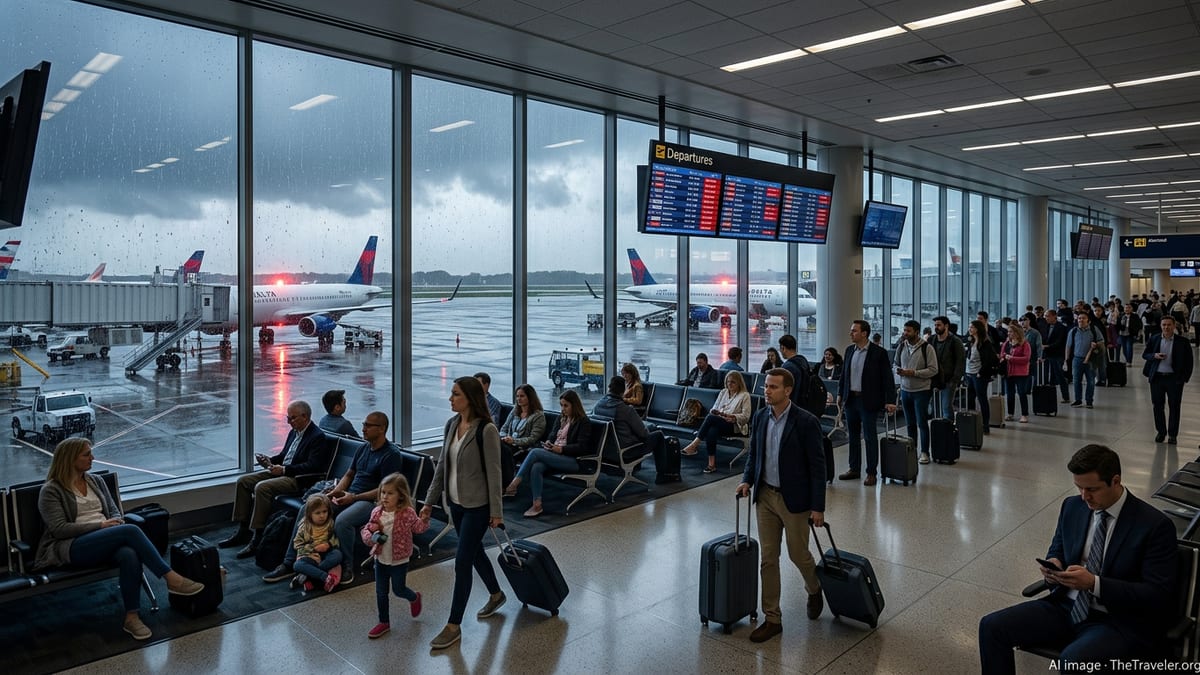
Severe storms tied to a sprawling March weather system have triggered widespread flight cancellations and delays at Philadelphia International Airport, disrupting thousands of travelers at the height of spring break and business travel season.
Get the latest news straight to your inbox!
Storm System Slams an Already Strained Air Travel Network
The latest round of disruptions at Philadelphia International Airport comes as a powerful storm complex sweeps across the eastern half of the United States, bringing heavy rain, strong winds and turbulent conditions to some of the country’s busiest air corridors. Published coverage of the broader system describes hundreds of cancellations and delays nationwide as airlines struggle to keep aircraft, crews and schedules aligned amid volatile weather and congested skies.
Philadelphia sits in a critical position along the Mid Atlantic corridor, where storms tracking from the Midwest toward the Atlantic Coast can quickly upend operations. Recent winter and early spring systems have already produced some of the worst single-day cancellation totals in years across the Northeast, with Philadelphia among the airports experiencing significant ripple effects. Publicly available aviation data and airline updates indicate that the latest storm has again forced reductions in takeoff and landing rates, creating bottlenecks that radiate through the network.
The result for travelers is a familiar pattern: ground stops, rolling delays and last-minute cancellations that can cascade throughout the day. Even when severe thunderstorms or low ceilings move through quickly, it can take hours for airlines and air traffic managers to recover, particularly when aircraft and crews are out of position and security checkpoints are under added pressure from higher passenger volumes.
The timing of the storm magnifies the impact. March brings a surge of passengers traveling for spring break and major sporting events, while airlines are still operating winter-weather playbooks. The combination of heavier demand, lingering cold-season conditions and a complex, multi-day storm has turned Philadelphia into one of several choke points across the East Coast.
Why Philadelphia Is So Vulnerable to Weather Disruptions
Philadelphia International Airport is a major hub for domestic and transatlantic traffic, handling tens of thousands of passengers each day and serving as a key connecting point between the Midwest, South, Mid Atlantic and Europe. Aviation planning documents and city budget testimony highlight how closely airport performance is tied to weather, noting that high winds, heavy rain and localized flooding have previously damaged equipment and strained energy infrastructure on the airfield.
PHL shares crowded airspace with airports in New York, Newark, Baltimore and Washington, meaning that storm-related slowdowns in one part of the region often affect the others. When the Federal Aviation Administration reduces arrival and departure rates for safety, even for short windows, Philadelphia-bound flights can be held at origin, diverted or rescheduled, resulting in rolling disruptions for hours afterward.
Historically, the airport has shown it can clear snow and ice efficiently compared with some more southern hubs, but it remains highly exposed to wind, thunderstorms and low visibility, especially when fast-moving systems cross the I-95 corridor. Analysis of national delay statistics shows that Philadelphia regularly ranks among the U.S. airports where passengers lose millions of hours each year due to schedule disruptions, underscoring how quickly weather can magnify existing congestion.
Other factors are compounding the current situation. Airlines serving Philadelphia are still recalibrating after a winter of major storms that forced mass cancellations and equipment repositioning, and a partial federal government shutdown has added pressure to security screening resources nationwide. When bad weather hits under these conditions, lines lengthen, rebooking options narrow and recovery takes longer.
How the Disruptions Are Affecting Travelers Right Now
For passengers, the latest wave of severe weather has translated into packed terminals, shifting departure boards and longer-than-usual waits to clear security and reach departure gates. Flight-tracking services show elevated cancellation and delay rates across the East Coast, with Philadelphia among the airports reporting significant schedule changes as thunderstorms and strong winds move through the region.
Travelers with connections through PHL are especially vulnerable. Because many flights into Philadelphia originate in cities also affected by the same storm system, a delay early in the day in one region can easily break a connection several states away. Even when a local forecast in Philadelphia appears relatively calm, upstream weather can still cause missed connections and overnight interruptions.
Reports from recent storms suggest that international itineraries and last flights of the day often face the greatest disruption risk. When crews reach duty-time limits or aircraft required for overnight departures are delayed elsewhere in the system, airlines have less flexibility to recover within the same day. That can leave passengers facing hotel stays, reroutes through alternate hubs or rebooking days later during a period when many flights are already near capacity.
At the same time, some carriers have introduced weather waivers for parts of the East Coast, allowing passengers to change travel dates or routing without standard change fees. These waivers are typically time-limited and route-specific, but they can provide a critical option for travelers willing to adjust their plans before conditions deteriorate further.
Planning Your Next Trip Through Philadelphia During Unstable Weather
The latest disruptions at Philadelphia International Airport offer a clear lesson for anyone planning to travel through the region in the coming days: flexibility and preparation are essential. Travel experts and frequent flyers consistently recommend building extra time into itineraries that rely on connections through weather-sensitive hubs, especially in late winter and early spring when fast-moving storms are common.
For those who have not yet booked, publicly available airline guidance suggests looking for earlier departures in the day, when schedules are less backed up and there is more room to rebook if conditions worsen. Nonstop flights reduce the number of potential failure points, while connections routed through less weather-exposed hubs can lower, but not eliminate, the risk of disruption.
Travelers with existing tickets through PHL should monitor both the airport’s general operations and the forecast not only in Philadelphia but also at their origin and final destination. Checking flight status regularly on airline channels and signing up for text or app alerts can provide earlier warning of creeping delays. If a carrier issues a weather waiver that includes PHL, acting quickly can make the difference between securing an alternative flight and getting stuck behind a wave of rebooking requests.
Insurance policies and credit card protections may also help, but travelers should review the terms in advance. Many policies require documentation that weather caused the disruption, and some offer coverage only for substantial delays, overnight stays or complete cancellations. Knowing what support is available beforehand can simplify decisions at the airport when time and options are limited.
Practical Strategies to Reduce Weather-Related Travel Stress
Beyond monitoring forecasts and schedules, several practical steps can make weather-impacted trips through Philadelphia more manageable. Carry-on-only travel, whenever possible, gives passengers more rebooking flexibility because airlines do not need to chase checked baggage across disrupted networks. It also makes it easier to pivot to other routes or carriers if severe delays accumulate.
Building longer connection windows can be particularly valuable when passing through PHL during stormy periods. While short layovers are convenient in normal conditions, they leave little margin when arrival rates are reduced, de-icing is required or aircraft wait for storms to pass. A layover of two to three hours may feel conservative, but during active weather patterns it can be the difference between making a connection comfortably and spending the night in the terminal.
Travelers should also prepare for extended time in the airport. Packing essential medications, chargers, snacks and a change of clothes in a personal item can help if delays stretch into many hours. Keeping boarding passes, identification and any necessary visas or travel documents easily accessible will speed security and rebooking processes when lines are long.
Finally, staying calm and proactive is crucial. Severe weather events that impact multiple hubs, including Philadelphia, create complex operational challenges that take time to unwind. By planning conservative itineraries, staying informed about evolving conditions and making early use of flexible change options when they appear, travelers can significantly improve their chances of reaching their destinations, even as storms continue to test the resilience of the air travel system.