

More news on this day
Severe weather around Iceland has triggered major disruption at Keflavik Airport, with 34 flights reportedly cancelled and at least 9 delayed on heavily used routes to Helsinki, London, Copenhagen, Tenerife, Stockholm, and Dublin, leaving hundreds of passengers stranded or facing long diversions across northern Europe.
Get the latest news straight to your inbox!
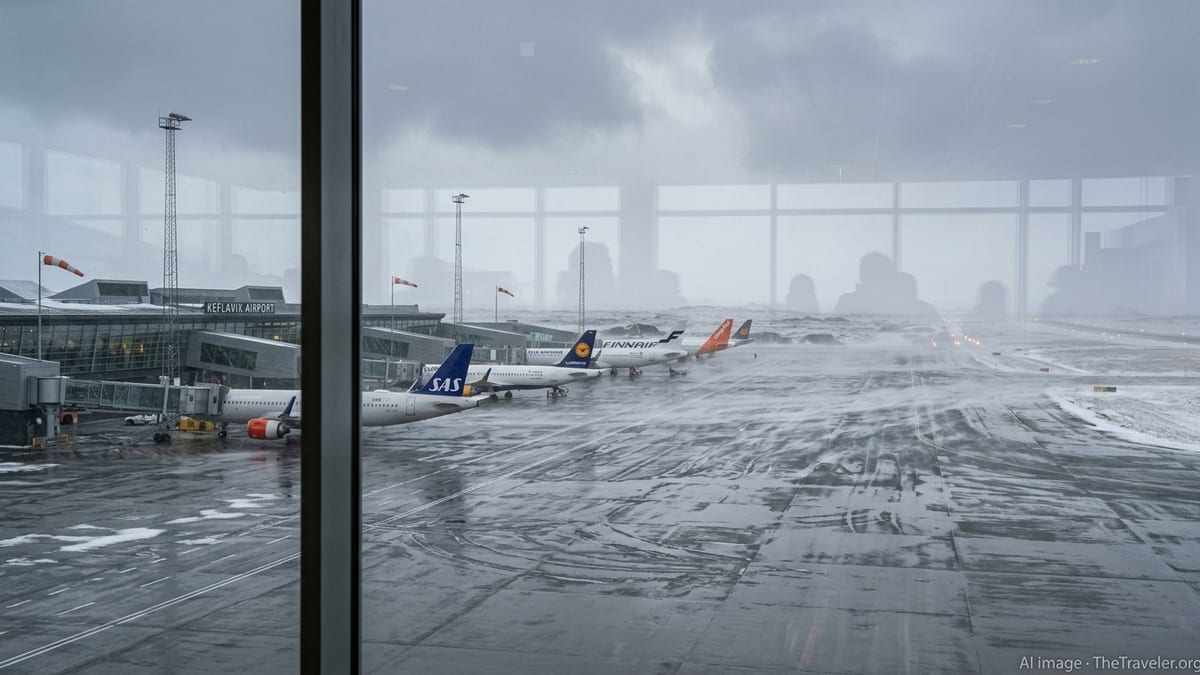
Storm Conditions Hit a Key North Atlantic Hub
The disruption comes as strong winds, low visibility, and fast-changing conditions sweep the North Atlantic, creating operational challenges at Keflavik, Iceland’s main international gateway. Publicly available flight information shows that services operated by SAS, Lufthansa, Icelandair, Finnair, and easyJet have been particularly affected, reflecting their dense schedules linking Iceland with Nordic capitals and major European cities.
Reports indicate that the bulk of cancellations are concentrated across a single weather-affected window, when crosswinds and poor visibility combined with shifting forecasts to reduce the airport’s usable capacity. Under such circumstances, airlines typically prioritize safety margins for takeoffs and landings, which can mean temporarily suspending operations on certain runways and thinning out flight schedules.
In practice, this results in rapid knock-on effects: once a core wave of departures and arrivals is cancelled or delayed, aircraft and crew become out of position for later services. The result for travelers is not only same-day disruption at Keflavik, but potential complications for connections onward into Europe and North America.
Aviation data for recent seasons already highlight how North Atlantic weather can strain timetables at Keflavik, with winter and early spring bringing recurring episodes of strong winds, snow, and freezing rain. The latest disruption fits into that broader pattern, even as airlines and airport managers refine their procedures in an effort to keep as many flights running as safely possible.
Routes to Helsinki, London, and Copenhagen Disrupted
The impact has been felt most sharply on key European trunk routes. Flights between Keflavik and Helsinki, a major Finnair and codeshare corridor, have seen cancellations and extended delays as crews work around crosswinds and altered approach patterns. Passengers bound for the Finnish capital have had to contend with rebookings via alternate Scandinavian hubs or overnight stays in Iceland.
Connections to London, one of Keflavik’s busiest markets, have also been hit. easyJet flights between the UK and Iceland have been among those cancelled or delayed, with some services to and from London airports grounded as weather conditions intensified. Lufthansa and SAS schedules feeding into and out of London via Keflavik have been indirectly affected as aircraft and crew positioning across their networks comes under strain.
Copenhagen, a critical hub for SAS and an important connecting point for Iceland-bound travelers from across continental Europe, has also seen knock-on effects. According to published coverage and live timetable data, multiple SAS and Icelandair rotations linking Keflavik and the Danish capital have been disrupted, reducing options for same-day onward travel deeper into Europe.
For many passengers, these cancellations mean missed rail links or domestic connections after they eventually reach their destination city. Because the affected routes serve as feeders into wider European and intercontinental networks, a single weather episode at Keflavik can ripple across multiple countries in a matter of hours.
Leisure Routes to Tenerife, Stockholm, and Dublin Also Affected
Beyond business and hub traffic, the weather-related disruption is hitting popular leisure routes. Tenerife, a key winter-sun destination for travelers from the Nordic region, features prominently on Icelandair and partner schedules from Keflavik. With several flights cancelled, holidaymakers have been forced to delay departures or accept rerouting via other European airports with available capacity.
Stockholm and Dublin, both important city-break and short-stay destinations, have seen cancellations and extended delays as well. Published flight-tracking snapshots show disrupted Icelandair, SAS, and low-cost operations on these routes, complicating weekend travel plans and short visits that rely on tight schedules and limited vacation time.
For tourism-dependent businesses, such as hotels and tour operators in Iceland and at the destination cities, the effect can be immediate. Late-night arrivals become early-morning landings, tours may need to be rescheduled, and accommodation plans sometimes require last-minute changes. While many travelers ultimately complete their journeys within a day or two, the financial and logistical fallout can extend longer for local service providers.
The current wave of disruption underlines how seasonal leisure travel remains highly exposed to rapid shifts in North Atlantic weather, even as airlines refine their contingency playbooks and aircraft technology improves.
Travelers Face Overnight Stays and Complex Rebookings
As flights are cancelled or pushed back by several hours, passengers at Keflavik have had to navigate a mix of overnight stays, rebooked itineraries, and, in some cases, partial refunds or travel credits. Publicly available guidance from airlines such as Icelandair, SAS, Lufthansa, Finnair, and easyJet outlines how accommodations, meal vouchers, and alternative travel arrangements are typically handled during weather-related disruptions, although exact entitlements can vary by ticket type and jurisdiction.
Weather is generally classified as an extraordinary circumstance, meaning that while airlines are expected to assist with re-routing and basic care, additional compensation rules are more limited under common regulatory frameworks. That distinction can be confusing for travelers who may be unfamiliar with the difference between a technical fault and a weather shutdown, especially when multiple flights on the same route experience different outcomes over a short period.
At Keflavik, where much of the traffic is connecting, even a modest delay can cause passengers to miss onward departures to Europe or North America. Re-accommodating those travelers often requires creative use of alliance partners and available seats on competing carriers, particularly when several airlines are simultaneously cutting capacity on the same day due to weather warnings.
Online accounts from previous winter and spring seasons show similar patterns: passengers queueing at transfer desks late into the night, receiving hotel vouchers near the airport, or choosing to reroute via other hubs such as London, Oslo, Frankfurt, or Amsterdam to complete their trips once conditions improve.
Continuing Weather Warnings Keep Outlook Uncertain
Forecasts from national meteorological services and aviation weather charts continue to highlight unsettled conditions around Iceland, with further strong winds and periods of poor visibility possible over the coming days. While not every warning automatically leads to flight cancellations, airlines often respond conservatively when models point to rapidly changing crosswinds or freezing precipitation during peak arrival and departure times.
Published guidance for travelers heading to or from Iceland typically emphasizes the need to build flexibility into winter and early spring itineraries, including leaving extra time for connections and avoiding last-minute, nonrefundable ground arrangements on the day of arrival. The latest events at Keflavik reinforce that advice, illustrating how quickly a single storm system can affect travel plans across a wide swath of northern Europe.
For now, the operational picture at Keflavik remains fluid. As airlines work to restore their schedules in the wake of 34 cancellations and nine reported delays, passengers bound for Helsinki, London, Copenhagen, Tenerife, Stockholm, and Dublin are being urged through general travel advisories and public-facing channels to monitor their flight status closely and remain prepared for further changes.
With severe weather warnings still in effect in parts of the North Atlantic region, the possibility of additional disruption cannot be ruled out. Travelers planning to transit through Keflavik in the near term may find it prudent to keep alternative options in mind, stay attentive to updates from their carriers, and factor extra margins into connecting journeys across Europe and beyond.