

More news on this day
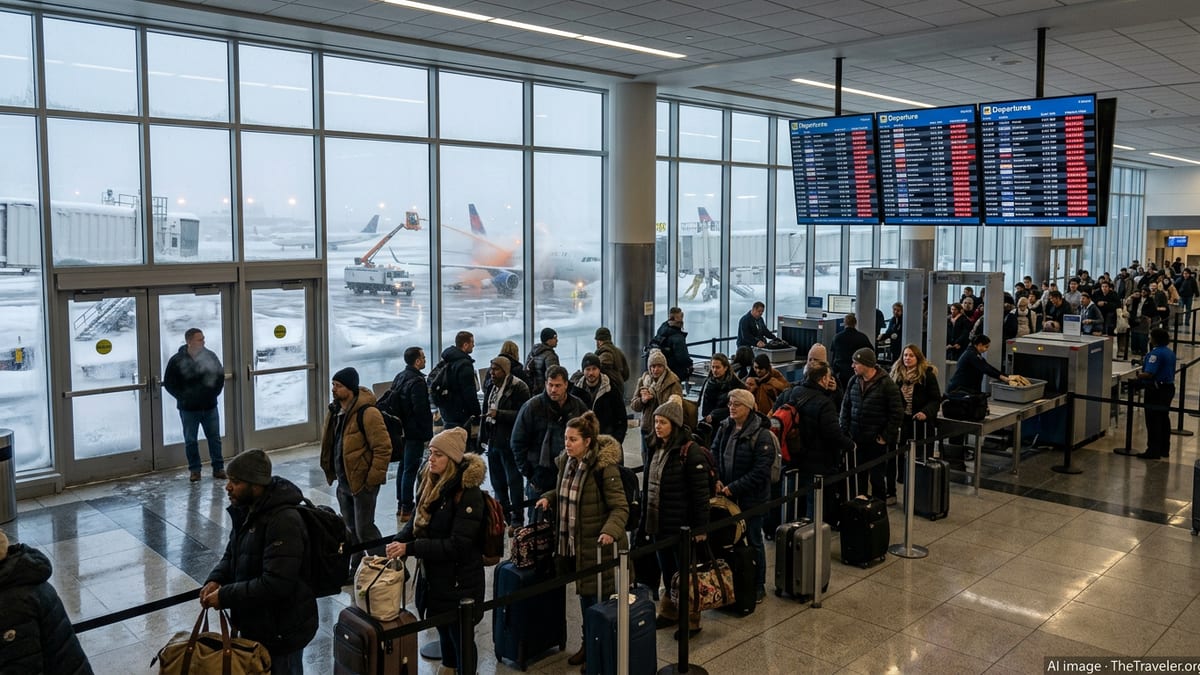
Successive winter and severe-weather systems sweeping across the United States in March 2026 are causing extensive travel disruptions from coastal airports to inland interstates, with thousands of passengers facing cancellations, diversions and unusually long security queues.
Get the latest news straight to your inbox!
Storm Complex Slams Coasts and Heartland
A sprawling March storm complex affecting the eastern half of the country has combined heavy snow, strong winds and severe thunderstorms, disrupting travel from the Pacific Northwest to the Mid-Atlantic. Publicly available information indicates that blizzard conditions and whiteouts have forced intermittent closures on major highways, while gusty winds have reduced visibility and complicated aircraft operations at several large airports.
In the Upper Midwest, the latest system follows a series of winter storms that already strained regional transport networks earlier in the season. Reports describe stretches of Interstate 90 and other key corridors becoming temporarily impassable due to drifting snow and ice, prompting detours and travel advisories. Road crews in affected states are working extended shifts to keep freight and essential traffic moving through high-impact zones.
Farther south and east, the same storm pattern is spawning lines of strong thunderstorms and the risk of tornadoes from the mid-South toward the Mid-Atlantic. According to national forecast centers and media coverage, these fast-moving squall lines are likely to trigger additional ground stops, airspace flow programs and short-notice delays at major hubs as they roll through already congested air corridors.
Airlines Face Waves of Cancellations and Diversions
Air travelers are experiencing another round of widespread disruptions only weeks after earlier winter storms led to mass cancellations across the United States. Industry trackers and news outlets report that recent systems, including a historic late-February blizzard in the Northeast and a powerful bomb cyclone in the Southeast, collectively prompted the cancellation or delay of tens of thousands of flights as carriers struggled to reposition aircraft and crews.
In the current mid-March episode, severe weather over both coastal and inland regions is again forcing airlines to thin schedules, consolidate departures and suspend some regional operations. Flight status boards at coastal gateways in the Northeast show waves of cancellations linked to lingering snow, strong crosswinds and low ceilings, while inland hubs in the Midwest and central Plains are contending with deicing backlogs and intermittent runway closures.
Carriers have issued a series of weather waivers that allow passengers to rebook without change fees for travel through affected dates in March. According to published advisories, these waivers cover clusters of airports in the Midwest, the East Coast and the Hawaiian Islands, reflecting how multiple storm systems are simultaneously affecting widely separated regions. Even with these policies in place, many travelers are facing overnight stays, missed connections and extended waits for available seats.
Highway and Rail Networks Struggle With Hazardous Conditions
Ground transportation has been equally strained by the volatile pattern. Following a season of disruptive winter weather beginning in January, state transportation agencies and logistics operators are reporting renewed challenges as snow, ice and heavy rain return to some of the same corridors. Freight bulletins circulating in late February and early March describe hazardous driving conditions across large portions of the country, with long-haul truckers encountering chain requirements, reduced speed limits and temporary road closures.
In the Northeast, the February blizzard known informally as the Blizzard of 2026 brought historic snowfall totals, prompting travel bans in several jurisdictions and leaving some secondary roads blocked for days. Publicly available summaries note that more than 5,000 flights were canceled during the height of that storm and that commuter rail and bus services were curtailed or suspended. The latest March storm complex is adding to those backlogs as crews continue to repair damaged infrastructure and clear remaining snow from rural routes.
Rail services in the Southeast and Midwest have also been affected by flooding, downed trees and debris on tracks following successive rounds of heavy rain and wind. Passenger rail operators have announced limited schedules and occasional cancellations on some long-distance routes, while freight railroads are rerouting trains to avoid washouts and landslide-prone areas. These adjustments are contributing to longer transit times for both passengers and cargo moving between coastal ports and inland distribution centers.
Security Checkpoints See Growing Congestion
The rolling wave of weather disruptions is coinciding with reports of unusually long security lines at certain U.S. airports, compounding frustration for travelers trying to navigate shifting schedules. Travel forums and consumer coverage describe passengers in some major hubs waiting two hours or more to clear security, particularly during early morning and late afternoon peaks when rebooked travelers converge with originally scheduled passengers.
While weather remains the primary driver of cancellations, staffing constraints at security checkpoints are amplifying the impact in constrained terminals. Publicly available commentary from industry analysts suggests that when storms repeatedly disrupt operations over several days, surges of rebooked passengers can overwhelm screening capacity even when the weather briefly improves. This leads to a cascade effect, where travelers who reach the airport on time still miss flights due to checkpoint bottlenecks.
Airport operators are urging travelers through public messaging to arrive earlier than usual for departures from hubs affected by both storms and staffing limits. Some airports have temporarily adjusted checkpoint layouts, opened additional lanes where possible or shifted personnel to the busiest screening areas. Nevertheless, the combination of weather-induced schedule changes and variable staffing has left many passengers queueing in crowded, slow-moving lines.
Coastal Vulnerabilities Highlight Long-Term Risks
The latest storms are again underscoring how exposed U.S. coastal transportation infrastructure is to extreme weather. Federal assessments on climate impacts, along with recent research cited by transportation agencies, indicate that sea level rise and stronger coastal storms are already affecting airports, seaports, highways and rail lines along the Atlantic, Pacific and Gulf coasts. High tides combined with storm surge are pushing water farther inland, increasing the frequency of nuisance flooding that can close access roads and inundate low-lying facilities even outside of major hurricanes.
In recent weeks, coastal communities have reported storm-driven flooding of shoreline roads and damage to sections of coastal highways, particularly in areas where heavy surf and runoff undercut roadbeds. These incidents disrupt local traffic and can briefly isolate neighborhoods, while also complicating access to coastal airports and ports during adverse weather. Repair crews face the challenge of stabilizing infrastructure that may be repeatedly exposed to similar events over the coming years.
Policy documents from transportation and climate agencies emphasize that disruptions from severe weather are expected to increase as extreme precipitation, heat waves and coastal flooding become more common. For travelers, this translates into a growing likelihood of delays, cancellations and security congestion during intense weather episodes, whether flying into a coastal gateway or driving across an inland corridor. For operators and planners, the current sequence of storms is adding urgency to efforts to reinforce critical assets, redesign evacuation and communication plans, and build greater resilience into the national travel network.