

More news on this day
Severe spring storms sweeping across northern and eastern China on March 6 have forced airlines to cancel at least 60 flights and delay more than 640 others, leaving passengers stranded or rerouted at major hubs in Beijing, Shanghai, Chengdu and Guangzhou as carriers race to reset schedules ahead of the weekend travel rush.
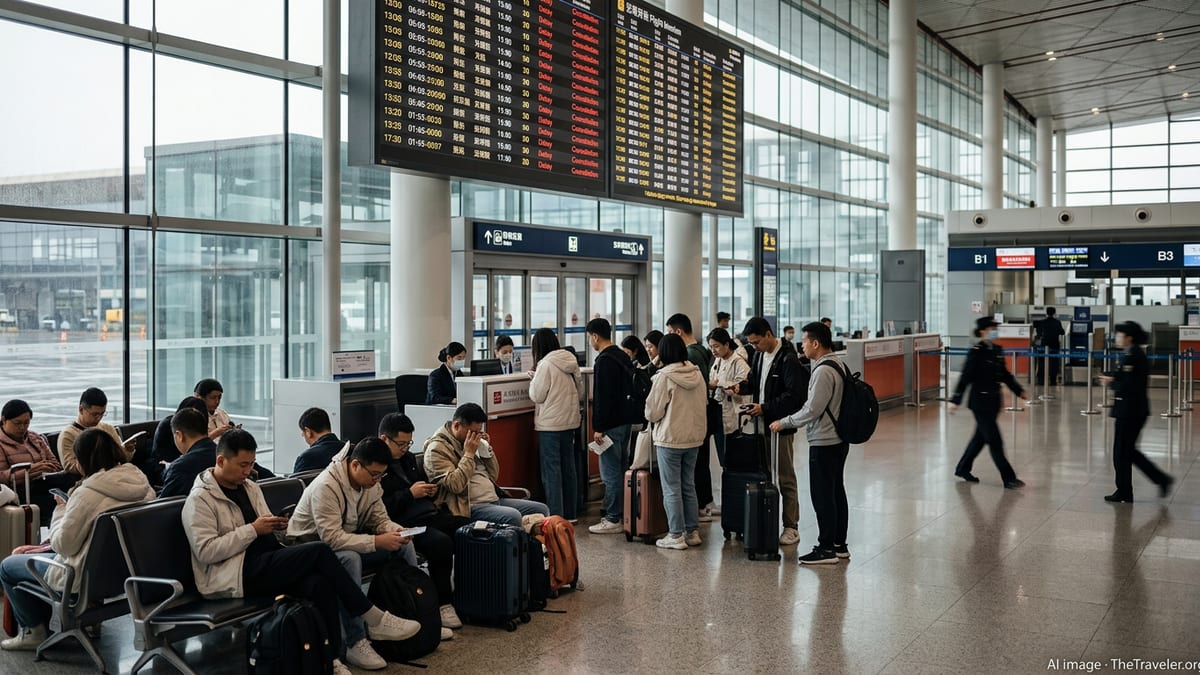
Storm Systems Hit China’s Busiest Air Corridors
The disruptions began early Friday local time as a band of heavy rain, low cloud and gusty winds moved across key aviation hubs, triggering tighter air-traffic control restrictions and forcing airlines to thin out schedules on already congested routes. Meteorologists reported reduced visibility and wind shear conditions around Beijing and Shanghai in particular, two of China’s busiest gateways for both domestic and international traffic.
By mid-afternoon, at least 60 flights had been scrubbed and roughly 642 were delayed across mainland Chinese airports, according to aggregated airport and flight-tracking data. The bulk of those delays were concentrated on trunk routes such as Beijing to Shanghai, Chengdu to Shanghai and Guangzhou to northern and central Chinese cities, where even small slowdowns can ripple across the entire network.
China’s aviation market has rebounded sharply over the past year, with passenger numbers at major hubs such as Beijing Capital, Shanghai Pudong, Guangzhou Baiyun and Chengdu Tianfu surpassing pre-pandemic levels. That growth has left carriers and air-traffic managers with less slack in the system when adverse weather hits, making even a few dozen cancellations enough to throw off aircraft rotations and crew assignments for days.
Friday’s disruptions in China come amid a broader spell of global aviation turbulence this week, with weather and airspace issues also affecting operations in Europe and the Middle East. For travelers in and out of China, the result has been a complicated patchwork of delays, reroutes and missed connections just as peak spring travel picks up.
Major Hubs See Crowds, Long Queues and Tight Connections
At Beijing’s twin hubs, Capital International and Daxing, passengers reported crowded departure halls and long check in lines as domestic carriers retimed flights and consolidated services throughout the morning. Several northbound and northeastbound departures were held at the gate or on the tarmac while controllers sequenced traffic through tighter approach and departure windows.
In Shanghai, delays were heaviest at Pudong International, the city’s primary long haul airport, where the knock on effects hit both domestic and international routes. Travelers connecting between regional Chinese flights and long haul services to Europe and North America faced the prospect of shortened or missed connections, with some airlines proactively rerouting passengers via alternative hubs later in the day.
Chengdu, now a major inland hub linking western Chinese cities with coastal centers, also reported a cluster of delays on eastbound flights to Shanghai and Beijing. Disruptions on this corridor can be particularly challenging because tight aircraft utilization and high demand leave carriers with limited backup capacity, making same day rebooking more difficult once aircraft and crews fall out of position.
At Guangzhou Baiyun, storms further north translated into rolling delays rather than mass cancellations, but passengers still faced extended waits for departures to Beijing, Shanghai and other cities under stricter flow controls. Airport staff in all four cities advised travelers to arrive early, stay close to departure gates and closely monitor airport display boards as departure times continued to shift through the afternoon.
Key Routes Most Affected and How Schedules Are Being Reset
The most heavily affected routes on Friday were the high frequency business corridors that form the backbone of China’s domestic network. Flights between Beijing and Shanghai, including services to both Shanghai Pudong and Shanghai Hongqiao, saw some of the longest delays as air traffic controllers spaced departures and arrivals more widely to maintain safety margins in poor weather.
Services linking Chengdu with Shanghai and Beijing were also repeatedly pushed back, in some cases by more than an hour, creating rolling disruption that cascaded into later flights using the same aircraft. With these trunk routes normally operating at near full capacity, even modest schedule changes can quickly translate into aircraft and crews being out of position for subsequent sectors.
Carriers responded by prioritizing peak demand departures and consolidating lightly booked flights where possible, while temporarily suspending some off peak services to free up aircraft. Airlines also began swapping in larger aircraft on select routes to accommodate displaced passengers, a common tactic during short term weather events when runway capacity, rather than aircraft availability, is the binding constraint.
By late afternoon, operations teams at the major hubs were working off recovery playbooks that focus on restoring schedule stability rather than operating every planned flight at any cost. That means some passengers will see outright cancellations even as weather conditions improve, as airlines favor a clean restart of the network over an overloaded, delay prone operation deep into the night.
What Stranded Travelers Should Do at Chinese Airports
For travelers caught in Friday’s disruption, the first priority is to confirm whether their flight is still operating and, if so, on what revised schedule. Airlines serving China typically push updates through mobile apps, text messages and airport display boards, but connectivity gaps and language barriers can slow the flow of information for international passengers.
Airline counters at Beijing, Shanghai, Chengdu and Guangzhou were reporting heavy queues as passengers sought rebooking, refunds or hotel vouchers. Travelers whose flights were canceled outright are generally being offered the choice of a later departure on the same route, a reroute via another Chinese hub, or in some cases a full refund, depending on the fare type and carrier policy.
Passengers with tight domestic to international connections are being advised to flag their situation early, either through airline hotlines or at transfer desks once in the airport. Even when minimum connection times are technically met, continued flow control can lead to boarding gates closing earlier than usual, making proactive rebooking a safer option than hoping a delayed feeder flight will still connect.
Those already airside should stay close to their gate whenever a delay is announced, as boarding can be brought forward quickly if conditions temporarily improve or if air-traffic control opens an additional departure slot. Carrying printed or downloaded copies of itineraries, e tickets and any correspondence from airlines can also speed up interactions at customer service counters during widespread irregular operations.
Recovery Timeline and Tips for Upcoming Trips
While Friday’s storm systems are expected to move through relatively quickly, aviation experts note that the network effects of a day of severe weather can linger for up to 24 to 48 hours. Aircraft and crews displaced by cancellations on March 6 may still be out of position for early morning departures on March 7, particularly on long domestic legs between western and eastern China.
Airlines are planning overnight recovery operations that include repositioning empty aircraft to Beijing, Shanghai, Chengdu and Guangzhou, as well as extending duty rosters for reserve crews where regulations allow. If weather cooperates, most carriers expect to operate a near normal schedule by late Saturday, even if scattered delays persist through the morning peaks.
Travelers booked to fly into or out of China over the next two days are being urged to build extra time into their plans. That means avoiding last minute cross airport transfers between Beijing’s two hubs or Shanghai’s two airports, choosing longer layovers on itineraries that require domestic connections, and keeping accommodation plans flexible in case of late night arrivals or missed onward journeys.
Passengers should also review their airline’s irregular operations and weather disruption policies before heading to the airport, including rules on no show status, change fees and the treatment of separately booked tickets. With China’s aviation system running closer to full capacity than at any time since before the pandemic, even routine spring storms can now trigger widespread knock on effects for unprepared travelers.