

More news on this day
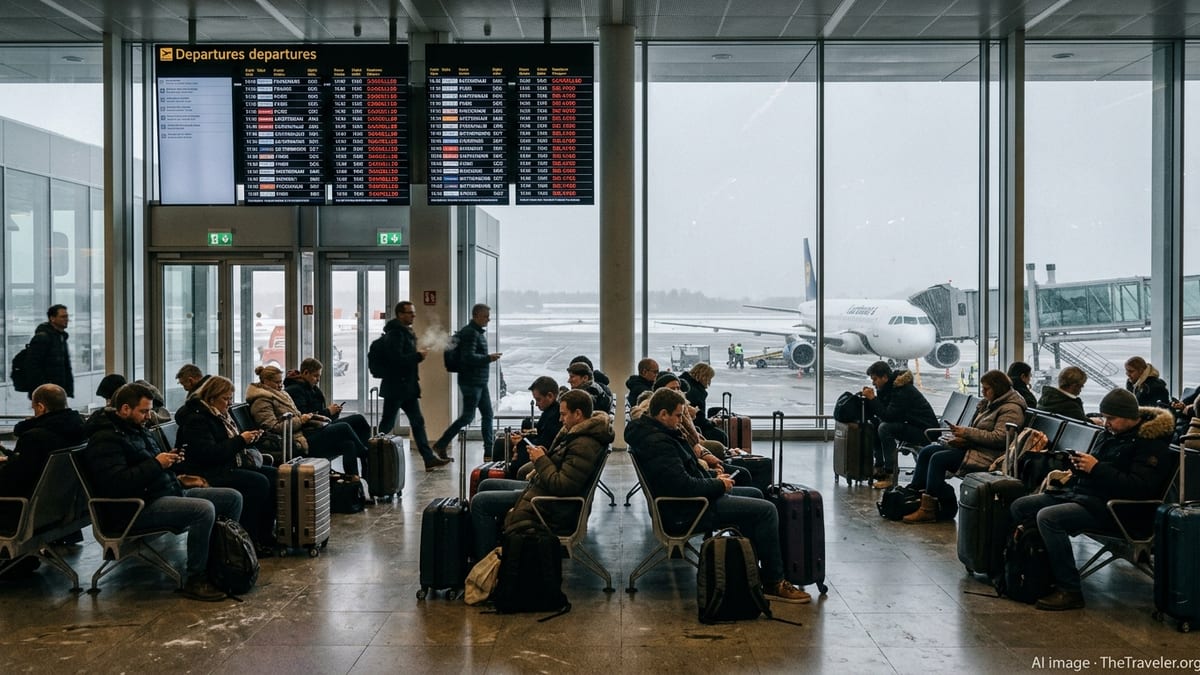
Severe winter weather sweeping across parts of Western and Northern Europe has forced airlines to cancel at least 30 flights and postpone 16 more across France, the Netherlands and Sweden, leaving passengers stranded at major hubs and regional airports amid ongoing disruption to already stretched aviation schedules.
Get the latest news straight to your inbox!
Storm Systems Bring Hazardous Conditions to Key Hubs
Publicly available meteorological data and aviation tracking platforms indicate that a series of strong low pressure systems and associated snow, freezing rain and high winds have moved across Western and Northern Europe, creating difficult operating conditions in French, Dutch and Swedish airspace. The most intense impacts have centered on coastal and northern regions, where crosswinds and visibility have periodically fallen below thresholds required for safe takeoff and landing.
In France, wintry showers and gusty winds have affected operations at Paris Charles de Gaulle and several regional airports. Reports from airline operations dashboards show cancellations on short haul European routes, particularly early morning and late evening services when runway de-icing and low cloud have coincided. Some domestic sectors have been combined or rerouted in order to keep aircraft and crew within duty limits.
The Netherlands has faced a renewed bout of snow and freezing conditions following an earlier wave of disruption in January, when de-icing capacity and runway conditions at Amsterdam Schiphol were placed under heavy strain. Current data show a more limited but still significant impact, with preemptive cancellations and delays concentrated at Amsterdam and, to a lesser extent, Eindhoven, as operators aim to avoid rolling knock-on delays across their networks.
Further north, Swedish airports have been dealing with heavy snow bands and periods of low visibility. Regional hubs serving central and northern Sweden have reported reduced arrival and departure rates, prompting airlines to trim schedules and consolidate lightly booked services. The 30 cancellations and 16 postponements recorded so far are spread across these three countries, with some services cut entirely and others retimed by several hours.
Where Flights Have Been Hit and How Passengers Are Affected
The bulk of the cancellations have been recorded on short and medium haul intra-European routes, particularly those linking Paris, Amsterdam and Stockholm with neighboring capitals and secondary cities. Flight-status boards and independent tracking services show clusters of affected services on routes between France and the Benelux countries, between the Netherlands and Scandinavia, and on Swedish domestic sectors connecting northern towns with Stockholm.
Passengers have reported overnight stays on terminal floors and in improvised rest areas, especially at Amsterdam Schiphol and Paris Charles de Gaulle, where hotel capacity near the airports filled quickly once cancellations were announced. Social media posts and passenger forums describe long queues at service desks as travelers attempt to secure rebookings, meal vouchers or alternative itineraries through other hubs.
In some cases, flights have been postponed rather than fully canceled, with departure times pushed back into weather windows when crosswinds ease or runway clearing can be completed. These 16 postponed services remain subject to change, and travelers are being urged by airlines via mobile apps and email notifications to monitor status updates closely on the day of travel.
The disruptions are also affecting connecting travelers who are not flying directly to or from the worst-hit airports. Missed connections at European hubs are forcing last minute re-routing through secondary airports, lengthening travel times and creating bottlenecks at transfer security and passport control points.
Operational Strain, De-icing Bottlenecks and Crew Limitations
According to published coverage analyzing recent European winter disruptions, airports in the Netherlands and northern France remain particularly vulnerable when sustained snow and ice coincide with peak travel periods. De-icing operations require specialized equipment and staff, and when multiple aircraft need treatment simultaneously, departure queues can quickly lengthen, pushing flights beyond their assigned air traffic slots.
Once departures begin to slide, airlines must also navigate strict crew duty-time regulations. If a delay grows too long, a flight can no longer depart with the crew initially assigned, forcing a cancellation even if weather later improves. This combination of de-icing backlogs, slot constraints and crew-time limits has contributed to the current tally of 30 cancellations and 16 postponements.
Ground handling capacity is another pressure point. Clearing snow from runways, taxiways and stands, while also managing baggage, catering and aircraft turnaround tasks, strains staffing levels, especially overnight. Reports from previous disruptions at Amsterdam and Nordic airports suggest that even modest snowfall can create hours of disruption when it arrives on top of already busy schedules and tight staffing.
Airlines are increasingly choosing to cancel select flights early, rather than attempting to operate full schedules through poor conditions. Industry analysis notes that targeted early cancellations help avoid cascading delays across entire networks, but they concentrate the impact on the passengers booked onto those specific flights, many of whom are now stranded until extra capacity becomes available.
Passenger Rights: What Travelers Can Expect
Under European passenger protection regulations, travelers on flights departing from EU airports, or operated by EU carriers, hold specific rights when flights are heavily delayed or canceled. However, severe weather is generally treated as an extraordinary circumstance, which can limit eligibility for financial compensation even when disruption is significant.
Regulatory guidance and airline policy statements emphasize that, in cases of weather-related disruption, airlines are usually required to offer a choice between re-routing at the earliest opportunity and a refund of the unused portion of the ticket. They may also be expected to provide care, such as meals and reasonable accommodation, when passengers are forced to wait for a replacement flight, although the exact level of support can vary by carrier and circumstance.
Travelers stranded in France, the Netherlands or Sweden are being advised by consumer groups and travel advocates to keep all receipts for food, transport and accommodation, and to document any additional expenses that arise directly from the disruption. This documentation can support later reimbursement claims where airline policies allow, or be used when seeking assistance from travel insurance providers.
For those whose flights are postponed rather than canceled, airlines may offer the option to move to another service, especially if a significant delay would cause a missed connection. Such changes can often be made through mobile apps or websites, avoiding lengthy waits at airport service counters. Passengers are encouraged to act quickly once disruption notices are issued, since seats on alternative flights can be claimed within minutes on busy routes.
Practical Steps for Upcoming European Trips
With unsettled weather still affecting parts of Western and Northern Europe, travelers planning to fly into or through France, the Netherlands or Sweden over the coming days are being urged, in publicly available advisories, to build extra time and flexibility into their itineraries. This includes allowing longer connection windows, especially when changing planes at major hubs known for de-icing delays.
Checking flight status frequently on the day of travel remains essential. Many airlines now update estimated departure and arrival times in near real time, and will sometimes preemptively cancel or rebook flights several hours before scheduled departure when forecasts indicate deteriorating conditions. Enabling app notifications and email alerts can provide quicker access to rebooking options.
Travel insurance that includes coverage for weather-related delays, missed connections and additional accommodation costs can offer a financial safety net, though policies differ widely in how they treat extraordinary weather events. Travelers are encouraged by consumer information sources to review policy wording carefully, particularly around definitions of delay length and eligible expenses.
For now, aviation data suggest that the current disruption, while serious for the travelers directly affected, remains limited in scale compared with major Europe-wide shutdowns seen during past severe winters. However, the 30 cancellations and 16 postponements serve as a reminder that even a relatively localized bout of snow, ice and high winds can ripple quickly through tightly packed European flight schedules, particularly at hub airports where a single missed slot can cascade into widespread delays.