

More news on this day
Severe weather sweeping across Oahu has forced major last-minute changes to this year’s Honolulu Festival, with organizers canceling the signature Waikiki Grand Parade and the Nagaoka fireworks show that traditionally cap the weekend of cultural celebrations.
Get the latest news straight to your inbox!
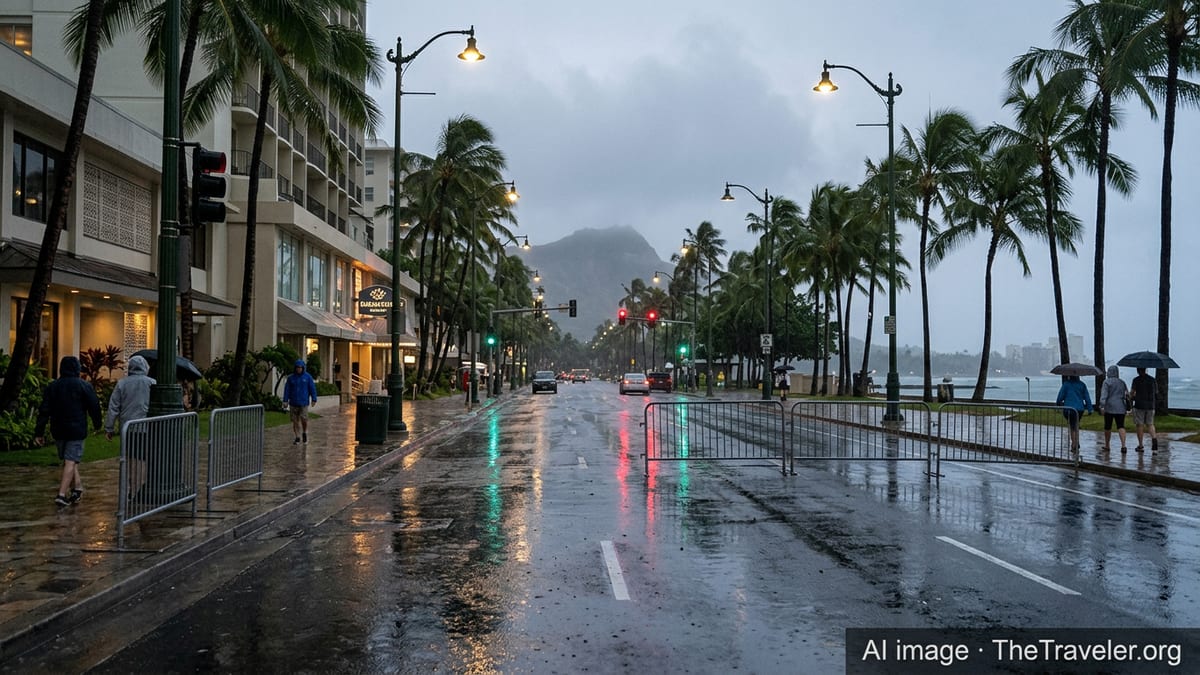
Storm System Brings Hazardous Conditions to Oahu
The weather disruption comes as a strong, slow-moving storm system delivers periods of heavy rain, gusty winds and the risk of localized flooding across Oahu. Publicly available forecasts from the National Weather Service indicate repeated rounds of showers and embedded thunderstorms over the island, creating poor visibility, ponding on roads and blustery onshore winds along south-facing shores.
Reports indicate that the timing of the heaviest bands of rain overlaps with the festival’s marquee outdoor events, particularly Sunday evening along Waikiki’s Kalakaua Avenue and the shoreline areas used for the fireworks display. Forecasters have also highlighted the potential for rapidly changing conditions, making it difficult to guarantee safe windows for large-scale gatherings or aerial pyrotechnics.
In recent days, local media coverage has documented multiple weather advisories and short-fuse flood alerts across parts of the state as similar systems moved through, underscoring concerns about saturated ground and storm drains already running near capacity. The prospect of tens of thousands of people lining streets and beaches under unstable skies became a central factor in the decision to pull key events from the schedule.
Travel and tourism outlets had been tracking the forecast closely, noting that while showers are common in Hawaii at this time of year, the current pattern is more organized and intense than the brief, passing downpours that many visitors expect.
Grand Parade and Fireworks Show Taken Off the Schedule
According to published coverage of the festival’s updated plans, the Honolulu Festival Foundation has removed the Waikiki Grand Parade and the Nagaoka fireworks show from this year’s program. The Grand Parade, which typically closes Kalakaua Avenue from Saratoga Road to Kapiolani Park on Sunday afternoon and evening, is widely regarded as the visual and emotional finale of the weekend, featuring community groups, cultural delegations, music and dance troupes from Hawaii and across the Pacific.
The Nagaoka fireworks, staged over the waters off Waikiki, have also become a major draw in recent years, promoted as a symbol of friendship between Honolulu and Nagaoka, Japan. Under the current storm conditions, pyrotechnic crews, marine operators and shoreline safety teams would all face challenging environments, from rougher seas and shifting winds to rain-soaked equipment and limited sightlines.
Publicly available information about past festivals shows that organizers generally proceed in light rain, but retain the option to cancel or significantly alter events when forecasts call for strong winds, lightning or heavy downpours. This year’s pattern appears to have crossed that threshold, prompting a rare, simultaneous cancellation of both the parade and the fireworks spectacle.
Reports on local television and in Honolulu-based outlets note that some ancillary outdoor demonstrations and performances scheduled along the parade route have also been shelved or moved under cover, further reshaping what Sunday in Waikiki will look like for residents and visitors who had planned to attend.
Indoor Cultural Programming Continues With Adjustments
Despite the high-profile cancellations, the broader Honolulu Festival is not shutting down. Public information from the festival’s organizers and partner venues indicates that many indoor and partially covered events are proceeding with schedule tweaks, including cultural performances, craft fairs and educational exhibits at the Hawaii Convention Center and selected hotels and shopping centers.
Hawaii Convention Center programming, in particular, is expected to absorb more of the visitor flow that would have spilled onto the streets for the parade. Travel forums and community bulletin boards that had been sharing parking and transit tips for the parade day are now steering attendees toward earlier arrival times for indoor showcases, while reminding visitors to account for wet-weather traffic and reduced parking availability in the surrounding districts.
Reports suggest that some performance groups are compressing or combining sets to fit into revised indoor timetables, while others that had prepared elaborate floats or large-scale outdoor presentations are scaling back to smaller ensembles suitable for stage or atrium spaces. The emphasis, according to event descriptions published in advance, remains on cultural exchange, music and dance, even as the format shifts in response to the storm.
Festival-related shopping and food offerings in covered areas are also expected to remain a draw, providing an alternative for visitors who had counted on the parade and fireworks as their main highlights. Businesses that had set up temporary booths along Kalakaua Avenue, however, may see reduced activity or face the challenge of relocating at short notice.
Impact on Visitors, Businesses and Waikiki Traffic
The loss of the parade and fireworks is reverberating across Waikiki’s tourism economy. Hotels, restaurants and retail outlets along and near Kalakaua Avenue often plan staffing and inventory around the expected surge in foot traffic tied to the Honolulu Festival’s closing events. With the largest outdoor attractions canceled, reports indicate that some businesses are rethinking extended hours and special promotions aimed at parade-goers and fireworks spectators.
For visitors, the shift means reworking carefully laid itineraries. Travel discussion boards that had been crowded with questions about road closures, parking for the Grand Parade and best viewing spots for the Nagaoka fireworks pivoted quickly to sharing wet-weather alternatives, from museum visits and shopping to dining and live music in covered venues. Some travelers are expressing disappointment at missing the spectacle they traveled for, while others are leaning into the chance to explore more of Oahu’s indoor cultural offerings.
From a transportation perspective, the cancellation of the parade and fireworks may ease some of the intense congestion that usually grips Waikiki on festival Sunday. Previously published guidance for this year’s event had warned that Kalakaua Avenue would be fully closed for several hours, with gridlock likely as spectators arrived and then tried to leave after the fireworks. With those closures now largely unnecessary, traffic patterns are expected to be less extreme, although periods of heavy rain may still slow movement on major arteries.
Ride-hailing services and public transit options such as TheBus remain important tools for visitors navigating the wet conditions, and some travel advisories circulating online encourage guests to avoid driving if they are unfamiliar with local roads and rain-related hazards, especially after dark.
Safety Considerations and Future Festival Planning
Weather-related disruptions to major outdoor events are not new to Hawaii, but the simultaneous cancellation of both the Honolulu Festival’s parade and fireworks underlines how closely cultural programming in the islands is tied to the natural environment. Publicly available information about parade guidelines in other Hawaii festivals notes that most are designed to continue in light rain, pausing or canceling only when organizers judge that conditions pose a risk to participants and spectators.
In this case, the combination of heavy showers, gusty winds and the risk of flooding in low-lying urban areas proved decisive. Large crowds along slick streets, participants maneuvering floats and performance equipment, and the logistics of offshore barge-based fireworks all add layers of complexity that are difficult to manage when weather can shift quickly.
Event planners and city officials in Honolulu have already been reviewing how parades and street festivals operate in Waikiki, as reflected in previously reported changes to permitting and routing rules aimed at balancing community needs, economic impacts and public safety. This year’s storm-disrupted festival is likely to feed further discussion about contingency planning, communication tools and the balance between pushing ahead and standing down when severe weather threatens.
For now, the focus remains on salvaging a meaningful cultural experience for residents and travelers within the safer confines of indoor and covered venues. Many of the international groups who traveled long distances to share their traditions are still performing for audiences in Honolulu, offering a reminder that even when the streets and skies do not cooperate, the spirit of the festival can adapt and endure.