

More news on this day
Thunderstorms sweeping the Midwest and Southeast, combined with late-season snow, ice and low ceilings in other regions, triggered a fresh wave of disruption across the US air network on March 7, with 478 flights canceled and at least 5,322 delayed as major hubs from Chicago O’Hare to Atlanta struggled under repeated Federal Aviation Administration ground stops.
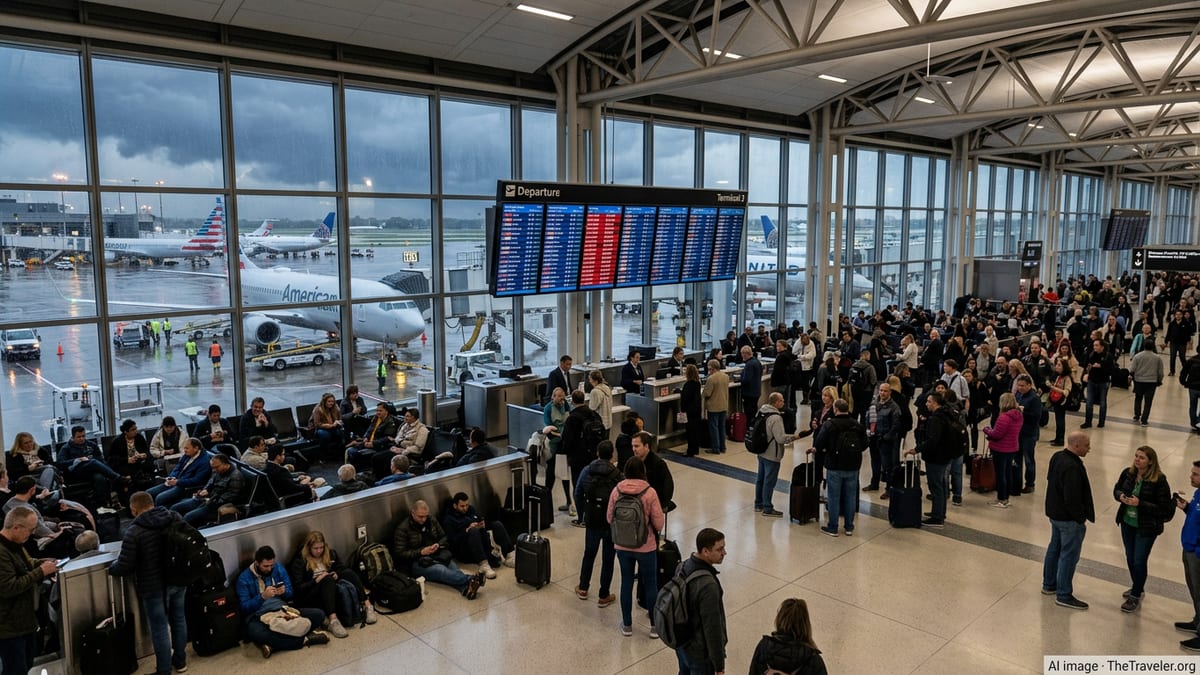
Nationwide Air Gridlock as Weather Systems Collide
The latest bout of air travel chaos unfolded on Saturday as multiple storm systems converged over key flight corridors, snarling operations just as the spring break travel period begins to ramp up. Data compiled from flight-tracking services showed the bulk of cancellations and delays clustered around large hubs that anchor the national network, creating a cascading effect felt at smaller airports nationwide.
Thunderstorms and low clouds over the Midwest forced traffic management measures at Chicago and other regional gateways, while snow and ice hampered operations at high-altitude and northern airports, including Denver and several Rockies fields. In the Southeast, strong storms and hail cells interfered with tightly scheduled bank structures at Atlanta and other connecting hubs, complicating recovery efforts for airlines already operating near peak capacity.
By Saturday evening, the 478 cancellations represented a modest percentage of the day’s overall schedule but had an outsized impact on travelers, as many of the scrubbed flights were core connections linking secondary cities to major hubs. The 5,322 delays, many stretching past two or three hours, left terminals packed with frustrated passengers searching for rebooking options and scarce seats on remaining flights.
Chicago O’Hare Bears Brunt of Thunderstorm Disruptions
Chicago O’Hare International Airport was among the hardest hit facilities in the country as lines of thunderstorms rolled repeatedly across northern Illinois, prompting an FAA ground stop for departing flights followed by a ground delay program once storms moved through. Airlines canceled hundreds of flights at the airport between Friday and Saturday, and on March 7 alone O’Hare accounted for a significant share of the 272 cancellations and more than 1,100 delays attributed to the Chicago area in the latest tally.
Travelers reported holding patterns, diversions and long waits on the tarmac as air traffic controllers metered arrivals to keep runways operating safely in periods of heavy rain, lightning and sharply reduced visibility. Low ceilings, a frequent late-winter problem around the Great Lakes, persisted behind the main line of storms, forcing aircraft to operate with increased spacing and driving average departure delays well beyond an hour at peak times.
Inside the terminals, gate areas quickly filled with passengers seeking information as departure times slipped further into the evening. With many flights fully booked and spare aircraft and crews already committed, rebooking opportunities were limited, especially for same-day travel. Travelers connecting through Chicago to smaller Midwestern and East Coast cities were among the most affected, with some facing overnight stays as the region worked through the backlog.
Atlanta Ground Stops Ripple Across the Southeast
At Hartsfield-Jackson Atlanta International Airport, the world’s busiest passenger hub, severe thunderstorms and unforecast hail on Friday night rolled into Saturday, prompting Delta Air Lines to request an FAA ground delay early in the morning. That program, which held inbound flights at their departure airports, led to average delays approaching an hour for Atlanta-bound operations and contributed to more than 200 cancellations tied to the carrier’s hub schedule as the weekend progressed.
Passengers arriving overnight reported extended waits on the tarmac as storms forced temporary pauses in ramp activity for safety reasons. Early-morning departures were among the first casualties, as crew duty limits and aircraft out-of-position from the previous night’s disruptions left airlines with limited flexibility. Even after the most restrictive FAA measures were lifted, carriers struggled through the day to reposition aircraft and crews to restore normal connectivity across their Southeastern networks.
The impact spread quickly beyond Georgia. Flights to and from Florida, the Carolinas, Tennessee and the Mid-Atlantic experienced rolling delays as Atlanta’s central role in domestic connectivity amplified the effects of each cancellation. For many travelers, a missed connection in Atlanta meant losing the only nonstop of the day to smaller regional markets, forcing complex rebookings via alternate hubs or overnight stays.
Snow, Ice and Low Ceilings Compound Woes in Rockies and Northeast
While thunderstorms pounded the Midwest and Southeast, late-season winter weather compounded the disruption in the Rockies and parts of the Northeast. A snowstorm over high terrain west of Denver delivered up to a foot of accumulation in some areas, leading to more than a thousand delays and over a hundred cancellations at Denver International Airport alone on Friday and into Saturday, according to local reports, with knock-on effects still evident in the March 7 national figures.
At altitude-sensitive airports, crews contended with runway and taxiway treatment, de-icing queues and gusty crosswinds that limited operations even during lulls in precipitation. Low ceilings and intermittent snow also affected flights in and out of certain New England and Mid-Atlantic airports, contributing to ground delay programs aimed at preventing gridlock in arrival and departure streams.
For airlines, the combination of snow and ice in the west and north with thunderstorms in the center and south of the country created a complex operational puzzle. Aircraft scheduled for morning departures in the Rockies were arriving late from weather-hit hubs, while jets leaving Denver and other western airports faced additional delays upon reaching storm-affected cities in the Midwest and East. The result was a rolling pattern of disruptions that left crews and equipment out of position across multiple time zones.
Southwest and SkyWest Among Hardest-Hit Airlines
Among individual carriers, Southwest Airlines and regional operator SkyWest emerged as two of the most affected by Saturday’s turmoil. Southwest, with its dense point-to-point network and large operations at Denver and across the Sun Belt, faced a high volume of delays and cancellations as storms and winter weather struck multiple focus cities simultaneously. Disruptions at Denver, Chicago Midway, Houston and Florida markets all fed into the carrier’s interconnected schedule.
SkyWest, which operates flights under regional brands for major airlines including United, Delta, American and Alaska, saw its own cancellations and delays reverberate through several big carriers’ networks. Because many SkyWest-operated routes connect smaller communities to large hubs such as Chicago O’Hare, Denver, Salt Lake City and various West Coast cities, a single scrubbed regional flight could sever the only direct link for those passengers to the wider system that day.
Passengers booked on regional feeders and heavily booked leisure routes were particularly vulnerable. With spare aircraft scarce and crew duty regulations limiting how long pilots and flight attendants could remain on the clock, options for rebooking were often constrained. Travelers reported agents scrambling to stitch together alternative itineraries via different hubs, while others were advised to delay trips by a day or more to secure confirmed seats.
The weekend disruption also underscored how quickly weather can ripple through a finely tuned but fragile aviation system. Even a few hundred targeted cancellations, when concentrated at major hubs and regional connectors, can strand thousands of people and leave airport operations straining under the load.