

More news on this day
Strong winds sweeping across Iceland have triggered widespread aviation disruption, with more than 80 flights reportedly cancelled at Keflavík and other airports, disrupting transatlantic and European routes linking Reykjavik with Boston, New York, Toronto, Vancouver, London, Copenhagen, Paris, Berlin, Amsterdam, Dublin, and additional cities.
Get the latest news straight to your inbox!
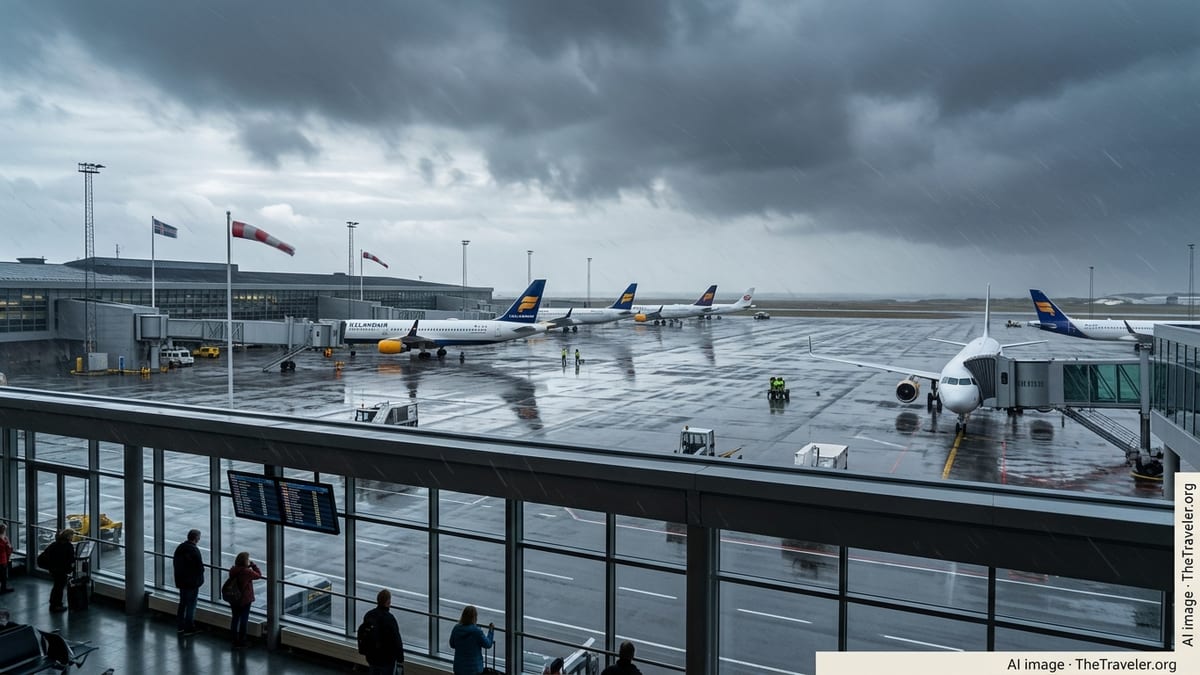
Severe Weather Halts Operations Across Icelandic Airspace
Publicly available aviation data and local media coverage indicate that powerful winds over Iceland on March 20 and 21, 2026, led to a concentrated wave of cancellations and delays, particularly at Keflavík International Airport. The combination of crosswinds and gusts around key operating thresholds appears to have limited the safe use of jet bridges and ground equipment, even when aircraft could technically approach the airfield.
Reports from passengers and airport monitors suggest that the disruption escalated over several hours, as wind conditions persisted longer than initially forecast. As a result, airlines began pre-emptively cancelling services, both to and from Iceland, to avoid aircraft and crews becoming stranded out of position. The knock-on effect quickly extended beyond Iceland, affecting departure boards in North America and across Europe.
While Iceland’s main international gateway is designed to handle challenging winter weather, operational procedures at Keflavík call for strict limits on ramp and boarding operations when wind speeds exceed certain thresholds. Industry documents on winter and adverse-weather operations at the airport highlight that, in such conditions, delays can rapidly compound as ground movements slow or stop altogether.
Major Carriers Hit: Icelandair, British Airways, Finnair and Others
According to flight-tracking snapshots and airline status pages monitored on March 21, Icelandair bore the brunt of the disruption, with a significant share of its transatlantic and European network affected. As Iceland’s flag carrier and primary user of Keflavík, any large-scale disruption at the airport tends to ripple through its entire schedule, from North American departures to short-haul European connections.
Published coverage and schedule data also show notable impacts for foreign carriers operating into Iceland. British Airways and Finnair, which link Reykjavik with hubs in London and Helsinki respectively, reported cancellations and extended delays on Iceland-bound rotations. Other European airlines, including low-cost and leisure-focused operators, also appear to have scrubbed flights as crosswinds intensified over southwest Iceland.
The widespread nature of the disturbance meant that not only direct Iceland services, but also onward connections on partner airlines, were disrupted. Travelers with through-tickets onto British Airways and Finnair long-haul routes, for example, faced missed connections and rebookings, adding pressure to already full spring schedules across Europe.
Transatlantic Routes to North America and Europe Disrupted
The cancellations have been particularly disruptive for transatlantic travelers. Publicly available route data show that flights linking Reykjavik with Boston, New York, Toronto, and Vancouver were among those affected, leaving passengers on both sides of the Atlantic scrambling for alternatives. With many of these services operating once daily, a single cancellation can lead to multi-day backlogs during busy travel periods.
On the European side, connections to major capitals and hubs such as London, Copenhagen, Paris, Berlin, Amsterdam, and Dublin suffered schedule changes or outright cancellations. Because many itineraries rely on tight transfer windows through Keflavík, the suspension of even a few key flights can break the entire connecting chain for travelers heading onward to secondary cities.
Transatlantic itineraries via Iceland have grown in popularity as an alternative to larger hub airports, but the current disruption underscores the vulnerability of such networks to localized weather events. When a central connecting point like Keflavík is constrained, there are fewer fallback options than in multi-hub systems, making recovery more complex.
Knock-On Effects for Passengers and Crews
Traveler reports from recent days describe crowded terminals, long lines at service desks, and limited seat availability on replacement flights as airlines worked to rebook affected passengers. Some travelers have noted being offered rerouting via alternative European hubs, while others were advised to wait one or two days for the next available direct service from Iceland.
The disruption also has operational implications for airline crews and aircraft positioning. When flights into Iceland are cancelled or delayed, aircraft can end up out of place for their next scheduled segments, and crew duty-time limits can be quickly reached. This can generate a second wave of schedule changes even after weather conditions begin to improve, prolonging the recovery period.
Travel insurance providers and consumer-rights organizations routinely highlight that weather-related incidents such as this are generally treated as extraordinary circumstances, limiting eligibility for cash compensation under many regulatory regimes. However, passengers may still be entitled to rebooking, meals, or hotel accommodation, depending on the airline’s policy and local regulations governing delayed and cancelled flights.
What Travelers Can Expect in the Coming Days
Operational experience and prior adverse-weather events in Iceland suggest that airlines will likely spend several days clearing backlogs and repositioning aircraft and crews. Even after wind speeds fall below critical thresholds, passengers may continue to see altered departure times, aircraft swaps, and sporadic cancellations as schedules are rebuilt.
Published guidance from Icelandic aviation stakeholders emphasizes that travelers should closely monitor airline notifications and airport departure and arrival boards during prolonged periods of high winds. Same-day airport check-in changes are common in such conditions, and mobile alerts have become a primary channel for last-minute updates on gate assignments and boarding times.
For upcoming travelers with itineraries routed through Iceland, travel planners recommend allowing extra time for connections, considering flexible tickets where possible, and reviewing travel insurance coverage before departure. As spring weather patterns across the North Atlantic remain changeable, further episodes of disruption cannot be ruled out, even as airlines and airports refine their winter and shoulder-season operating procedures.