

More news on this day
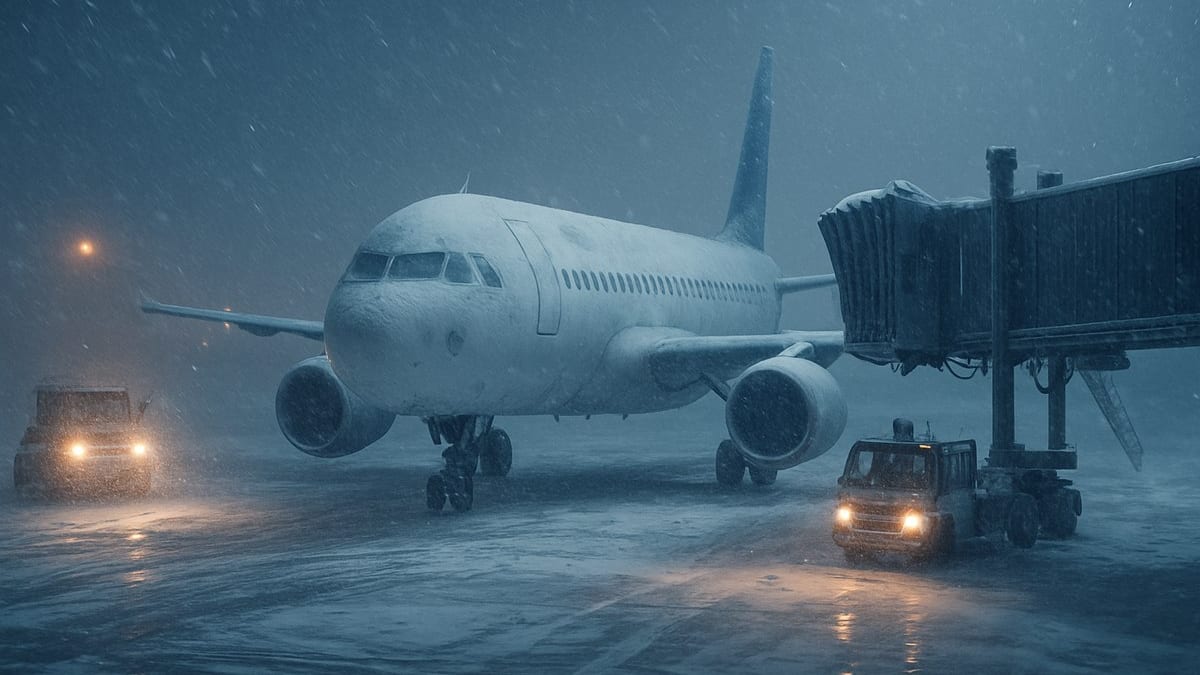
A powerful late-season winter storm sweeping across Canada has triggered hundreds of flight delays and cancellations since the Easter weekend, disrupting operations at every major hub and leaving thousands of travelers stranded nationwide.
Get the latest news straight to your inbox!
Nationwide Network Hit by Wave of Cancellations
Publicly available flight tracking data for April 5 and 6 shows a cascading breakdown of Canada’s air travel network as snow, ice and freezing rain disrupted tightly timed schedules. Reports indicate at least 82 cancellations and more than 420 delays across the country in a single 24 hour period, with Toronto, Montreal, Vancouver, Calgary, Ottawa and Halifax all experiencing significant operational impacts.
Toronto Pearson, Canada’s busiest airport, remains at the center of the disruption. Coverage from aviation and travel outlets points to several dozen cancellations and well over one hundred delays at Pearson alone on April 5, as aircraft required extended deicing, visibility fluctuated, and ground operations struggled to keep pace with the storm’s intensity.
Air Canada, WestJet, Porter and regional carriers have all been affected, with schedules heavily thinned on domestic corridors and transborder routes. According to published coverage, some smaller airports in Quebec and Atlantic Canada have posted unusually high ratios of cancellations to scheduled flights, compounding the strain on the wider network as passengers attempt to reroute through already congested hubs.
The paralysing effect of the storm has been magnified by the interconnected nature of Canadian aviation. Delays and groundings at major hubs have rippled across the network, affecting flights that never entered the storm zone but relied on aircraft or crews cycling through impacted airports earlier in the day.
Storm Builds on Weeks of Extreme Winter Weather
The latest disruption follows a series of severe cold and snow events that have repeatedly stressed Canadian aviation during the 2025 to 2026 winter season. Meteorological analysis describes a persistent pattern of Arctic air plunging south, fueling multiple winter storms across central and eastern Canada and creating near-blizzard conditions in several provinces.
Weather agencies and climate risk analysts have highlighted the role of a recent polar vortex disturbance and stratospheric wind reversal, which extended wintry conditions well into March and early April. Forecasts issued ahead of the Easter weekend warned that heavy snowfall, sleet and freezing rain would coincide with one of the year’s busier travel periods, raising the likelihood of large-scale transport disruption.
Travel and insurance industry assessments note that major winter storms in Ontario, Quebec and the Atlantic provinces are increasingly associated with substantial economic losses and infrastructure strain. A costly ice storm in 2025 and multiple high-impact blizzards earlier in 2026 set the stage for the current crisis, leaving airlines and airports with little respite between storm cycles.
The latest system has reinforced concerns that Canada’s winter travel season is effectively lengthening, with significant snowfall and freezing precipitation now affecting operations well into what would traditionally be regarded as spring shoulder months.
Major Hubs Struggle to Maintain Operations
Across the country’s principal gateways, airport operators and airlines are relying on contingency playbooks designed for peak winter conditions. Published airport performance snapshots show Toronto Pearson and Montreal Trudeau recording some of the highest delay volumes, with average departure holdups extending close to or beyond one hour during peak periods.
In western Canada, Calgary and Vancouver have faced their own set of challenges. A late-season snowstorm over the Prairies and periods of freezing rain in coastal British Columbia have slowed aircraft turnarounds, added pressure to deicing facilities and limited the number of runway movements that can be safely handled each hour. Travel industry reports describe hundreds of passengers stuck in terminals overnight as crews timed out and equipment reached capacity.
Smaller but strategically important airports such as Ottawa, Halifax and Quebec City have also reported a spike in disruption. Although absolute numbers of cancellations and delays are lower than at the big hubs, the effect on local travelers can be more acute because of limited alternative flights and fewer direct connections, making same-day rebooking difficult.
As the storm system lingers, publicly available information indicates that airlines are continuing to pare back schedules proactively, preferring to cancel flights in advance rather than attempt to operate full timetables that would likely unravel as the day progresses.
Airlines Issue Waivers as Recovery Proves Slow
In response to the latest weather shock, several carriers have introduced flexible rebooking policies covering affected dates and routes. Travel advisories from Canadian airlines encourage passengers to verify the status of their flights before leaving for the airport and to consider postponing non-essential trips, particularly through Toronto, Montreal, Calgary and Vancouver.
Previous winter storm waivers this season, especially for Atlantic Canada and transcontinental services, have demonstrated how recovery can lag several days behind the weather itself. Once a large number of flights are cancelled, aircraft and crew are often left out of position, creating a secondary wave of disruption even after runways and taxiways are cleared.
Industry analysis notes that Canadian airlines entered this storm period after months of elevated weather-related cancellations, leaving limited spare capacity to absorb additional shocks. With many routes already operating at high load factors, finding open seats for stranded travelers has become increasingly difficult, particularly on cross-country legs and popular sun destinations.
For international travelers connecting through Canada, the knock-on effects are significant. Missed onward flights to Europe, the United States and the Caribbean add complexity to rebooking efforts, as long-haul departures generally operate less frequently and rely on tight aircraft rotations that are easily upset by winter weather.
What Travelers Can Expect in the Coming Days
Meteorological guidance suggests that while the most intense phase of the storm may ease, wintry conditions could persist in parts of Canada through the early part of the week, maintaining the risk of further disruptions. Operational data from previous late-season storms indicates that schedules may remain fragile even after skies clear, as airlines work through backlogs and reposition aircraft.
Travel information services are advising passengers with near-term itineraries to Canada to build in additional buffer time, avoid tight connections through Toronto and Montreal, and be prepared for last-minute gate or timing changes. Monitoring airline apps and airport departure boards closely on the day of travel is being presented as essential, given the pace at which conditions and operating plans are evolving.
For those yet to book travel, industry commentators suggest considering routes that offer more than one daily frequency or multiple carriers, increasing the chances of being re-accommodated if a flight is cancelled. Travelers heading to or from smaller regional airports may wish to route through larger hubs only once conditions have stabilized, rather than attempting complex multi-stop itineraries during the height of the disruption.
With the storm capping a difficult winter for Canada’s aviation sector, analysts expect carriers and airports to review their cold-weather readiness and schedule resilience ahead of the next peak season. For now, however, the focus remains on restoring basic connectivity across the country and moving stranded passengers to their destinations as the severe winter weather gradually loosens its grip.