

More news on this day
Severn Valley Railway has unveiled a pioneering hydrogen-powered locomotive at Kidderminster Town station, in a landmark move that pairs heritage rail preservation with next-generation sustainable technology.
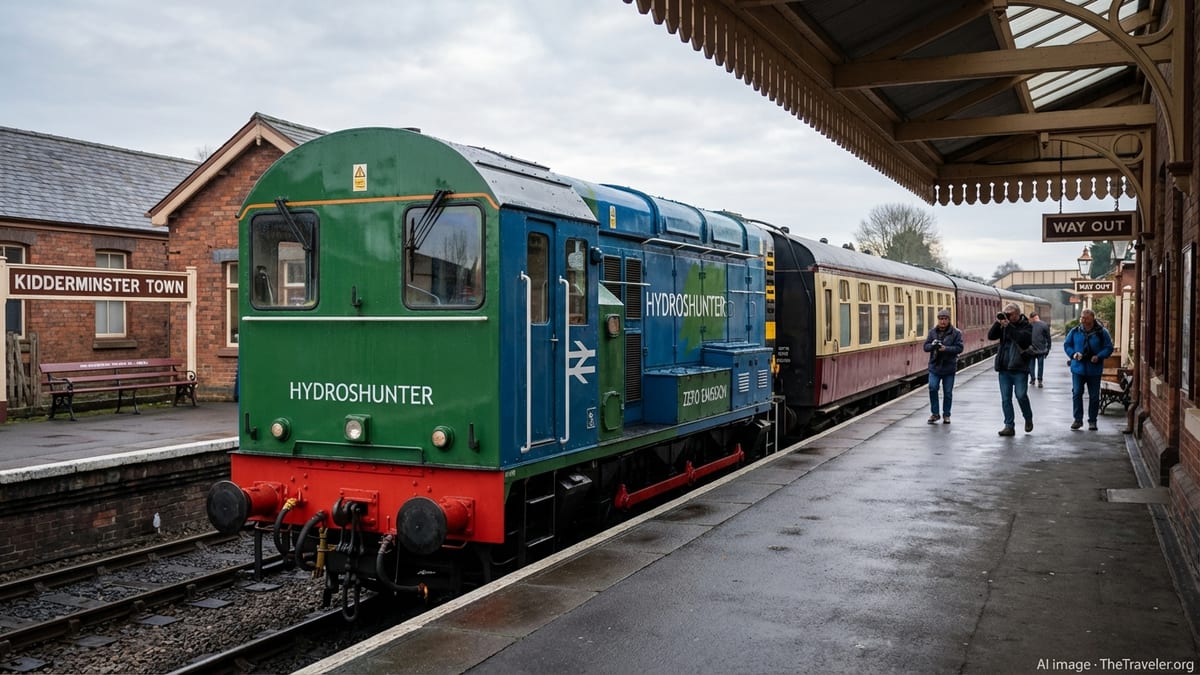
HydroShunter Marks New Era for Heritage Line
The new HydroShunter, launched to invited guests at the Worcestershire heritage line’s Kidderminster Town hub, is being billed as the UK’s first hydrogen-powered railway shunting locomotive. Developed in partnership with West Midlands-based Vanguard Sustainable Transport Solutions, the locomotive is intended as a commercial demonstrator for zero-emission yard and depot operations across the rail network.
Built on the chassis and body of a redundant British Rail Class 08 diesel shunter, the project shows how long-serving industrial workhorses can be given a second life with clean propulsion systems. The transformation is designed to retain the familiar profile and operational role of the classic locomotive while eliminating tailpipe emissions and significantly reducing noise.
Senior figures from train operating companies, rolling stock owners and industry bodies attended the unveiling, which included demonstration runs along the Severn Valley Railway behind the converted locomotive and a vintage observation saloon. For the host railway, the event was as much about showcasing its technical capability as it was about celebrating a milestone in decarbonisation.
Management at Severn Valley Railway said the launch underlines a strategic intent to remain relevant in a rapidly changing transport landscape. While the line is best known for its steam engines and historic carriages, it now finds itself in the spotlight as a testbed for future-facing technology.
Retrofit Hydrogen Powertrain Targets Rail Decarbonisation
At the heart of the HydroShunter is a hybrid hydrogen and battery powertrain engineered by Vanguard, a company spun out of the University of Birmingham’s long-running research into hydrogen traction. Instead of a diesel engine, the locomotive now houses hydrogen fuel cells, high-pressure storage tanks and a substantial onboard battery pack.
The fuel cells generate electricity by combining hydrogen with oxygen from the air, with water vapour as the only by-product at the point of use. The batteries provide additional power for acceleration and shunting duties, while also recapturing energy during braking. Together they feed electric traction motors that turn the locomotive’s wheels.
Project partners say the retrofit concept is deliberately modular, intended to be adaptable to similar shunting locomotives and industrial units in depots and yards around the country. By focusing on low-speed, stop-start operations in confined spaces, the design targets some of the most pollution-intensive tasks on the railway, where diesel engines typically spend long periods idling.
The HydroShunter also aims to offer operators a pragmatic route into zero-emission operations that avoids the capital cost of new-build fleets. By extending the life of existing rolling stock and pairing it with a modern powertrain, the project aligns with wider UK rail decarbonisation goals while conserving embedded carbon in existing vehicles.
Heritage Railway Positions Itself as Innovation Partner
For Severn Valley Railway, the hydrogen locomotive is the culmination of several years of collaboration with academic and commercial partners. The railway’s engineering teams have previously hosted experimental projects and overhauls, but the HydroShunter represents one of its most ambitious technical undertakings.
Leaders at the line say the work has been driven in part by a younger generation of volunteers and apprentices eager to combine their enthusiasm for historic railways with skills in modern engineering disciplines. Their hands-on role in the conversion has been highlighted as a model for attracting and retaining talent in the heritage sector.
The HydroShunter is expected to enter regular use on internal shunting duties, positioning Severn Valley Railway as both operator and living showcase for the technology. Visitors will be able to see the locomotive at work preparing trains and moving stock around yards, offering a contrast to the coal-fired steam locomotives that remain central to the tourist experience.
By hosting an advanced clean-traction project alongside traditional preservation, the railway aims to broaden its appeal to funders and partners who prioritise sustainability. Being shortlisted for national rail innovation awards has reinforced the message that heritage sites can contribute meaningfully to industry-wide decarbonisation efforts.
Balancing Historic Charm with Sustainable Travel Demand
The launch of the hydrogen shunter comes at a time when heritage railways across the UK are under pressure to demonstrate environmental responsibility. Rising fuel costs, evolving emissions regulations and changing public expectations are prompting operators to explore cleaner technologies without eroding the historic character that draws visitors.
Severn Valley Railway’s approach has been to focus hydrogen power on behind-the-scenes operations rather than front-line passenger services, at least initially. By converting a workhorse shunter instead of a flagship main line locomotive, the railway hopes to cut its own operational emissions while preserving the authenticity of its steam-hauled tourist trains.
The move also speaks to a broader shift in the travel and tourism sector, where destinations are increasingly measured by their progress toward net zero. For a line that markets itself as a scenic route through the Severn Valley, being able to point to tangible clean-technology projects may prove valuable in securing grants, sponsorship and public support.
Industry observers suggest that heritage lines could become important demonstration platforms for emerging green rail technologies precisely because they offer controlled operating environments and in-house engineering expertise. Severn Valley Railway’s hydrogen project is being closely watched by other preserved railways and by main line operators weighing their own decarbonisation options.
Potential Blueprint for Zero-Emission Shunting Nationwide
With the HydroShunter now formally launched to market, Vanguard and Severn Valley Railway are positioning the locomotive as a template for zero-emission shunting across depots, ports and industrial sites. The partners say they have already received expressions of interest from operators seeking to replace aging diesel shunters or to trial hydrogen in limited, well-defined applications.
Because shunting locomotives typically operate within a fixed area, they are seen as a natural fit for early hydrogen adoption, where fuelling infrastructure can be concentrated in a small number of depots. The predictable duty cycles and lower speeds of these locomotives also align well with current fuel cell and battery technology.
If the concept gains traction, Severn Valley Railway’s workshops could see further conversion work, generating new revenue streams for the heritage organisation while helping to scale the technology. The line would effectively serve as both reference site and industrial partner, blending preservation with production.
The HydroShunter’s arrival suggests that heritage railways will not be confined to commemorating the past, but could instead play an active role in shaping the future of low-carbon transport. For passengers watching a hydrogen-powered locomotive shuffle vintage carriages in a country station yard, the sight may soon become as emblematic of modern Britain as steam once was of its industrial age.