

More news on this day
Two of the Indian Ocean’s most biodiverse island destinations, Seychelles and Madagascar, are moving to the forefront of expedition cruising as Hapag-Lloyd’s HANSEATIC Nature prepares a 2027–2028 season centered on warm-water exploration in the region.
Get the latest news straight to your inbox!
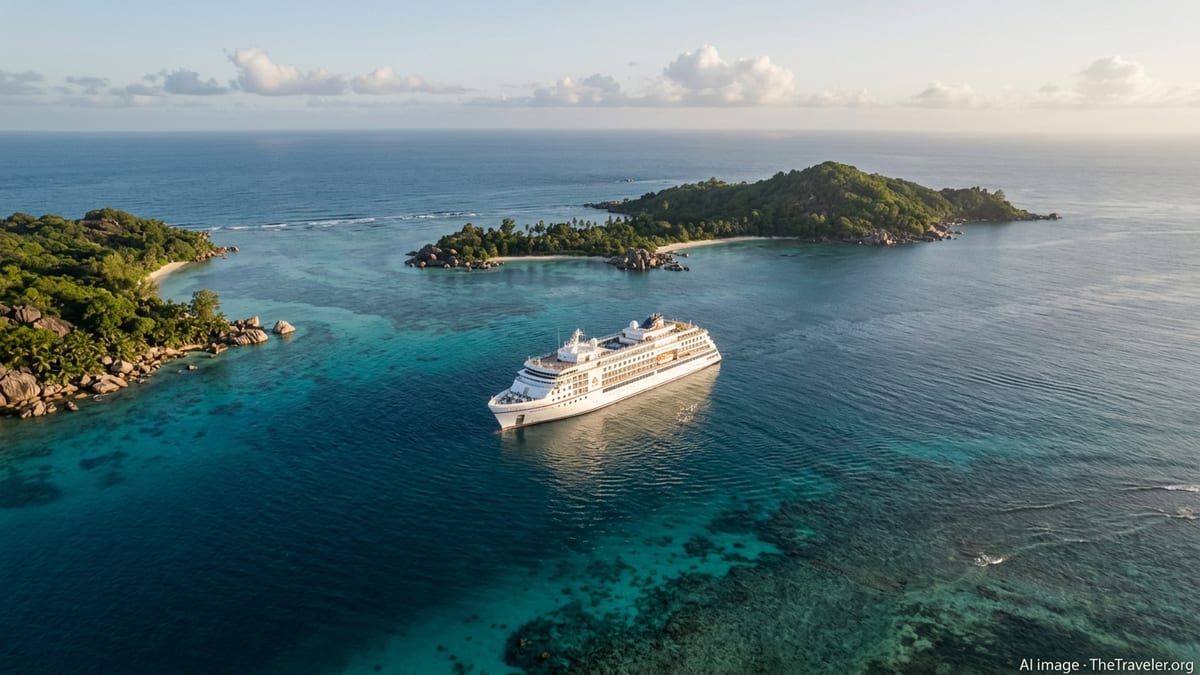
Expedition Line Repositions Toward the Indian Ocean
Publicly available information from Hapag-Lloyd Cruises shows a strategic pivot in the company’s expedition program for winter 2027–2028, with a new emphasis on warmer destinations in the Indian Ocean alongside its established Antarctic operations. One of its three expedition vessels, the 230-passenger HANSEATIC Nature, is scheduled to spend the season on discovery-focused itineraries in the western Indian Ocean that feature Seychelles and Madagascar as headline destinations.
This shift follows earlier test deployments in late 2026, when sister ship HANSEATIC Spirit was scheduled on warm-water expeditions between West Africa and the Indian Ocean. Industry coverage indicates that the strong response to those sailings has encouraged the line to formalize a multi-year Indian Ocean focus, extending into 2028 with additional routes positioned around Seychelles and Madagascar.
For the broader region, the redeployment signals growing confidence in Indian Ocean expedition cruising, a segment that blends classic small-ship exploration with the appeal of tropical anchorages. For Seychelles and Madagascar, it adds a new premium operator to an evolving mix of oceangoing and small-yacht products already serving the islands.
The move also aligns with a wider industry pattern, as expedition lines diversify beyond polar seasons to reduce operational risk and balance year-round demand. The Indian Ocean’s combination of wildlife, culturally rich ports and relatively under-visited coastlines has emerged as a natural complement to classic cold-water itineraries.
Key Routes Linking Seychelles, Madagascar and Southern Africa
According to route previews and regional trade coverage, one of the flagship itineraries for the period from late 2027 into early 2028 positions HANSEATIC Nature on a 16-day voyage from Cape Town to Mahé in the Seychelles. The route traces South Africa’s southern and eastern coastline before crossing the Mozambique Channel and making landfalls in Mayotte and the Seychelles archipelago, including Praslin and nature-focused calls such as Cousin Island.
Separately, program documents and travel calendars for early 2028 highlight dedicated “Expedition Madagascar” sailings with HANSEATIC Nature operating between Mahé and Mauritius. These 15-day cruises are designed to concentrate on Madagascar’s west, north and east coasts, interspersed with sea days and calls at smaller Indian Ocean islands. The combination of the Cape Town–Mahé leg and the Mahé–Mauritius route effectively creates a modular Indian Ocean corridor linking southern Africa, Madagascar, Seychelles and Mauritius.
The itineraries are timed to coincide with the austral summer, typically from November through March, when seas are generally calmer and wildlife viewing in coastal and island habitats is at its best. However, the period also overlaps with the wider southwest Indian Ocean cyclone season, a factor that operators and travelers must monitor closely when planning late-summer departures.
For destination tourism stakeholders, the planned sequence of voyages creates repeated, small-scale calls rather than the mass-visit model of conventional big-ship cruising. Ports such as Victoria in Seychelles, and a mix of Malagasy coastal communities and nature reserves, stand to benefit from higher-spend, lower-volume visitation that is characteristic of expedition products.
What Expedition Guests Can Expect Onboard and Ashore
HANSEATIC Nature is part of Hapag-Lloyd’s dedicated expedition class, designed for remote-region cruising with a comparatively small guest capacity and extensive outdoor viewing space. Fleet descriptions emphasize reinforced hulls suitable for challenging waters, a high Zodiac count for wet landings and coastal exploration, and a program of lectures and briefings led by subject-matter specialists in fields such as marine biology, geology and regional culture.
On Seychelles and Madagascar itineraries, this expedition hardware is paired with warm-water experiences rather than ice and snow. Available information about sample programs highlights Zodiac excursions along mangrove-lined coasts, hikes in rainforest reserves, snorkeling in clear lagoons and landings on remote beaches that lack conventional port infrastructure. In Madagascar, guests can expect a focus on endemic species including lemurs and chameleons, encounters with baobab landscapes and visits to coastal communities where tourism remains relatively limited.
In Seychelles, the emphasis shifts toward granite and coral islands, bird sanctuaries and marine reserves. Destinations such as Praslin and Cousin are typically approached through carefully managed landings, with group sizes and timing structured to comply with local conservation regulations. The small size of HANSEATIC Nature means that all guests can usually be transferred ashore in stages without overcrowding fragile sites.
Onboard, the line’s positioning remains firmly in the premium expedition segment, with German as the primary onboard language but English documentation and translation commonly available on international sailings. Public information on past voyages underscores a casual but service-forward atmosphere, contrasting with the more formal feel of some traditional ocean liners.
Implications for Seychelles and Madagascar Tourism
The planned expansion of expedition activity has several potential implications for tourism in Seychelles and Madagascar. For Seychelles, which already has a mature high-end resort and yacht sector, HANSEATIC Nature’s calls add another distribution channel for nature-based excursions, cultural experiences and pre- and post-cruise stays. Local operators specializing in guided hiking, diving, birdwatching and cultural tours are likely to see incremental demand, particularly on Mahé, Praslin and nearby islands.
In Madagascar, where infrastructure and visitor numbers are more unevenly distributed, targeted expedition calls may bring economic benefits to less-visited coastal regions. Industry observers note that expedition ships, by design, spread passenger spending across multiple small ports rather than concentrating it in a single gateway city. If managed carefully, this can support community-based tourism initiatives, craft markets and small-scale guiding services without overwhelming local capacity.
At the same time, conservation groups and regional planners have long pointed to the sensitivity of Malagasy and Seychellois ecosystems. Increased visitation, even at expedition scale, will heighten the importance of strict landing protocols, waste management and reef-safe practices. Hapag-Lloyd’s published materials for its expedition fleet place repeated emphasis on environmental standards and interpretive programs, which may help align cruise operations with national sustainability goals.
For both destinations, the visibility that comes from inclusion in a global expedition program can also influence future air and land-based tourism demand. Travelers who sample Seychelles or Madagascar on a 15- or 16-day voyage may later return for longer, land-focused holidays, potentially extending the economic impact of each cruise call beyond the voyage itself.
Booking Outlook and Practical Planning for Travelers
Hapag-Lloyd opened bookings for its broader 2027–2028 program in mid-2025, with early information indicating tiered early-booking discounts and a mix of fare structures across the fleet. Expedition itineraries involving Seychelles and Madagascar are positioned within this larger release, and trade reports suggest strong interest from both German-speaking and international markets, particularly for the Cape Town–Mahé and Mahé–Mauritius combinations.
Given the relatively low capacity of HANSEATIC Nature compared with mainstream cruise ships, availability on peak-season sailings is likely to be limited. Prospective travelers are advised by specialist agencies to plan at least 18 to 24 months ahead for prime cabin categories, especially balcony and suite accommodations. Connecting air travel into Cape Town, Mahé or Mauritius remains a key logistical consideration, with some itineraries encouraging guests to add hotel nights to buffer potential flight disruptions.
Travelers should also review visa and entry rules for South Africa, Seychelles, Madagascar, Mayotte and Mauritius, as requirements differ by nationality and can change with limited notice. Health considerations, including recommended vaccinations and malaria precautions for parts of Madagascar and Mozambique-channel ports, should be discussed with a medical professional well in advance of departure.
For those prepared to navigate the planning curve, the 2027–2028 HANSEATIC Nature deployments represent a rare chance to explore Seychelles, Madagascar and their neighboring coasts from an expedition vessel rather than a conventional cruise ship. With more details of the season emerging across official program materials and trade coverage, the Indian Ocean is poised to become one of the most closely watched regions in the next wave of warm-water expedition cruising.