

More news on this day
San Francisco International Airport is preparing for months of prolonged flight delays after federal regulators sharply reduced the number of planes allowed to land each hour, citing runway construction and concerns about closely spaced approaches.
Get the latest news straight to your inbox!
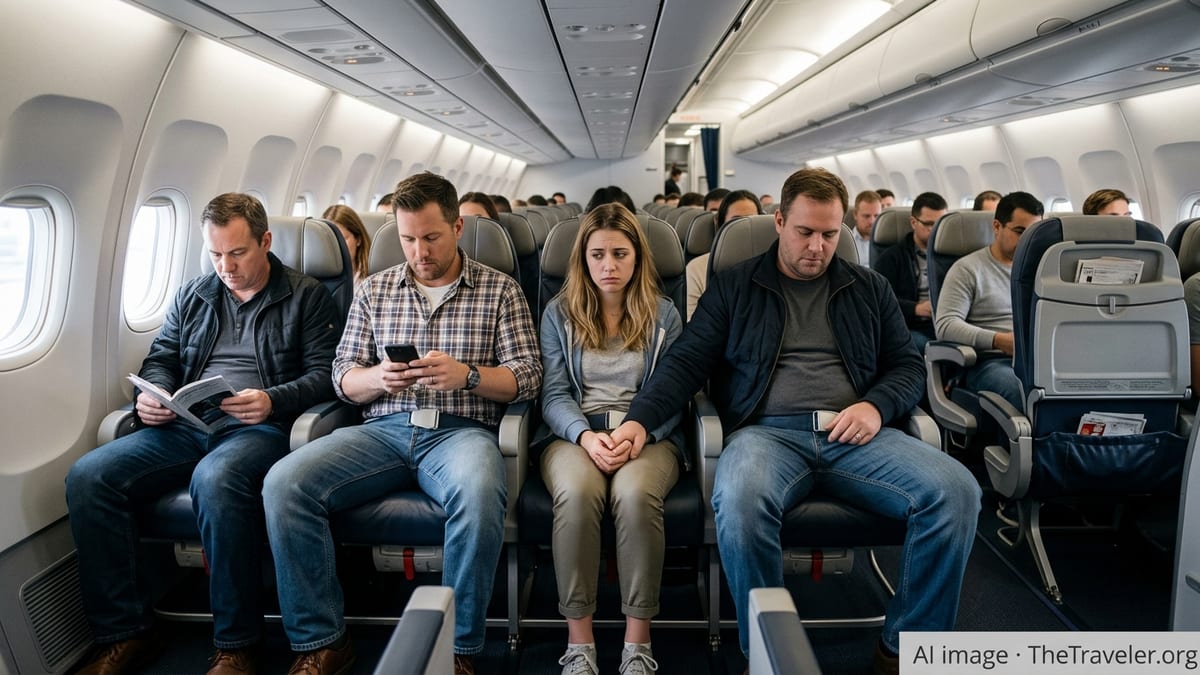
New FAA Limits Cut SFO Arrivals by a Third
Publicly available information shows that the Federal Aviation Administration has reduced San Francisco International Airport’s maximum arrival rate from roughly 54 flights per hour to 36. The change combines a temporary cut linked to a major runway repaving project with a permanent adjustment in how aircraft are sequenced for landing.
According to published coverage, the new operating limits are tied to longstanding procedures that allowed simultaneous arrivals on San Francisco’s closely spaced parallel runways. Regulators now plan to restrict those side by side approaches, which in turn lowers the number of aircraft that can safely land in a given hour, even in clear weather.
The revised cap effectively removes about one third of SFO’s arrival capacity during peak periods. Aviation analysts note that, at a hub airport where schedules are tightly timed around connecting banks, even a modest cut in hourly throughput can ripple across the daily operation, lengthening queues in the air and on the ground.
The new landing limits come on top of broader efforts across the national airspace system to control congestion at busy hubs through scheduling caps and runway use rules. San Francisco now joins a list of high demand airports where the FAA directly constrains hourly operations to manage chronic delay risk.
Runway Construction Compounds Capacity Squeeze
The timing of the new landing restrictions coincides with a six month closure of one of SFO’s main runway pairs for resurfacing, a project the airport has been preparing for since last year. With the north south runways out of service, more traffic is funneled onto the remaining east west pair, leaving little room to absorb additional constraints.
Airport planning documents and recent news reports indicate that the construction alone was expected to reduce hourly arrival capacity and generate modest schedule impacts. Initial forecasts suggested that between 10 and 15 percent of flights could see delays, typically averaging under half an hour, during the most intensive phase of the work.
The new FAA arrival limits significantly change that outlook. With fewer landing slots available while a critical runway is offline, queues are likely to build more quickly whenever demand approaches the reduced cap. That makes the system more sensitive to common disruptions such as low clouds, strong winds or minor routing changes in the crowded Bay Area airspace.
The affected runway is scheduled to reopen in early October, which should restore some of the lost capacity. However, the permanent elements of the FAA’s landing policy, particularly the constraints on parallel approaches, are expected to remain in place, keeping SFO’s practical arrival ceiling below its previous level.
Delays Expected to Rise for Summer and Early Fall Travel
Estimates shared in recent coverage suggest that roughly one quarter of flights arriving at SFO could now be delayed by 30 minutes or more during the combined period of runway work and new landing rules. That represents a notable increase compared with earlier projections based on construction alone.
The greatest impact is anticipated in morning and evening peaks, when transcontinental and long haul international arrivals converge with dense short haul traffic up and down the West Coast. When demand exceeds the new hourly limit, traffic managers are likely to implement ground delay programs that hold departures at origin airports to meter arrivals into San Francisco.
Airlines with large operations at SFO are reviewing schedules for the spring and summer seasons to determine whether some flights will need to be retimed or consolidated. Public statements referenced in local reporting indicate that carriers are monitoring on time performance closely and may make further adjustments if delays become more severe than expected.
Travel experts note that, beyond headline delay statistics, the new constraints could affect missed connections, crew scheduling and aircraft rotations throughout airline networks. Because SFO serves as a major west coast gateway for transpacific and domestic connecting traffic, extended arrival holds or long taxi in times can cascade into later banks of flights across the country.
What Passengers Can Expect at SFO in the Coming Months
For travelers, the most immediate effect is likely to be longer and less predictable arrival times, particularly on busy travel days. Publicly accessible flight tracking and airport status tools already show signs of increased holding patterns near SFO during certain peaks, as aircraft queue up for the constrained landing slots.
Consumer advocates advise that passengers connecting through SFO build extra buffer into itineraries, choosing longer connection windows when possible and avoiding tight turn times on separate tickets. Early morning departures from other cities bound for San Francisco may also be less exposed to compounding delays than late afternoon and evening flights.
Published guidance from airlines and travel advisers continues to recommend that passengers monitor their flight status frequently on the day of travel and consider rebooking options when significant schedule changes appear. Same day changes to alternate Bay Area airports, including Oakland and San Jose, may offer a useful fallback in some cases, though ground transportation time needs to be factored into plans.
Airport operations summaries indicate that SFO is working with federal air traffic managers to optimize use of available runways and adjust procedures where possible to keep arrivals flowing within the new safety parameters. However, with less flexibility in the system, even small weather disruptions or upstream congestion at other hubs may trigger longer delay chains than passengers have recently experienced.
Broader Context for Federal Caps on Airport Capacity
The decision to impose stricter landing limits at San Francisco comes amid a wider debate about how the United States manages capacity at its busiest airports. Other congested hubs, such as those in the New York and Washington regions, have long operated under explicit slot controls or scheduling limits intended to balance demand with available runway and airspace resources.
Federal rulemaking notices and recent industry analysis describe these measures as tools to reduce the risk of gridlock and maintain safety margins in crowded terminal environments. At the same time, caps can reduce flexibility for airlines, limit growth and concentrate schedule pressure into fewer, more heavily utilized time periods.
San Francisco’s situation is distinctive because its closely spaced runways and complex local airspace limit the options for expanding capacity through new infrastructure. Reports on airport planning have noted that significant runway expansion would be difficult given the surrounding bay, urban development and environmental considerations, leading regulators to focus on procedural changes instead.
As the new landing limits take effect, aviation observers are watching how SFO’s on time performance compares with other major hubs operating under similar constraints. The experience over the coming summer and early fall is likely to influence future discussions about long term capacity, airspace redesign and the balance between safety, efficiency and growth at one of the West Coast’s key international gateways.