

More news on this day
San Francisco International Airport is warning travelers to expect significantly longer delays in the coming months as a major runway construction project collides with new Federal Aviation Administration limits on flight arrivals, sharply reducing the airport’s capacity during peak periods.
Get the latest news straight to your inbox!
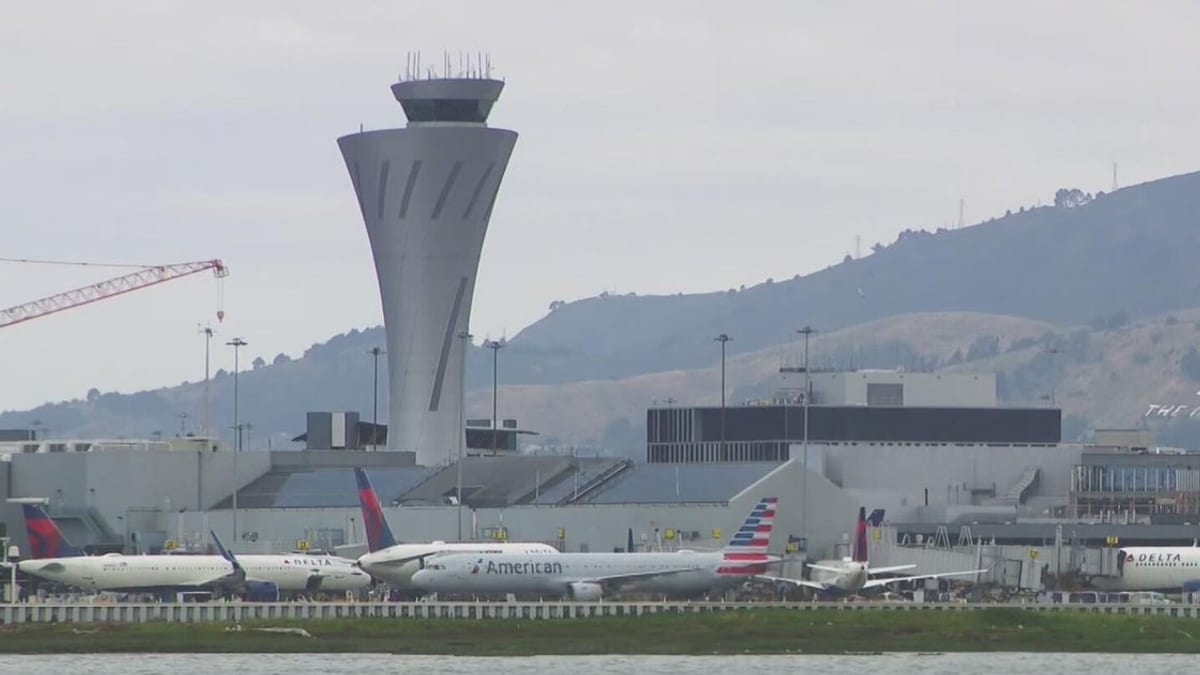
Image by CBS News
Runway Repaving and New FAA Rule Squeeze Capacity
A temporary shutdown of one of San Francisco International Airport’s primary runway complexes for a six-month repaving project has already constrained operations, with all traffic funneled onto the remaining runways. Publicly available airport planning documents show that SFO typically schedules for about 54 arrivals per hour in favorable weather, a figure that has helped sustain its role as a key West Coast hub.
That capacity is now being cut back dramatically. According to recent coverage of the project and federal actions, the combination of construction closures and new operational limits ordered by the FAA will trim the maximum arrival rate to roughly 36 flights per hour. The reduction applies across much of the day, intensifying the risk of backups whenever weather or airspace congestion complicate the flow of traffic into the Bay Area.
The repaving work, which began at the end of March, temporarily removes SFO’s north south runways from service, routing arrivals and departures to the east west pair. Airport planning materials had initially framed the project as a moderate operational challenge, but the subsequent federal rule change has effectively turned a capacity squeeze into a protracted test of the system’s resilience.
Federal notices and industry reporting indicate that the FAA’s new restrictions are focused on the long standing practice of “side by side” arrivals on closely spaced parallel runways. Those simultaneous approaches, long a hallmark of flying into San Francisco, allowed airlines to schedule dense arrival banks, but regulators have now decided the margin for error is too slim when combined with construction related constraints.
Delays Expected to Rise for Spring and Summer Travel
Before the FAA action, airport forecasts anticipated that fewer than one in six flights would encounter significant construction related disruption. Updated projections shared in recent media reports now suggest that about one quarter of arriving flights could experience delays of at least 30 minutes while the rule and construction overlap.
The timing is particularly sensitive. The runway project and FAA arrival limits stretch across the spring and summer travel peaks, when San Francisco regularly sees heavy leisure traffic layered on top of its year round business demand. Even routine marine layer clouds off the Pacific can slow approaches, and with less runway capacity available, modest schedule hiccups have a greater chance of cascading into lengthy waits.
Airlines with a substantial presence at SFO are reviewing schedules and operating plans in response. United Airlines, which maintains a primary hub at the airport, and Alaska Airlines, a major player in the region, are assessing whether to trim frequencies, adjust aircraft gauge, or shift some connections to alternate airports. Early indications from carrier statements suggest a preference for managing the impact through schedule fine tuning rather than broad cancellations.
For travelers, the operational math is straightforward: fewer available arrival slots mean less ability to absorb disruptions. Industry analysts note that when a hub’s capacity is cut by roughly a third, even during a defined construction period, it often leads to downstream consequences across an airline’s wider network, affecting not only flights to and from San Francisco but also onward connections.
Safety Concerns Shape FAA’s Long Term Approach
The FAA’s decision to permanently restrict certain simultaneous approaches at San Francisco reflects a wider focus on runway safety at high traffic airports. Recent safety incidents at other U.S. hubs, including runway collisions and near misses, have intensified scrutiny of procedures that rely on tight spacing and complex choreography in congested airspace.
At SFO, the closely spaced parallel runways and a crowded regional airspace that includes major airports in Oakland and San Jose have drawn attention from safety advocates for years. Public records and technical analyses highlight that when visibility deteriorates, the operational flexibility that once supported parallel side by side arrivals shrinks, and small errors can have outsized consequences.
Reports indicate that the FAA’s latest ruling is not part of a nationwide overhaul of parallel operations but is tailored to the geometry and traffic patterns at San Francisco. Even so, airlines and air traffic specialists are watching closely, viewing SFO as a test case for how regulators might balance capacity and safety at other complex airports undergoing significant construction.
While the reduction in arrival rates is being characterized as a necessary safety measure, there is uncertainty about how long the tighter limits will remain in place after the construction phase ends. For now, the FAA is signaling that the permanent rule on side by side landings will continue, even when all of SFO’s runways return to service, potentially embedding a portion of the current capacity cut into the airport’s long term operating profile.
What Travelers Should Expect in the Months Ahead
With the runway repaving projected to last roughly six months and the FAA rule change already in effect, passengers connecting through San Francisco face an extended period of less predictable operations. Travel advisories and industry commentary encourage flyers to build in extra time, particularly for itineraries that rely on tight domestic connections or same day links between international and U.S. flights.
Morning and late afternoon bank times, when SFO traditionally compresses numerous arrivals into short windows, are expected to be the most challenging. Reduced hourly arrival caps mean there is less room to “catch up” after a burst of delays caused by weather, ground holds, or upstream congestion, making it more likely that disruptions will spill into evening operations.
Travel planners are recommending that passengers departing from SFO consider earlier departures where possible and factor in the risk of missed connections when booking complex itineraries. Those with flexibility may also look at alternate Bay Area airports for some trips, although shifting too much demand to those facilities could introduce fresh bottlenecks in the region’s airspace.
Ground access may also require additional time. Separate rail construction on the transit line serving SFO has triggered periodic evening and late night slowdowns, with advisories suggesting riders add extra minutes to airport trips during work windows. Combined with the airside constraints, the overlapping projects underscore the importance for travelers of monitoring both flight status and ground transport conditions in the days leading up to departure.
Longer Term Questions for SFO’s Role as a West Coast Hub
The current round of construction and regulatory change raises broader questions about how San Francisco International Airport will manage growth and reliability in the years ahead. The reduced arrival rates, even if partially temporary, highlight the limits of the existing runway layout when faced with dense schedules and evolving safety expectations.
Airport planning documents and past performance reports show that SFO has long navigated a delicate balance between high demand, challenging coastal weather, and a constrained airfield footprint. Periods of construction in prior years have produced noticeable spikes in delays, and the present combination of infrastructure work and new rules is shaping up to be one of the most consequential tests yet.
Local and national aviation analysts are watching how effectively the airport, regulators, and airlines coordinate schedule adjustments, air traffic procedures, and passenger communication. The outcome could influence future decisions about where to concentrate new long haul services, how aggressively to schedule peak hour arrivals, and whether further airfield or technology investments are needed to restore some of the lost capacity.
For now, travelers can expect San Francisco to remain a vital link in domestic and transpacific networks, but with a more fragile on time record while the runway project proceeds and the new FAA regime takes hold. How quickly operations stabilize after construction ends will go a long way toward determining whether the current wave of delays becomes a short term disruption or a lasting feature of flying through SFO.